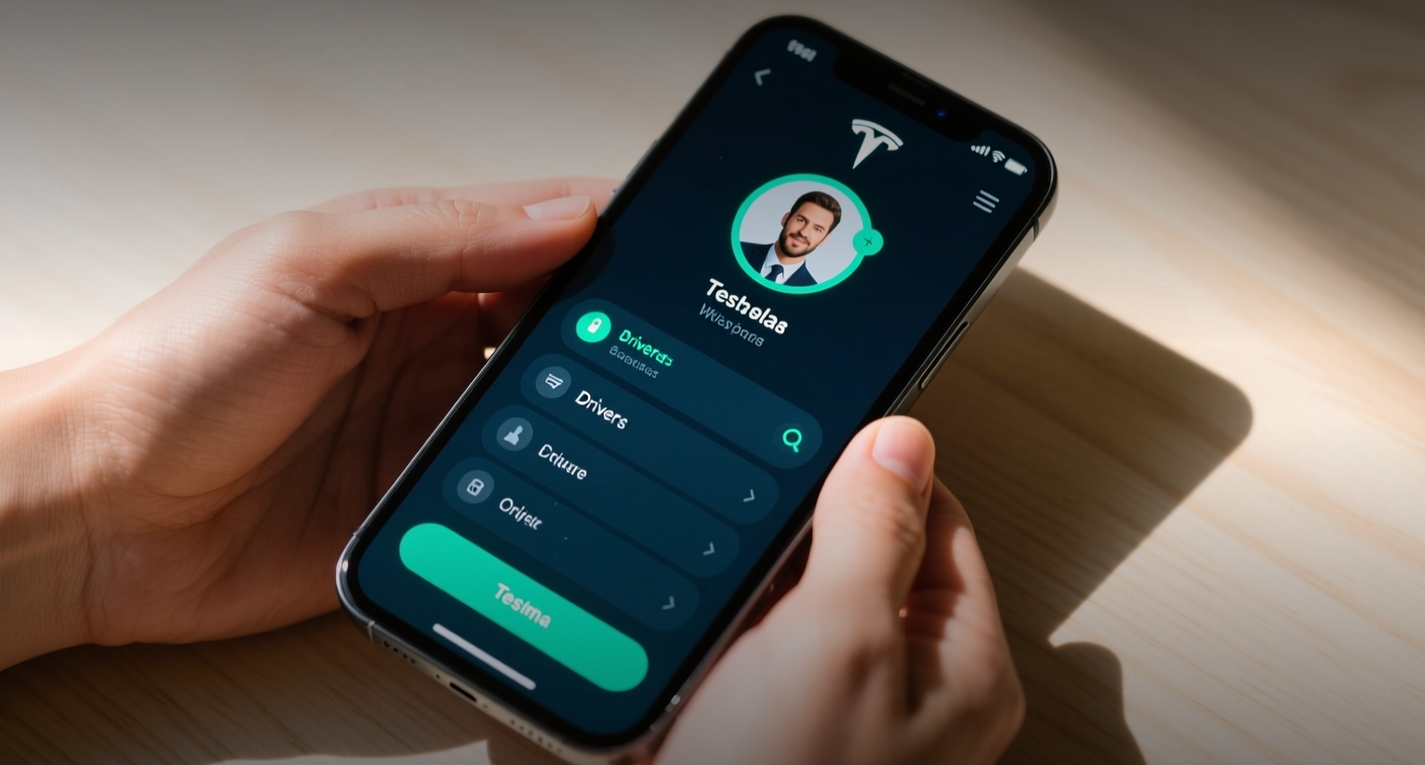
Tesla's Full Self-Driving system is evolving from a universal AI driver to a personalized model that remembers individual parking preferences, takeover behaviors and long-term driving habits.
Tesla's Full Self-Driving system is gaining long-term memory that will let it remember individual parking preferences, driving habits and takeover behaviors, shifting from a one-model-fits-all approach to personalized AI driving for each user.
"FSD will soon be able to remember users' parking preferences," Musk said in a June reply on X. In a later post, he said future vehicles will record specific takeover behaviors and gradually match each driver's preferences.
The personalization layer builds on Tesla's end-to-end neural network architecture introduced with FSD V12 and refined in V14. Rather than training separate models for each driver — which would be cost-prohibitive — Tesla is expected to add a lightweight user preference layer on top of the base model, recording parking habits, driving rhythm, route preferences and historical intervention data.
The shift creates a new competitive moat for Tesla at a time when most autonomous driving players still compete on generic driving capability. It also strengthens the case for private vehicle ownership in the Robotaxi era, since Robotaxi services using one AI for all users cannot offer the same level of personalization.
The Technology Behind Personalized FSD
The personalization effort draws on three research directions that have emerged in autonomous driving in recent years: Driver Modeling, Preference Learning and Human-in-the-loop Learning.
Driver Modeling creates a digital profile for each driver — classifying whether someone drives aggressively or conservatively based on steering inputs, acceleration patterns and following distance. Preference Learning goes further by observing which specific choice a driver prefers in a given scenario, such as whether to change lanes early or stay in the current lane when approaching a slower vehicle. This mirrors the preference learning logic used in large language models, where user feedback shapes behavior.
Human-in-the-loop Learning addresses how to keep humans engaged in the autonomous driving learning process. The most valuable data is generated not during normal driving but when the AI encounters situations it cannot handle. Tesla's global fleet of vehicles already functions as a data collection network; binding that feedback to individual user accounts would transform the data's value — helping not just the base model but also individual vehicles understand specific users.
What This Means for Tesla's Competitive Position
The personalized FSD strategy solves two problems for Musk simultaneously. First, it creates a differentiation path for smart vehicles at a time when basic autonomous driving capabilities are becoming commoditized. Once every vehicle can navigate from parking spot to parking spot, the next competitive battleground becomes who understands the driver better.
Second, it resolves a tension between Tesla's business model of selling private cars and the ultimate goal of fully autonomous driving. If Robotaxis can handle all transportation needs, the rationale for private vehicle ownership weakens. Personalized FSD preserves the value of private cars by offering an experience that Robotaxis — which use one AI to serve all users — cannot replicate.
For competitors, the bar rises. Third-party autonomous driving suppliers that offer one-size-fits-all solutions may struggle to allocate resources for personalization features. Even if they open permissions for automakers to customize, few original equipment manufacturers have the code-level AI development capabilities required. The trend favors vertically integrated players with full-stack in-house research and development, including Tesla, BYD and Xpeng.
This article is for informational purposes only and does not constitute investment advice.