

Key Takeaways:
- Tencent open-sources Hy3 AI model under Apache 2.0 license
- API pricing at 1 yuan per million input tokens, undercutting U.S. rivals
- Hy3 achieves performance comparable to models two to five times its size
Key Takeaways:
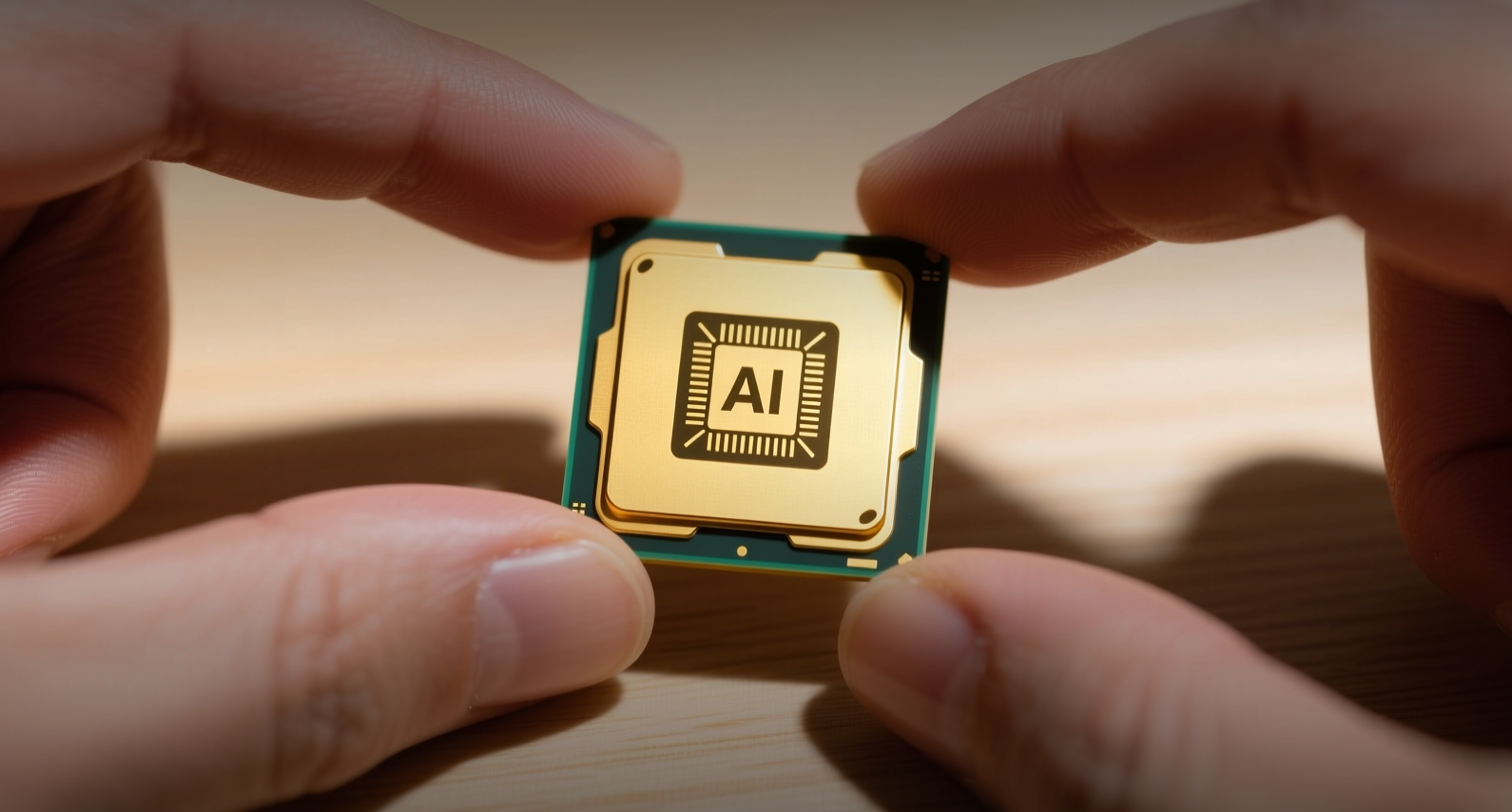
Tencent's Hy3 matches models five times its size while pricing API access at a fraction of U.S. rivals, escalating the price war in China's AI market.
Tencent Holdings released its Hy3 AI model under the Apache 2.0 open-source license, achieving performance comparable to models two to five times its parameter count while pricing API access at 1 yuan per million input tokens — a fraction of leading U.S. offerings.
"Hy3 closes the gap between open-weight Chinese models and much larger frontier systems through expanded reinforcement learning compute and higher-quality post-training data," Tencent's Hunyuan team said in a statement.
The model improves reasoning, agent capabilities and long-context tasks versus its preview predecessor. API pricing stands at 1 yuan ($0.14) per million input tokens and 4 yuan per million output tokens, with cached inputs at 0.25 yuan. By comparison, OpenAI charges $15 per million input tokens for GPT-5.5 and Anthropic charges $3 per million for Claude Opus 4.8, according to published pricing. Hy3 has been released on GitHub, HuggingFace, ModelScope and GitCode.
The release intensifies competition in China's AI market, where Tencent, Alibaba's Qwen, Baidu's ERNIE and ByteDance's Doubao are vying for developer adoption. Tencent's open-weight strategy and aggressive pricing could pressure rivals and accelerate enterprise adoption of its cloud ecosystem, which competes with Alibaba Cloud and Huawei Cloud. Tencent trades at about 18 times forward earnings.
Hy3's claim of matching models two to five times its size places it alongside recent Chinese releases that have narrowed the gap with U.S. frontier models. Z.ai's GLM-5.2, a 750-billion-parameter open-weight model, ranks second on the Code Arena front-end coding benchmark and operates at roughly one-sixth the cost of closed U.S. frontier models, according to Artificial Analysis. DeepSeek's V4-Pro and Alibaba's Qwen3.7-Max have also demonstrated competitive performance, with the Center for AI Standards and Innovation estimating the gap between leading U.S. models and DeepSeek V4 Pro at about eight months.
Chinese labs have benefited from knowledge distillation — using stronger models to train smaller ones — and a growing open-weight research community that allows rapid adoption of best practices. Tencent did not disclose Hy3's exact parameter count or training cost.
Chinese AI models are significantly cheaper to access than U.S. closed models. DeepSeek's V3 training run cost about $5.6 million, a fraction of the billions spent by OpenAI and Anthropic. Tencent's Hy3 API pricing extends this trend, potentially making it the default choice for cost-sensitive developers and startups.
However, the open-weight strategy carries trade-offs. Chinese labs that release models openly do not collect user interaction data when models are deployed through third-party hosts, limiting their ability to build feedback loops and monetize usage. U.S. firms such as OpenAI, Anthropic and Google benefit from integrated products — ChatGPT, Claude, Gemini — that generate proprietary data, subscription revenue and platform lock-in.
For Tencent, the Hy3 release serves dual purposes: building developer ecosystem adoption globally while reducing inference compute burden through third-party hosting. The model's Apache 2.0 license allows commercial use, modification and redistribution, lowering barriers for enterprises that may be wary of sending data to Chinese servers.
This article is for informational purposes only and does not constitute investment advice.
