Samsung's 140 trillion won investment plan targets the AI-era building blocks of HBM memory, advanced displays, and new battery technologies.
Samsung's 140 trillion won investment plan targets the AI-era building blocks of HBM memory, advanced displays, and new battery technologies.
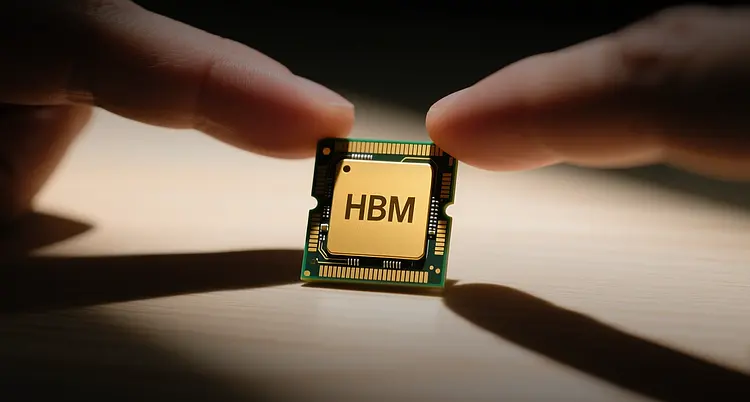
Samsung Group will invest 140 trillion won ($90 billion) in South Korea's Chungcheong province to build production lines for HBM chips, OLED displays, and batteries, cementing the region as a global advanced manufacturing hub.
"Samsung has demonstrated a virtuous cycle in which preemptive investment drives corporate growth, and that growth extends to the region and the nation," Chairman Lee Jae-yong said at a briefing at Samsung Display's Asan campus. "Chungcheong will achieve even greater growth as a global hub for IT materials and components."
The plan allocates 67 trillion won to Samsung Display for OLED production spanning smartphones, IT devices, extended reality, automotive, and humanoid robot applications. Samsung Electronics will spend 56 trillion won to build five high-bandwidth memory fab lines at its Onyang campus and upgrade facilities in Cheonan. Samsung SDI will invest 9 trillion won by 2040 in a battery verification facility, while Samsung Electro-Mechanics commits 8 trillion won to expand AI server package substrate production in Sejong.
The investment is expected to create 250,000 jobs and forms part of a broader 2,655 trillion won group-wide spending program that includes 425 trillion won for two new semiconductor fabs in the Honam region. President Lee Jae Myung compared the announcement to founder Lee Byung-chull's 1983 decision to enter semiconductors, saying Chairman Lee Jae-yong's commitment "will lead South Korea's advanced industry into a new leap forward."
Samsung Display's 67 trillion won allocation represents the largest single piece of the plan, funding expansion from Asan Complex 1 into Complex 2 with new OLED lines for high-value applications. The company is targeting not just smartphones and IT devices but also emerging categories such as extended reality headsets, automotive displays, humanoid robots, and wearables — a bet that OLED technology will penetrate far beyond its current core markets. Samsung Display President Lee Cheong said the company aims to "realize the future of South Korea's materials and components in Chungcheong," building an industrial cluster covering displays, HBM, package substrates, and batteries.
Samsung Electronics' 56 trillion won commitment focuses on HBM, the high-bandwidth memory chips that have become essential for AI training and inference workloads. The five new fab lines at Onyang will position the company to challenge SK Hynix's dominance in the HBM market, where Samsung has trailed its domestic rival in securing orders from Nvidia. The Cheonan campus will also receive equipment upgrades and facility modernization to support HBM-related production. Lee Jae-yong said the outcome of the AI era "depends on the materials and components that power AI, which means it is directly tied to Samsung's own future."
Samsung SDI's 9 trillion won investment through 2040 will build a mother line for verifying new battery technologies at its Cheonan campus. The facility is designed to prove out production processes before they are deployed at overseas manufacturing bases, a strategy aimed at strengthening global competitiveness against Chinese battery makers such as CATL and BYD, which have dominated the market through scale and aggressive pricing.
Samsung Electro-Mechanics will spend 8 trillion won by 2040 in Sejong to expand production of high-performance package substrates for AI servers. The company also plans to increase investment in core component research and development and the cultivation of specialist talent, addressing a critical bottleneck in South Korea's advanced packaging supply chain. The substrates business has become a key enabler for AI chipmakers, as advanced packaging technologies such as TSMC's CoWoS require increasingly complex substrate designs.
Samsung shares trade at a discount to global semiconductor peers, weighed down by memory price cycles and the company's lagging position in HBM versus SK Hynix. This 140 trillion won commitment shows management is betting aggressively on AI-driven demand to close that gap. If successful, the Chungcheong cluster could generate significant revenue from HBM, OLED, and battery sales by the end of the decade. Investors should watch for design wins with Nvidia and other AI chipmakers as the earliest indicator of whether the bet is paying off. President Lee dismissed suggestions the investment was made under government pressure, saying "could you run a company that way, or attract world-class investment?"
This article is for informational purposes only and does not constitute investment advice.
