

A single multi-layer circuit board is delaying Nvidia's next-generation AI rack by more than a year, testing the chipmaker's annual release cadence.
A single multi-layer circuit board is delaying Nvidia's next-generation AI rack by more than a year, testing the chipmaker's annual release cadence.
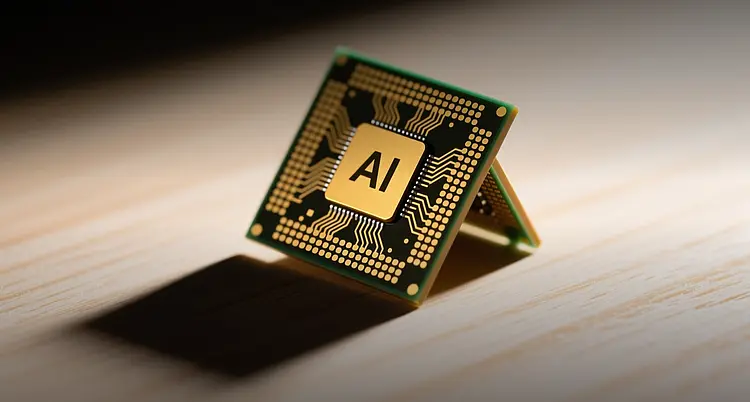
Nvidia's Kyber NVL144 rack architecture has been pushed to 2028 because the 78-layer printed circuit board at its core remains too difficult to manufacture at scale, according to research firm SemiAnalysis.
"Kyber NVL144 rack architecture has been delayed to 2028 as the PCB midplane remains challenging from a manufacturability standpoint," SemiAnalysis said in a post Monday, citing the multi-layer board that connects vertical compute trays within the system.
The delay affects the rack designed to house Nvidia's Vera Rubin Ultra chips, which were slated to debut in 2027. SemiAnalysis also reported that a proposed interim design — the NVL72x2 back-to-back configuration — was scrapped after cloud providers pushed back on its operational complexity. The larger NVL576 system, linking eight racks over optical connections, is likely delayed or limited to small volumes, the firm said.
The setback leaves Nvidia without a proven scale-up path for Rubin Ultra in 2027, creating a rare opening for rivals Advanced Micro Devices and Google at the high end of the AI training market. Nvidia disputed the claims, telling media outlets its roadmap remains intact, but the episode highlights the manufacturing risks embedded in its annual product cadence.
The Midplane Bottleneck
The PCB midplane is an extremely high-complexity board with 78 layers, according to Techzine. Such multi-layer, high-density boards can suffer low yields and defect sensitivity during scale production. In analogous datacenter hardware efforts, high-layer-count boards and rigid orthogonal backplanes have historically elevated manufacturer qualification time and yield risk, increasing lead times even when the upstream silicon is ready.
The manufacturing problem is concentrated at Nvidia's supply chain partners. Japan's Ibiden, which counts Nvidia as its largest client, fell as much as 10 percent Monday, Bloomberg reported. Kingboard Laminates tumbled 18 percent in Hong Kong, while Samsung Electro-Mechanics slid 11 percent in Seoul. The supply-chain selloff shows how sensitive the ecosystem is to hardware qualification news.
Cloud Providers Rejected the Fallback
SemiAnalysis said the NVL72x2 stopgap was cancelled after heavy pushback from cloud service providers and hyperscalers over its "odd design and heavy operational burden." The rejection underscores a practical constraint: cloud operators prioritize maintainability and operational simplicity over peak density. When a vendor's high-density design fails, operators often accept lower-density interim designs, shift workloads to existing-generation hardware, or increase investment in cooling and floor space to compensate.
Nvidia's current-generation Rubin systems remain in production and begin shipping this fall to eight cloud partners, including Amazon Web Services, Microsoft Azure and Google Cloud. SemiAnalysis projects Nvidia's data-center compute revenue will run 20 percent above Wall Street consensus in the second half of fiscal 2027.
Investors Bet on a Rebound
Despite the negative report, options market activity suggests institutional investors are treating the delay as noise. On Tuesday, Nvidia call options volume exceeded 1.5 million contracts versus about 690,000 puts — a ratio of more than 2-to-1. On Monday, total Nvidia option premium reached about $600 million, with roughly two-thirds tied to call options. A single trader bought $3.5 million in 200-strike calls expiring late July, according to ThinkorSwim data.
Nvidia shares showed relative strength during a broad chip selloff Tuesday. While the Philadelphia Semiconductor Index fell more than 5 percent, Nvidia shares closed higher, holding above the 200-day moving average near $200. Mizuho analyst Jordan Klein called the delay concerns "more noise" and pointed to continued strong AI demand from Nvidia suppliers.
Nvidia trades near $196.58, down about 17 percent from its May high. The concentrated call positioning at the $200 strike suggests traders expect a breakout above that level in the near term. If confirmed, the Kyber delay would not affect Nvidia's current-generation revenue — Rubin systems are shipping this year — but it raises questions about whether the company can sustain its annual cadence as chip and system complexity increases.
This article is for informational purposes only and does not constitute investment advice.
