

Nvidia's first open humanoid robot reference design pairs its Jetson Thor chip with a Unitree H2 Plus body, giving researchers a standardized platform to develop general-purpose physical intelligence.
Nvidia's first open humanoid robot reference design pairs its Jetson Thor chip with a Unitree H2 Plus body, giving researchers a standardized platform to develop general-purpose physical intelligence.
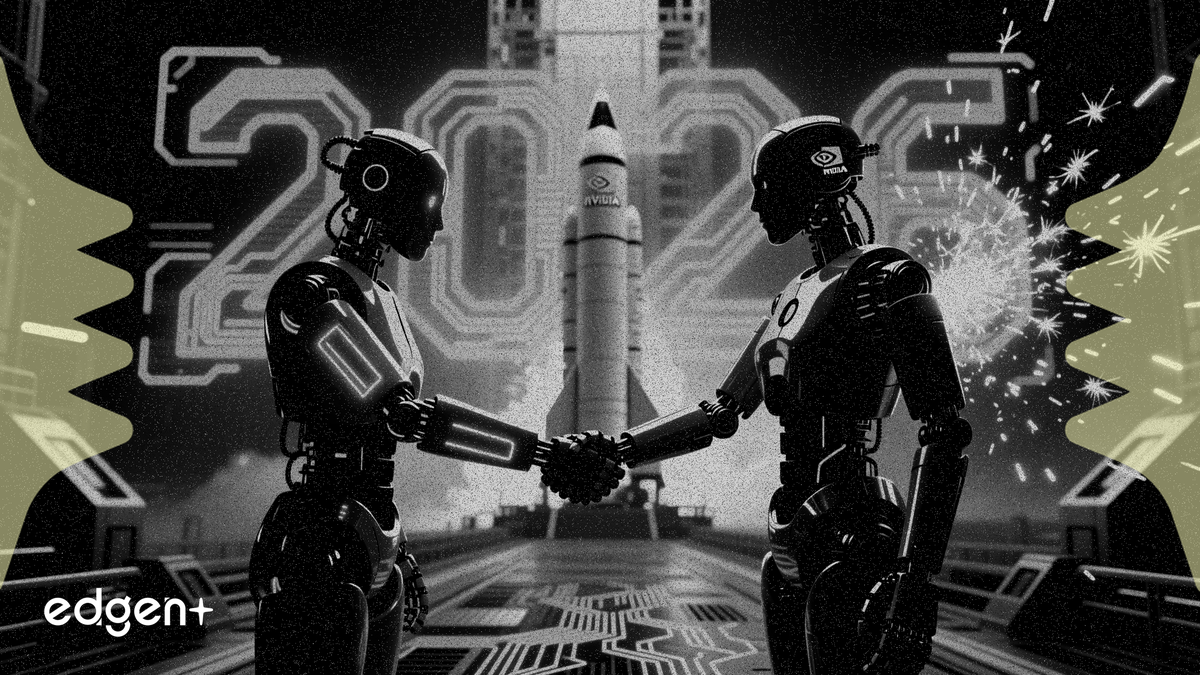
Nvidia's first open humanoid robot reference design pairs its Jetson Thor chip with a Unitree H2 Plus body, giving researchers a standardized platform to develop general-purpose physical intelligence.
Nvidia opened its humanoid robotics stack to researchers Monday, pairing its Blackwell-based Jetson Thor chip with a Unitree H2 Plus robot body in a reference design that eliminates the need for proprietary platforms.
"Humanoid robots will bring physical AI to the world's largest industries, opening a multitrillion-dollar economic opportunity," Jensen Huang, founder and chief executive officer of Nvidia, said at the company's GTC Taipei event.
The Isaac GR00T Reference Humanoid Robot integrates a Unitree H2 Plus humanoid with Sharpa Wave tactile five-finger hands, powered by Nvidia's Jetson Thor onboard compute and the Isaac GR00T software stack for simulation, training and deployment. The platform will also support the smaller Unitree G1, a robot already used in research labs. Availability from Unitree is set for late 2026.
The reference design threatens to commoditize humanoid hardware development at a moment when Boston Dynamics, Figure AI and Tesla are racing to commercialize their own platforms. Nvidia collects revenue from chip sales regardless of which robot maker wins — the strategy mirrors its GPU dominance in AI training, where it supplies compute to every major competitor.
An Open Platform for a Fragmented Market
Humanoid robotics research has been hampered by a fragmented development process spanning hardware integration, data collection, simulation, training, evaluation and deployment, Nvidia said. The Isaac GR00T reference design unifies those steps into a single system, letting research teams move from robot bring-up to skill development without rebuilding infrastructure for each task.
Leading institutions including Ai2, ETH Zurich, Stanford Robotics Center and UC San Diego's Advanced Robotics and Controls Laboratory have committed to using the platform. "Robotics moves fastest when researchers can build on open platforms, share code and test ideas on real machines," Steve Cousins, executive director of the Stanford Robotics Center, said.
The modular design lets teams use the full platform or integrate selected capabilities into existing pipelines. Nvidia Research will also use the reference design to advance its Isaac GR00T open models and frameworks.
Unitree Gains Nvidia Validation as IPO Prospects Rise
For Unitree, the partnership provides a powerful endorsement as the Chinese startup weighs an initial public offering. Nvidia's selection of the Hangzhou-based company over rivals including Boston Dynamics and Figure AI signals confidence in Unitree's hardware capabilities and manufacturing scale.
Unitree has shipped hundreds of humanoid robots to industrial partners, competing directly with China's AGIBOT and US-based Figure AI, which is now producing one robot per hour at its manufacturing facility and carries a $39 billion valuation, according to published reports. Boston Dynamics, meanwhile, is navigating a leadership exodus and pressure from parent Hyundai Motor Group to scale Atlas production to 30,000 units per year by 2028, per a Semafor investigation.
The competitive dynamics show Nvidia establishing itself as the compute layer for the entire humanoid industry, supplying chips to all comers while letting hardware makers fight for market share. The strategy has worked in AI data centers, where Nvidia's H100 and Blackwell GPUs power models from OpenAI, Google and Meta.
For investors, the announcement reinforces Nvidia's strategy of capturing value at the infrastructure layer rather than picking winners in hardware. Humanoid robotics represents a new compute total addressable market that could add billions in annual chip sales if the industry scales as projected. Unitree's IPO, should it proceed, would give public market investors a pure-play bet on humanoid hardware — but one that depends on Nvidia for its compute.
This article is for informational purposes only and does not constitute investment advice.
