
China's Long March 10B rocket completed its first controlled booster recovery on July 10, making the country only the second after the US to master vertical rocket landing technology.
China's Long March 10B rocket completed its first controlled booster recovery on July 10, making the country only the second after the US to master vertical rocket landing technology.
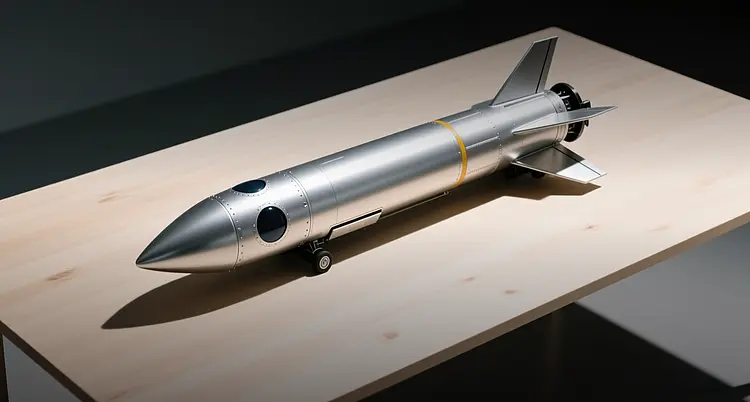
China's Long March 10B rocket completed its first controlled booster recovery on July 10, making the country only the second after the US to master vertical rocket landing technology.
China launched the Long March 10B carrier rocket from the Hainan Commercial Space Launch Site at 12:15 p.m. Beijing time on Friday, successfully placing a satellite into orbit and, about eight minutes after liftoff, recovering the first-stage booster via a net-based capture system on an offshore platform in the South China Sea, according to state broadcaster CCTV.
"This mission marks China's first successful controlled recovery of a launch vehicle first stage and also the world's first net-based recovery of a launch vehicle," the China Academy of Launch Vehicle Technology said in a statement. The rocket's first stage was captured by the "Linghangzhe" recovery platform, a 144-meter-long vessel with a 25,000-ton displacement equipped with DP2 dynamic positioning capability.
The Long March 10B measures 63 meters in length with a 5-meter diameter and generates about 890 tons of liftoff thrust. Its first stage uses seven liquid oxygen-kerosene engines in parallel, while the second stage runs on a single liquid oxygen-methane engine. In its reusable configuration, the rocket can deliver 16 tons to low-Earth orbit — roughly half the payload capacity of SpaceX's Falcon 9 in reusable mode, which can lift about 22.8 tons to LEO. The rocket's first stage separated from the second stage at an altitude of about 100 kilometers roughly 150 seconds after liftoff, then executed a four-phase descent involving grid-fin deployment, engine reignition for braking, aerodynamic deceleration, and a near-hover landing sequence before being caught by the net system.
Net-based recovery offers a Chinese alternative to landing legs
Unlike the landing-leg systems used by SpaceX's Falcon 9 and Rocket Lab's Electron, the Long March 10B's net-based approach uses a system of pulley-driven cables on an offshore platform to capture the descending booster. The rocket's onboard navigation system continuously transmitted velocity and position data to ground control, which coordinated with the platform's cable system to guide the first stage into the capture net. A hooking mechanism on the rocket body then engaged with four cross-grid-shaped cables, and auxiliary securing cables stabilized the booster against wave-induced swaying.
The approach eliminates the weight penalty of landing legs, potentially increasing payload capacity, and offers greater tolerance for landing position偏差, according to the development team. The team expects to complete a reused first-stage flight test by the end of 2026.
Competitive implications for the global launch market
The breakthrough positions China to compete directly with SpaceX, which has dominated the reusable launch market since Falcon 9's first successful landing in 2015. SpaceX has completed more than 300 booster landings and now routinely flies the same first stage up to 20 times, driving launch costs below $2,700 per kilogram to LEO. China's state-owned aerospace sector, by contrast, has relied on expendable rockets with per-kilogram costs estimated at $5,000 to $10,000.
The Long March 10B is expected to support China's satellite internet constellation deployments, which the country's 15th Five-Year Plan has identified as a national priority. Several large-scale Chinese satellite internet projects have entered substantive launch phases, creating demand for high-frequency, low-cost launch services that expendable rockets cannot economically meet. The rocket can also use recovered first stages from the Long March 10A — China's next-generation crewed launch vehicle — to accumulate flight data for human spaceflight missions.
A larger variant, the Long March 10C, which will use an all-liquid-oxygen-methane design, is under development and positioned as a mainstream commercial launcher with stronger payload capabilities.
For investors, the development signals intensifying competition in the $15 billion global launch services market, where SpaceX currently holds about 60% market share by payload mass. Chinese aerospace contractors and supply chain companies stand to benefit from increased launch cadence, while Western launch providers face a new competitor with state-backed funding and policy support. The Long March 10B's net-based recovery system, if proven reliable through repeated flights, could also emerge as a licensing opportunity for other countries seeking reusable rocket technology without developing landing-leg systems from scratch.
This article is for informational purposes only and does not constitute investment advice.