

Key Takeaways:
- Google ordered more than 3 million custom TPU chips from Intel
- Intel's pre-market stock surged over 9% on the news
- The deal positions Intel as a direct challenger to Nvidia's AI chip dominance
Key Takeaways:
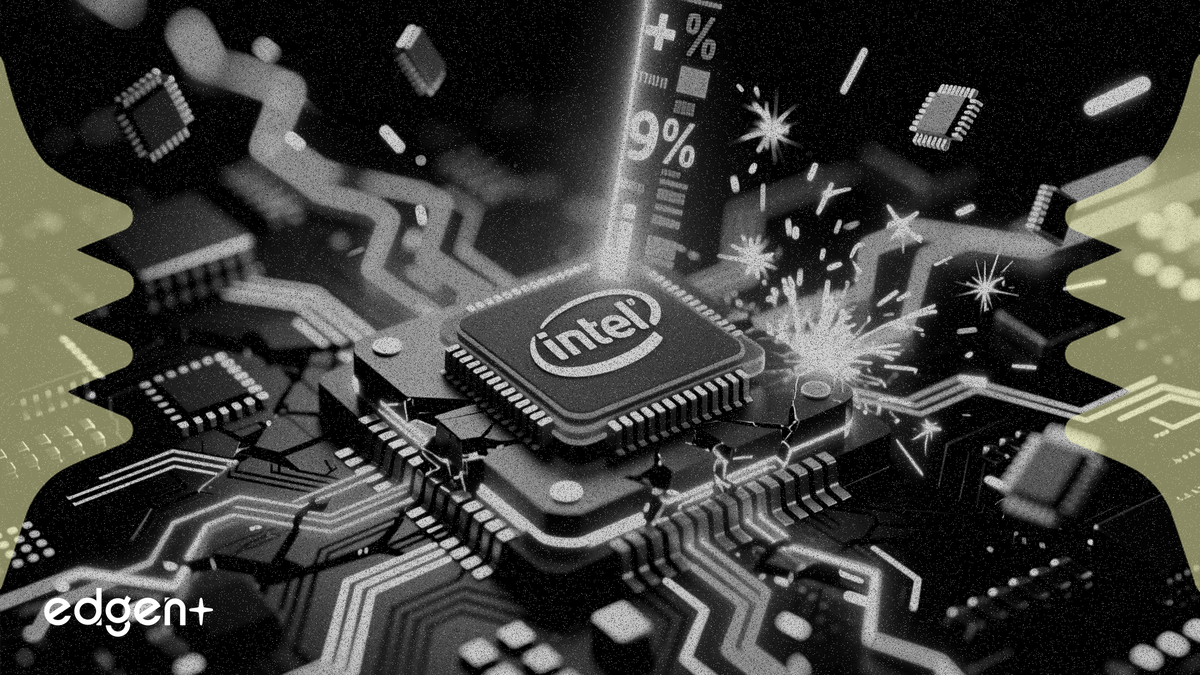
Google placed an order with Intel for more than 3 million custom TPU (tensor processing unit) chips, a deal that validates Intel's foundry and AI chip ambitions and positions it as a direct challenger to Nvidia's dominance in the $120 billion AI accelerator market.
Intel's pre-market stock surged more than 9% following the news, adding roughly $8 billion to its market value before the opening bell. The shares traded near $114 in pre-market activity, extending a rally that has seen Intel climb from about $40 in late March to a peak near $133 after its Q1 2026 earnings drove a 15% single-day jump.
The order covers Google's next-generation TPU design, a custom chip purpose-built for training and inference workloads inside Google's cloud infrastructure. Intel will manufacture the chips using its advanced process technology, marking one of the largest external wins for Intel's foundry business since it began offering manufacturing services to outside customers. Google, which has historically designed its TPUs in-house and relied on TSMC for production, is diversifying its supply chain by adding Intel as a second source.
The deal reshapes the competitive dynamics of the AI chip market. Nvidia currently commands roughly 80% of the AI accelerator market, with its H100 and B200 GPUs powering most large-scale AI deployments across Amazon, Microsoft, and Google. Google's TPU has long been its in-house alternative, but outsourcing production to Intel signals that the chipmaker's manufacturing capabilities have reached a level where hyperscalers trust it with high-volume, high-performance designs.
Intel's foundry business has been a central pillar of CEO Pat Gelsinger's turnaround strategy. The company has invested tens of billions of dollars in new fabrication facilities in Ohio, Arizona, and Ireland, aiming to reclaim process leadership from TSMC and Samsung. Winning a Google TPU order — a chip that will run in production data centers serving billions of users — provides the strongest external validation of Intel's manufacturing roadmap since the foundry push began.
For Nvidia, the deal introduces a new competitive vector. While Nvidia's GPUs remain the default choice for AI training, Google's ability to design and scale its own TPUs through Intel's fabs means the largest cloud providers now have a credible alternative to Nvidia silicon. Amazon has its Trainium and Inferentia chips, Microsoft is developing its own AI accelerators, and Google is deepening its Intel relationship — all trends that could erode Nvidia's pricing power over time.
Intel shares, trading at roughly 22 times forward earnings, have more than doubled since late March. The Google order provides fundamental support for that rally, though the company still faces execution risks in ramping production to meet the multi-million unit commitment. Nvidia shares, which trade at about 35 times forward earnings, fell modestly in pre-market trading as investors weighed the long-term competitive implications.
This article is for informational purposes only and does not constitute investment advice.
