

Enphase Energy wants investors to stop thinking of it as a solar company — and its new AI data center power technology is the reason.
Enphase Energy wants investors to stop thinking of it as a solar company — and its new AI data center power technology is the reason.
Enphase Energy wants investors to stop thinking of it as a solar company — and its new AI data center power technology is the reason.
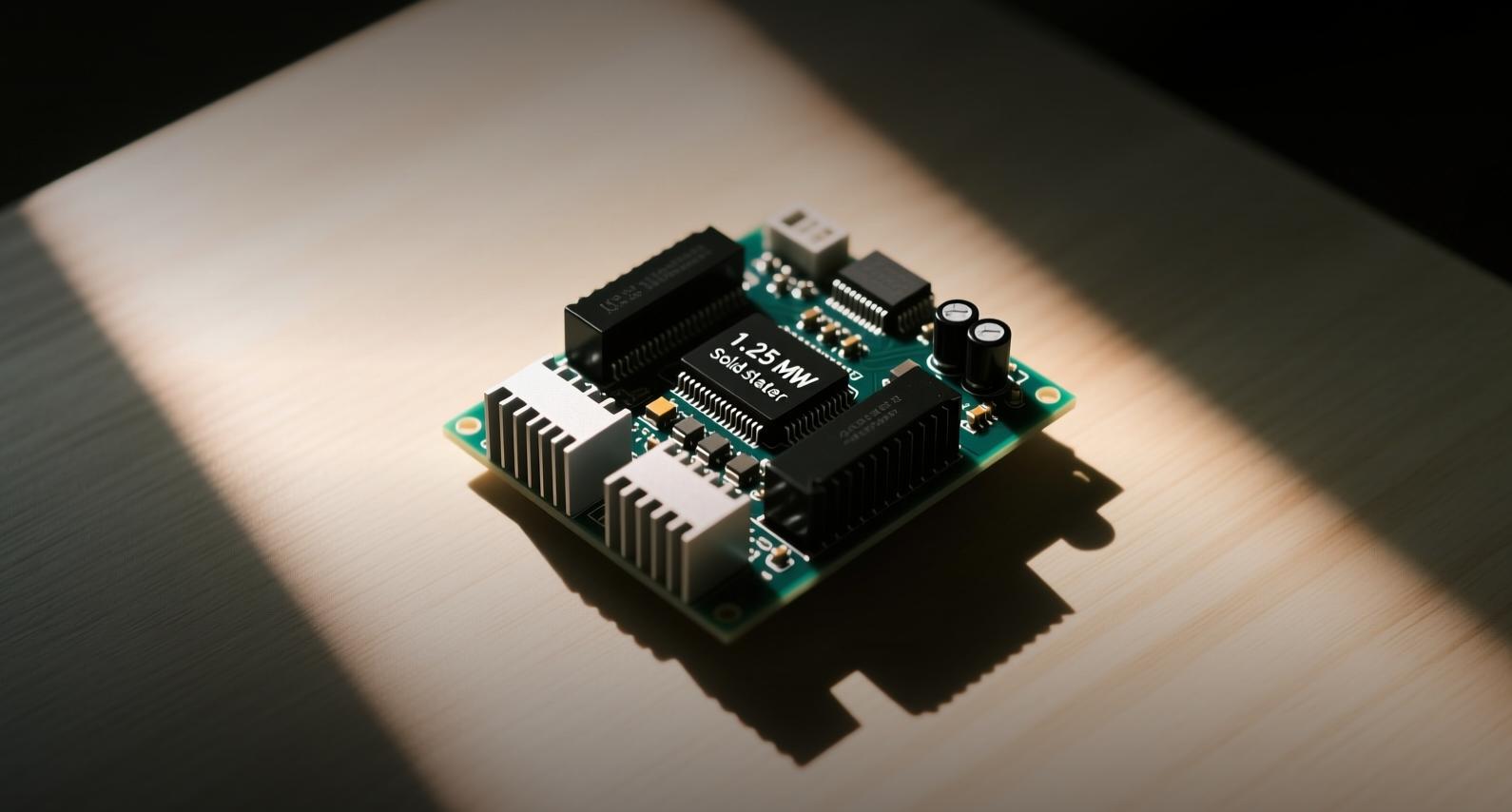
Enphase Energy is betting its future on a technology most investors have never heard of — a solid-state transformer that converts medium-voltage AC to 800-volt DC in a single step, targeting the power-hungry racks inside AI data centers.
"AI is driving rack power from roughly 150 kilowatts to more than 1 megawatt," Badri Kothandaraman, Enphase's president and chief executive officer, said on an investor call. "We believe this architecture is the right way to power the next generation of AI infrastructure."
The IQ Solid-State Transformer delivers 1.25 megawatts through 342 power modules at 98.5 percent efficiency, converting medium-voltage AC directly to low-voltage DC without the multiple conversion stages used in conventional data center power systems. Enphase has engaged with more than 20 prospective customers, with a demonstration planned for this year, pilots in 2027 and commercial production by 2028.
The pivot comes as Enphase's core U.S. residential solar business contracts after the expiration of federal tax credits. Revenue is expected to fall about 18 percent to $1.2 billion this year, though the company is still projected to turn a $47 million profit. Enphase shares have dropped roughly 85 percent from their pre-Trump administration peak, giving the company a market capitalization of about $4 billion — a valuation Kothandaraman argues fails to account for the AI opportunity.
The company's move into data center power infrastructure places it in direct competition with established players such as Siemens and ABB, as well as newer entrants like Fluence Energy, which in June partnered with Nvidia to provide battery storage for AI factories. But Enphase's approach differs: rather than storing power, its solid-state transformer manages the conversion and distribution of electricity at the rack level, addressing a bottleneck that hyperscalers face as they scale from 150-kilowatt racks to 1-megawatt-plus configurations.
The timing is strategic. Hyperscale data center operators including Amazon, Microsoft and Google are grappling with multiyear delays in utility interconnections and severe voltage fluctuations from high-density AI computing loads. Nvidia's September white paper on 800-volt DC architectures for its Vera Rubin NVL72 platform validated the technical direction Enphase is pursuing, Kothandaraman said.
Enphase's financial position gives it room to execute the transition. The company held nearly $1 billion in cash at the end of 2025 against $1.48 billion in revenue, with a debt-to-equity ratio of 1.1 times. Free cash flow for the fiscal year was $95.9 million, though stock-based compensation represented 157 percent of operating cash flow — a figure that raises questions about the sustainability of reported cash generation.
Europe is providing a buffer during the U.S. solar downturn. First-quarter revenue in the region rose 36 percent, driven by battery demand in the Netherlands, France and Germany as policy shifts toward self-consumption gain traction. Kothandaraman said April showed "green shoots," with solar and battery activations up "healthy double digits" across multiple European markets compared with first-quarter monthly averages.
The biggest risk is execution. Enphase plans to cut battery prices by about 10 percent as competition from low-cost providers intensifies, and the company faces multiple securities fraud class actions filed in 2026 related to inventory management and disclosure practices. The solid-state transformer market is also unproven at scale — no major data center operator has deployed the technology commercially.
For investors, the question is whether Enphase can execute a transition that would fundamentally change its addressable market. At 23.5 times forward earnings and 4.7 times sales, the stock trades at a discount to the broader tech sector but at a premium to solar peers. If the IQ Solid-State Transformer gains traction, the AI infrastructure opportunity could dwarf Enphase's residential solar business. If it does not, the company faces a shrinking core market and a stock that has already lost most of its value.
This article is for informational purposes only and does not constitute investment advice.
