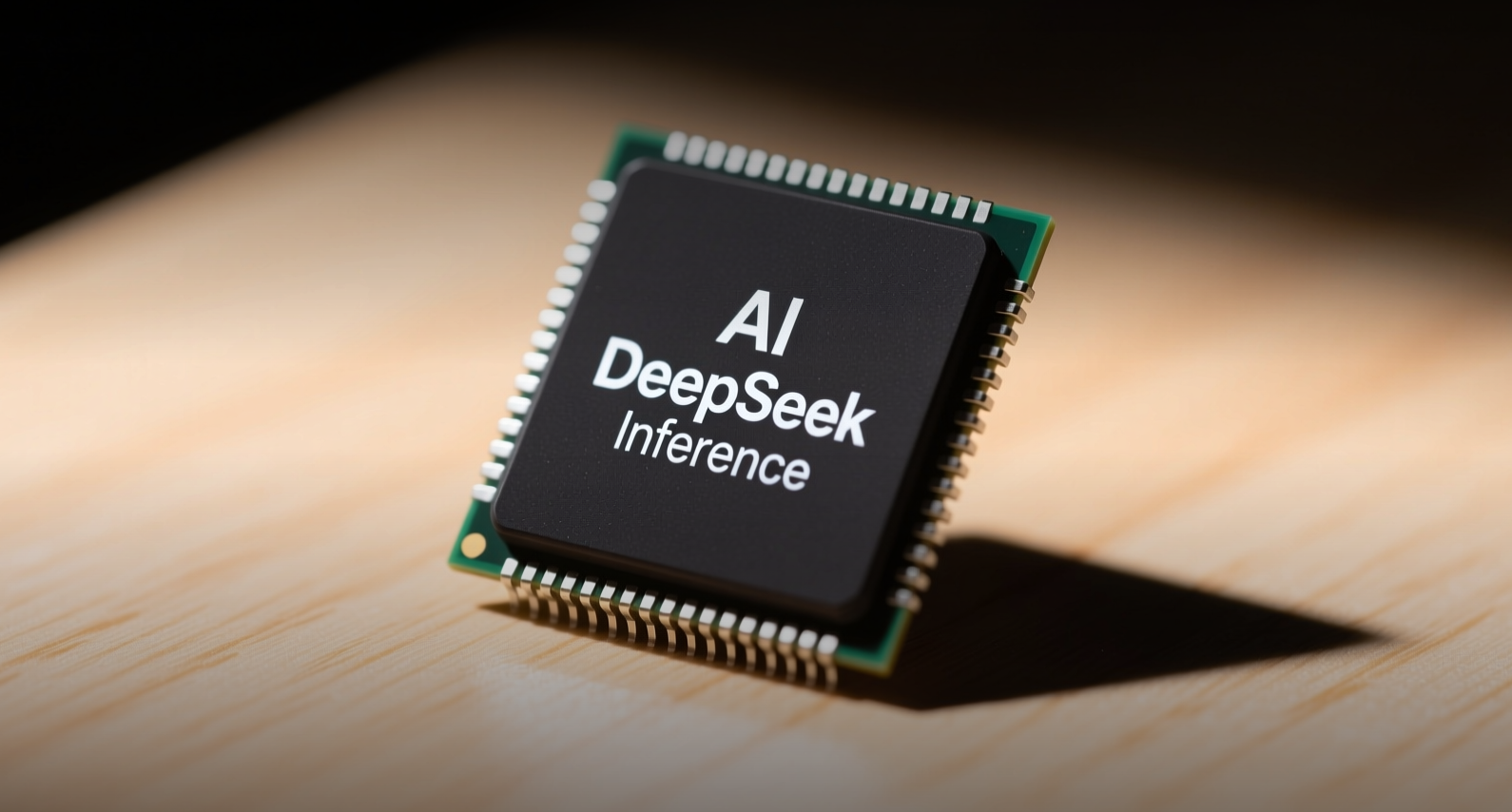
Chinese AI startup DeepSeek is designing its own inference chip, a strategic shift that could reshape the $50 billion domestic semiconductor market and reduce dependence on Nvidia and Huawei.
DeepSeek's push to develop its own AI inference chip threatens to upend the $50 billion Chinese semiconductor market, where Nvidia still holds 62% share despite US export restrictions, according to three people familiar with the matter.
"The effort began about a year ago and includes discussions with chip-design, foundry and memory companies," one of the people said, speaking on condition of anonymity because the information is not public.
The chip is designed specifically for inference — the stage where trained models generate responses for users — rather than training new models. DeepSeek has increased hiring of chip-design engineers in recent months, recruiting privately without public job postings, two of the sources said. The company joins a global trend: OpenAI last month unveiled Jalapeno, its first custom inference chip developed with Broadcom, while Anthropic has been weighing building its own AI chips.
The move carries added strategic weight given US export controls barring Chinese companies from buying Nvidia's most advanced chips. DeepSeek founder Liang Wenfeng said in a rare 2024 interview that chip export restrictions were a challenge for the company. DeepSeek, which is raising $7 billion in its first external funding round at a $52 billion to $59 billion valuation, has already shifted much of its workload to Huawei's Ascend processors after Washington banned the Nvidia H800 chips used to train its R1 reasoning model.
Huawei's Dominance Under Pressure
Huawei has captured roughly half of China's $50 billion domestic AI chip market, benefiting from US bans on Nvidia's most advanced exports. But its hold is weakening as Alibaba and Baidu develop their own chips and gain share. Alibaba's T-head semiconductor unit has shipped "several hundred thousand" Zhenwu PPU chips, powering multiple 10,000-chip clusters within Alibaba Cloud serving more than 400 clients, according to people close to the company.
At least nine Chinese chip companies have surpassed 10,000 units in cumulative shipments, according to industry data, signaling that domestic alternatives are gaining market traction. In the first half of 2025, Chinese chips captured about 35% of the $16 billion China AI server market, IDC data shows, up from negligible share two years ago.
Inference Demand Drives the Shift
The focus on inference reflects the fastest-growing segment of AI computing demand. As AI applications spread, more computing work shifts from training models to running them, which relies on specialized chips that can be cheaper and less power-hungry than general-purpose GPUs. DeepSeek's V4 model, released in April, was adapted for Huawei's Ascend chips, and orders for Huawei's Ascend 950 processors surged after the launch.
Success is far from guaranteed. Designing a competitive AI chip typically takes years and significant capital. Manufacturing poses another hurdle: US rules bar Chinese designers from accessing the most advanced overseas foundries, while separate curbs have cut China's access to high-bandwidth memory, a component critical to AI inference chips. Singaporean authorities last week seized a $42.4 million bungalow and charged four people with money laundering linked to alleged movement of Nvidia chips subject to US export controls, showing the enforcement pressure on the supply chain.
For investors, the implications are clear. Nvidia shares trade at roughly 35 times forward earnings, with China representing an estimated $10 billion to $12 billion in annual data center revenue. If DeepSeek and its Chinese peers succeed in replacing Nvidia and Huawei chips with their own designs, that revenue stream faces structural erosion. Huawei, meanwhile, could see its 50% domestic market share squeezed from both sides — by homegrown chips from customers like DeepSeek and by rivals like Alibaba and Baidu building their own alternatives.
This article is for informational purposes only and does not constitute investment advice.