
China's artificial intelligence industry surpassed 1 trillion yuan in 2025 and is on track to grow by more than 30% this year, the country's top economic planning agency said, as Beijing doubles down on AI as a core economic driver.
China's artificial intelligence industry surpassed 1 trillion yuan in 2025 and is on track to grow by more than 30% this year, the country's top economic planning agency said, as Beijing doubles down on AI as a core economic driver.
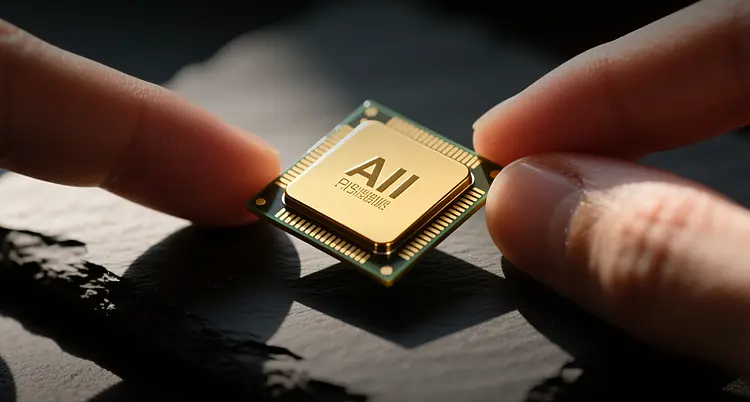
China's AI-related industry exceeded 1 trillion yuan ($137.5 billion) in 2025 and is forecast to grow more than 30% in 2026, the National Development and Reform Commission said, as Beijing pushes AI as a core driver of economic growth.
"Last year, China's AI-related industry scale exceeded 1 trillion yuan, and preliminary forecasts suggest it will maintain a growth rate of more than 30% this year," Wang Ruomeng, deputy director of the NDRC's Innovation and High-Tech Development Department, said at a press conference in Shanghai on July 7.
Wang made the remarks ahead of the 2026 World AI Conference and High-Level Meeting on AI Global Governance, scheduled for July 17-20 in Shanghai. A number of Chinese AI companies have gone public in recent months, reaching record-high market capitalizations, Wang said, without naming specific firms. He described the trend as evidence of the "AI+" strategy's strong pull on the broader economy.
The growth forecast means China's AI sector is expanding at a pace that far outpaces the country's overall economic growth — GDP expanded 5% in 2025 — and is drawing strong capital market interest. With the World AI Conference expected to draw global attention to Chinese AI capabilities, the NDRC's projection could further fuel investor appetite for domestic AI stocks, including Baidu Inc., SenseTime Group and iFlytek Co., many of which have seen their valuations climb sharply this year.
AI Companies Flock to Public Markets
The NDRC's comments come as a wave of Chinese AI companies pursue public listings, capitalizing on strong investor demand for exposure to the sector. Several firms have achieved record-high market capitalizations after their debuts, Wang said, reflecting the strong pull of AI on the economy. The trend mirrors global patterns: Foxconn, the world's largest electronics manufacturer, said on July 4 it expects capital expenditure to grow more than 30% in 2026, driven by sustained demand for AI and cloud infrastructure. The Taiwan-based company, which assembles AI servers for major US tech firms, said AI servers accounted for more than half of its total server revenue in the first quarter.
Global Rivalry Intensifies
China's AI push is unfolding against a backdrop of intensifying competition with the US in advanced technology. Chinese companies have been shifting away from Nvidia Corp.'s chips toward domestic alternatives, according to a Bloomberg survey published July 7, as US export controls limit access to the most advanced semiconductors. Applied Materials Inc., a key supplier to the global chip industry, has seen its shares surge 236.7% over the past year as AI-driven demand reshapes wafer fabrication equipment spending, according to a Zacks Investment Research report. The company delivered record revenue in its fiscal second quarter and the highest gross margin in more than two decades.
For investors, the NDRC's forecast provides a top-down confirmation of the AI theme in China. Baidu trades at roughly 15 times forward earnings, while SenseTime — which has yet to turn a profit — commands a market cap above $10 billion based on expectations of future AI revenue. The World AI Conference, starting July 17, could drive further re-rating if major product announcements or policy support measures emerge.
This article is for informational purposes only and does not constitute investment advice.
