

Ayar Labs is bringing co-packaged optics to Nvidia's AI networking ecosystem, giving hyperscalers a new path to scale GPU clusters beyond the limits of traditional copper interconnects.
Ayar Labs is bringing co-packaged optics to Nvidia's AI networking ecosystem, giving hyperscalers a new path to scale GPU clusters beyond the limits of traditional copper interconnects.
Ayar Labs is bringing co-packaged optics to Nvidia's AI networking ecosystem, giving hyperscalers a new path to scale GPU clusters beyond the limits of traditional copper interconnects.
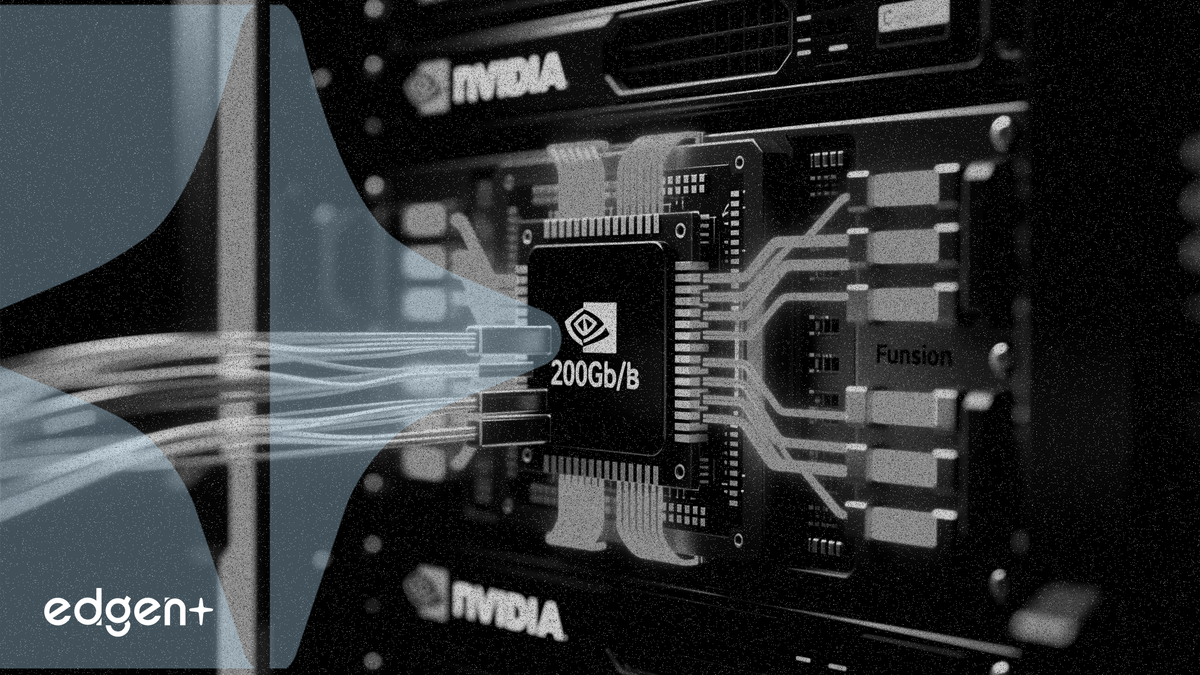
The optical interconnect specialist has joined Nvidia's NVLink Fusion ecosystem, making its co-packaged optics products optically and electrically compatible with Nvidia's optical and SerDes technologies, the companies said Tuesday. The partnership allows hyperscalers and system builders to design optically-connected AI infrastructure around Nvidia's NVLink Fusion platform, which links multiple GPUs as a single logical device.
"Co-packaged optics are essential for scaling AI factories beyond the limits of electrical I/O," said Mark Wade, chief executive officer of Ayar Labs, in a statement. "By joining the NVLink Fusion ecosystem, we can deliver optical connectivity that is natively compatible with Nvidia's architecture, reducing power and latency at rack scale."
The announcement comes as Nvidia ramps its Vera Rubin platform into full production, with Spectrum-X Ethernet Photonics — the world's first CPO-based switches with 200Gb/s SerDes — now in manufacturing. Nvidia claims the CPO switching technology delivers 5x better power efficiency and 5x longer AI uptime compared with networks using traditional transceivers, while simplifying design and freeing more power for compute. CoreWeave, Lambda and Oracle Cloud Infrastructure are among the first adopters.
The optical networking push addresses a growing bottleneck in AI infrastructure. As GPU clusters scale to hundreds of thousands of units, electrical interconnects consume an increasing share of power budgets and limit physical rack spacing. Co-packaged optics integrate optical transceivers directly into switch silicon, eliminating the power-hungry electrical-to-optical conversion stages that dominate traditional pluggable optics. For hyperscalers building million-GPU AI factories, the technology could meaningfully reduce both capital expenditure and per-token inference costs.
Ayar Labs' CPO technology targets the scale-up fabric — the high-bandwidth connections between GPUs within a rack — where Nvidia's NVLink protocol currently dominates. By making its optical engines compatible with Nvidia's SerDes specifications, Ayar Labs enables system builders to replace copper NVLink cables with optical links without redesigning the GPU baseboard. The approach competes indirectly with pluggable optical modules from suppliers such as Coherent Corp. and Lumentum Holdings, which serve the scale-out network layer connecting racks.
Nvidia's Vera Rubin platform, which enters production shipments this fall, integrates six new chips including the Rubin GPU with 336 billion transistors and the Vera CPU with 227 billion transistors. The platform delivers 10x agent throughput versus the prior-generation Grace Blackwell, according to Nvidia. The Vera Rubin NVL72 rack offers 3.6 EFLOPS of NVFP4 inference performance and 2.5x the LPDDR5x memory capacity of Blackwell at 54 terabytes.
For Ayar Labs, the NVLink Fusion ecosystem membership provides a distribution channel into the world's largest AI hardware platform. The startup, which has raised more than $370 million from investors including Boardman Bay Capital Management and GlobalFoundries, has been developing its optical I/O technology for nearly a decade. The Nvidia compatibility validation could accelerate its path to production volumes in a market where optical interconnect spending is projected to exceed $10 billion annually by 2028, according to LightCounting estimates.
Nvidia shares, which have gained more than 140% over the past 12 months, trade at approximately 35 times forward earnings. The company's data center revenue reached $35.6 billion in its most recent fiscal quarter, driven by demand for AI training and inference infrastructure.
This article is for informational purposes only and does not constitute investment advice.
