

Semiconductor equipment suppliers are capturing a growing share of industry value, with ASML gaining 28% in the past month while chipmakers struggle to convert AI demand into higher margins.
Semiconductor equipment suppliers are capturing a growing share of industry value, with ASML gaining 28% in the past month while chipmakers struggle to convert AI demand into higher margins.
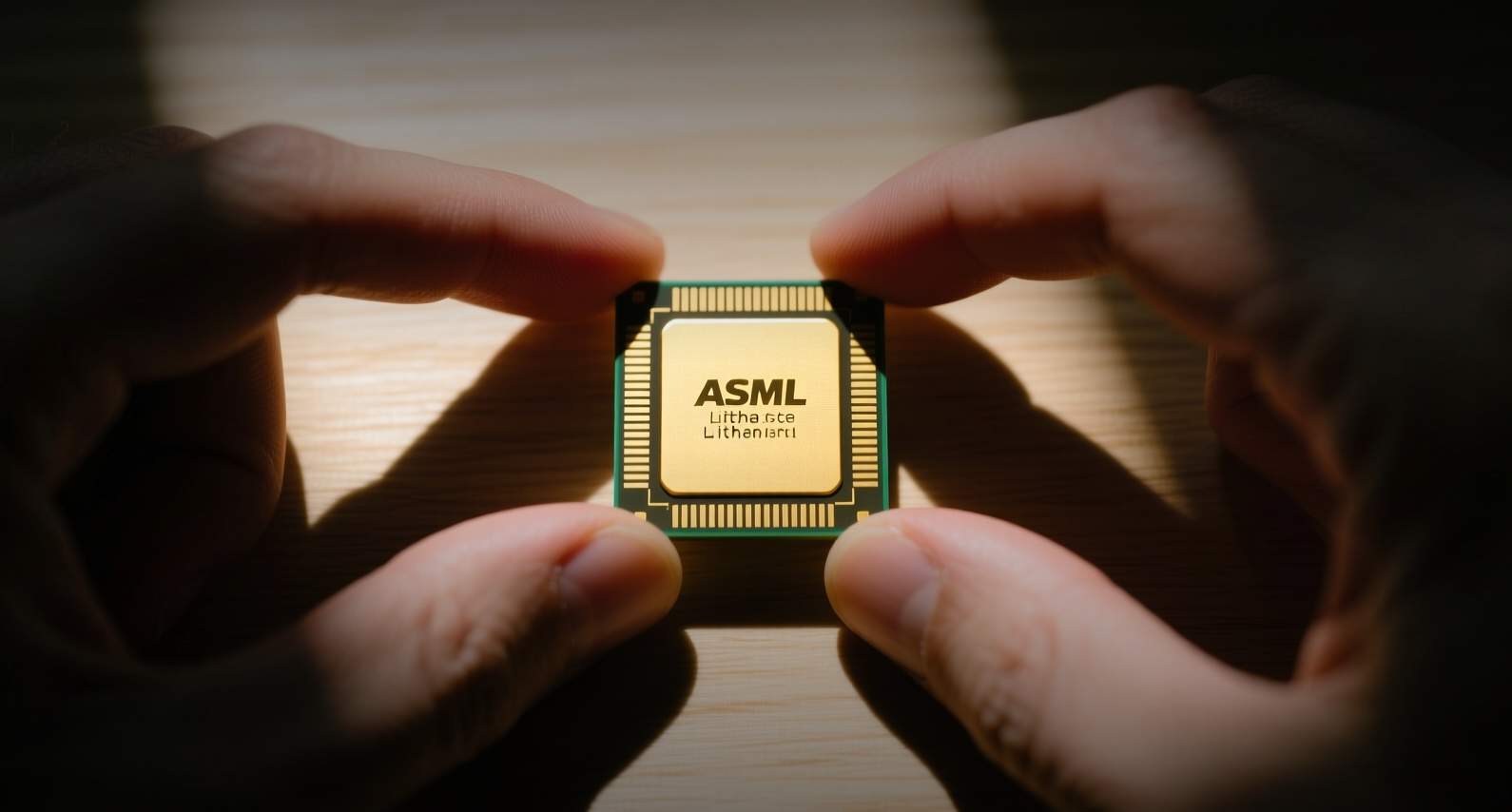
The balance of power in semiconductors is shifting. Equipment suppliers including ASML, Applied Materials and Lam Research are outperforming the chipmakers they supply, as pricing power concentrates in the tools that make advanced chips possible.
"Capital equipment providers hold structural pricing power because there is no alternative to their machines for leading-edge production," said a senior technology analyst at a New York-based investment firm. "Chipmakers compete with each other; equipment suppliers are monopolists or duopolists in their niches."
ASML shares closed at $1,803.89 on Tuesday, up 28.54% over the past month, according to Zacks data. The company is scheduled to report earnings on July 15, with analysts projecting earnings of $8.01 per share, up 76% from a year earlier, on revenue of $10.28 billion, a 17.8% increase. The stock trades at 51.5 times forward earnings, a premium to the industry average of 45.9 times. Aehr Test Systems, a smaller equipment maker, surged as much as 17.8% on Wednesday after announcing a repeat order for its wafer burn-in systems from an unnamed customer.
The divergence matters for portfolio allocation. ASML's forward P/E of 51.5 times already prices in continued dominance, while chipmakers like Intel and Samsung trade at significant discounts, reflecting margin pressure from rising equipment costs and competitive pricing. If the trend persists, investors may need to reassess which part of the semiconductor supply chain deserves a premium.
The structural shift reflects a simple dynamic: equipment suppliers benefit from every new fab built, regardless of which chipmaker operates it. TSMC, Intel and Samsung are all expanding capacity simultaneously — a rare synchronized buildout driven by AI demand and geopolitical pressure to diversify manufacturing. Each new fab requires billions of dollars in lithography, deposition and etching tools, creating a revenue stream for equipment suppliers that is largely independent of end-market chip prices.
ASML's Monopoly Premium Widens
ASML holds a near-monopoly on extreme ultraviolet lithography machines, the essential tool for manufacturing chips at 5nm and below. The Dutch company's position has strengthened as TSMC, Intel and Samsung all race to build 2nm capacity. Consensus estimates project ASML's annual revenue reaching $45.35 billion in the current fiscal year, up 22.7% from last year, with earnings per share of $36.76, a 31.5% increase. The company's PEG ratio of 1.52, slightly above the industry's 1.43, suggests investors are willing to pay a modest premium for its growth trajectory.
Chipmakers Face a Margin Squeeze
While equipment suppliers enjoy pricing power, chipmakers face the opposite dynamic. The cost of building a leading-edge fab has surpassed $20 billion, with ASML's high-NA EUV machines alone costing more than $350 million each. These costs compress margins even as AI demand drives revenue growth. TSMC's gross margins, while still industry-leading, face pressure from rising depreciation charges. Intel's foundry business has yet to reach profitability after years of heavy capital spending.
For investors, the question is whether the equipment premium has room to run. ASML trades at 51.5 times forward earnings, already reflecting high expectations. The Zacks consensus EPS estimate has edged 0.93% lower over the past 30 days, and the stock carries a Zacks Rank #3 (Hold), suggesting limited near-term upside. Applied Materials and Lam Research face similar valuation questions. A rotation back toward chipmakers could occur if equipment orders slow or if chipmakers demonstrate that their AI investments are translating into margin expansion. For now, the data supports the equipment thesis — but the premium leaves little room for error.
This article is for informational purposes only and does not constitute investment advice.
