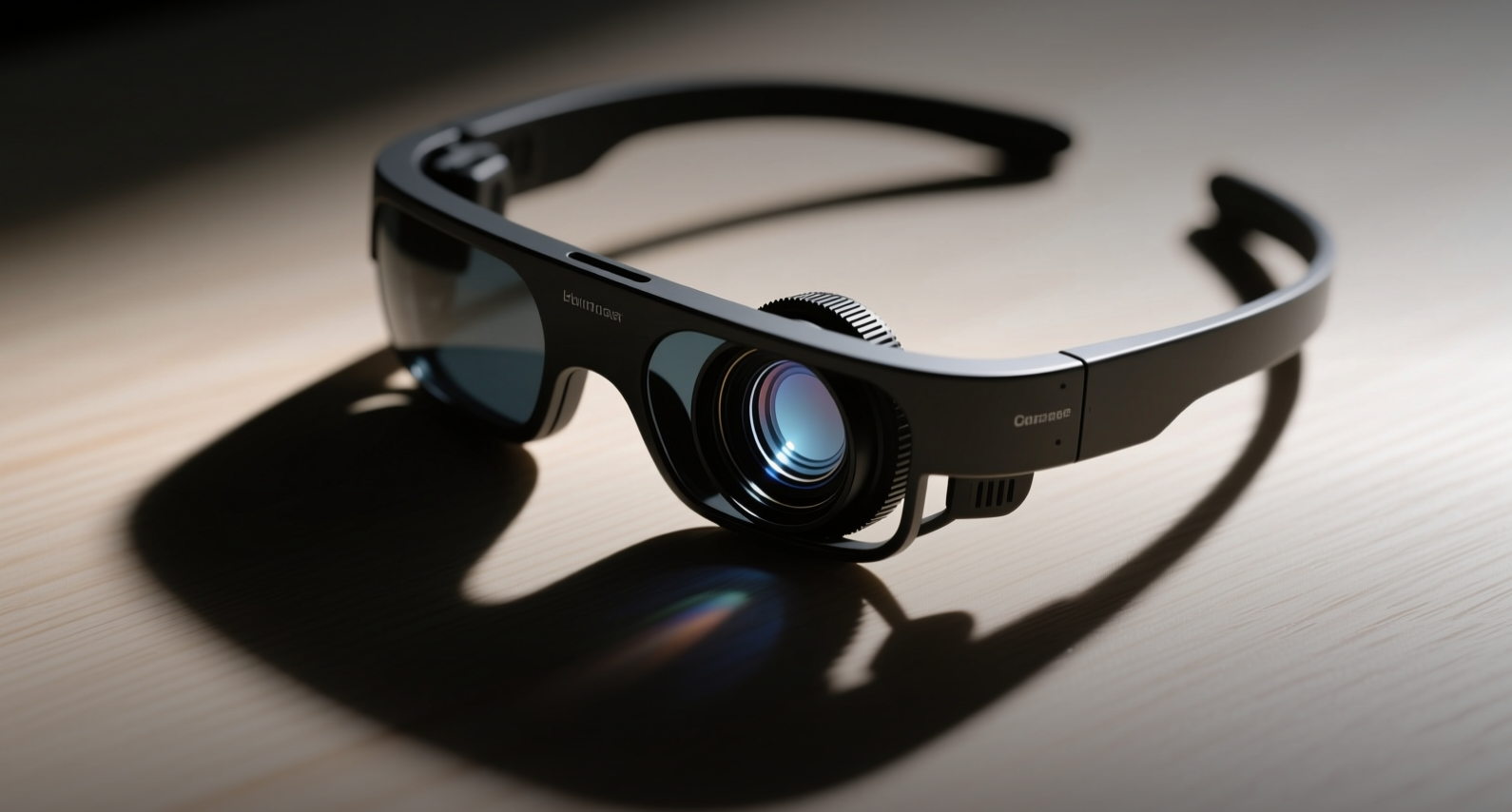
Applied Materials Inc. jumped 8% on Wednesday after unveiling SENZ, an integrated visual system for augmented reality glasses that positions the semiconductor equipment giant as a key infrastructure supplier in the emerging smart eyewear market.
"This is a full-stack optical platform, not a component play," said Rachel Kim, semiconductor supply chain analyst at Edgen. "Applied Materials is packaging waveguide optics, light engines and sensing into a single co-optimized system — exactly what AR hardware makers need to reduce BOM complexity."
SENZ combines waveguide optics, a light engine, sensing technology, vision correction and electronic dimming into what the company calls an "integrated ambient visual platform" for AI-enabled smart eyewear. The system targets manufacturers building AR glasses, a category that remains nascent but is attracting heavy investment from Meta Platforms Inc., Snap Inc. and Alphabet Inc.'s Google.
The stock surge added roughly $14 billion to Applied Materials' market capitalization, reflecting investor optimism that the company can open a new revenue stream beyond its core semiconductor equipment business. AMAT shares closed at their highest level in three months, according to market data.
Why SENZ Matters Now
The launch comes as the AR glasses market reaches an inflection point. Snap this week began taking preorders for its Specs AR glasses at $2,195 — a consumer version of its developer-focused headset — while Meta has sold more than 7 million units of its Ray-Ban smart glasses at roughly $350. Apple's Vision Pro, priced at $3,500, has struggled to find a mass audience.
Applied Materials' move targets the supply chain bottleneck that has kept AR glasses expensive and bulky. By integrating multiple optical components into a single system, SENZ could lower the bill of materials for manufacturers — a critical factor if AR glasses are to reach price points that drive mass adoption.
The company did not disclose pricing for SENZ or name initial customers. Production timelines and volume commitments were not yet announced.
Competitive Landscape
Applied Materials enters a market where the optical subsystem suppliers are fragmented. Waveguide technology — the method of projecting images through transparent lenses — has been developed by startups like Lumus and Dispelix, while light engines have come from companies such as Omnivision and Himax Technologies.
By offering a co-optimized system, Applied Materials could capture higher value per device than selling individual components. The company's existing relationships with every major chipmaker — it supplies deposition and etching equipment to TSMC, Samsung and Intel — give it manufacturing scale that pure-play optics startups lack.
For AR glasses makers, the question is whether an integrated system from a semiconductor equipment supplier can match the performance of specialized optics vendors. Applied Materials said SENZ uses "billions of invisibly small nanostructures" in its waveguide design, a technology similar to what Boeing uses in 787 Dreamliner windows.
Investor Implications
Applied Materials trades at roughly 22 times forward earnings, in line with its five-year average. The SENZ launch provides a narrative for multiple expansion if the company can convert its semiconductor manufacturing expertise into a meaningful AR revenue stream.
The addressable market remains speculative. IDC estimates AR glasses shipments could reach 50 million units annually by 2030, up from roughly 2 million in 2025. At an assumed optical subsystem value of $100-$200 per device, the total opportunity could range from $5 billion to $10 billion — modest relative to Applied Materials' $27 billion in annual revenue but high-margin if the company captures significant share.
Snap's Spiegel said this week that consumers are "ready to think about computing differently" after nearly 20 years of the iPhone. Whether that translates into demand for $2,000-plus AR glasses — and the components inside them — will determine whether SENZ becomes a growth driver or a niche product line.
This article is for informational purposes only and does not constitute investment advice.