

Key Takeaways:
- Apple is testing CXMT's DRAM chips for devices sold in China
- CXMT held about 11% of global DRAM wafer capacity last year, targeting 15% by 2028
- The Chinese chipmaker is preparing an IPO that could value it at up to 3 trillion yuan
Key Takeaways:
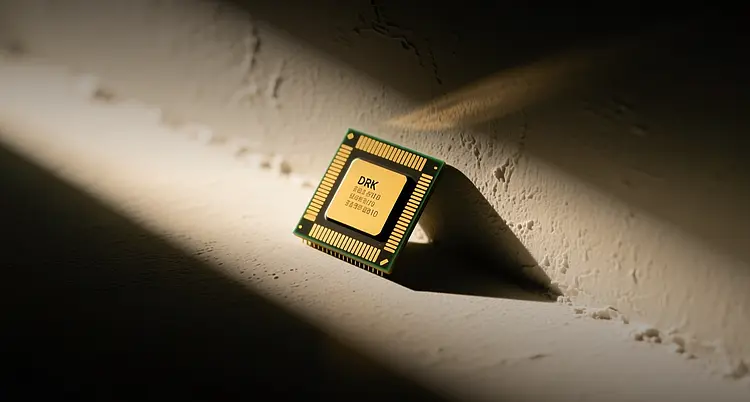
Apple is testing DRAM chips from China's state-backed ChangXin Memory Technologies for devices sold in the Chinese market, a move that could reshape the $80 billion global memory industry.
Apple Inc. is testing DRAM chips from China's ChangXin Memory Technologies for devices sold in the Chinese market, the Financial Times reported, as the state-backed chipmaker's rapid ascent threatens to upend the global memory hierarchy.
"Apple has not committed to using the chips in commercial products but is evaluating CXMT's DRAM technology," a person familiar with the matter told the Financial Times.
CXMT has grown from a government-backed startup into the world's fourth-largest DRAM manufacturer, trailing only Samsung Electronics, SK Hynix and Micron Technology. The company represented about 11% of global DRAM wafer production capacity last year, a figure expected to reach roughly 15% by 2028 as it expands facilities in Hefei, Shanghai and Beijing.
The evaluation comes as Apple also seeks US government approval to use chips from CXMT and Yangtze Memory Technologies Co. in China-only products, according to Bloomberg. CXMT is preparing a domestic IPO that analysts say could value the company at up to 3 trillion yuan ($412 billion), with proceeds earmarked for next-generation DRAM and high-bandwidth memory development critical for AI accelerators.
CXMT's Rise Reshapes the DRAM Market
The Chinese chipmaker's expansion mirrors the rapid capacity buildout seen in China's electric vehicle and solar panel industries, raising concerns among analysts that oversupply could pressure global memory prices. CXMT's additional production lines in Hefei, Shanghai and Beijing are expected to add meaningful wafer capacity over the next two years, intensifying competition for the three incumbent DRAM suppliers that have controlled roughly 95% of the market for the past decade.
Industry analysts have warned that China's continued investment in domestic semiconductor manufacturing could mirror the rapid expansion previously seen in sectors such as electric vehicles and solar panels. If production continues to accelerate, the growing supply of DRAM chips could place downward pressure on global memory prices and intensify competition for established chipmakers.
Apple's Supply Chain Calculus
Apple's interest in CXMT and YMTC comes amid a severe memory supply crunch that forced the company to raise prices on MacBooks, iMacs, iPads, Mac mini, Mac Studio, Apple TV and HomePods by as much as $1,000 on some Mac models, according to earlier reports. Diversifying into Chinese suppliers could free up DRAM and NAND supply from Samsung and Micron for US-market devices while giving Apple access to potentially lower-cost memory for its China business.
Apple Chief Executive Officer Tim Cook has discussed the proposal with US government officials, according to Bloomberg. The company would use the Chinese memory chips exclusively in devices sold within China, a structure designed to address national security concerns while still diversifying its supply base.
However, both CXMT and YMTC are operating at full capacity and struggling to meet demand from local Chinese companies, raising questions about whether they can supply Apple at scale. The Chinese government may also restrict exports of scarce memory chips to foreign companies, according to people familiar with the matter.
Investment Implications
For investors, the story carries competing signals. CXMT's IPO — potentially the largest in China this decade — would give public markets exposure to a DRAM supplier that could capture meaningful share in the $80 billion market. Samsung and SK Hynix shares could face headwinds if CXMT's capacity expansion leads to price erosion in commodity DRAM, though both Korean manufacturers maintain a technological lead in high-bandwidth memory used for Nvidia's AI accelerators. Apple's ability to secure a third DRAM source would reduce its dependence on Samsung and Micron, potentially improving its bargaining power in future procurement negotiations.
This article is for informational purposes only and does not constitute investment advice.
