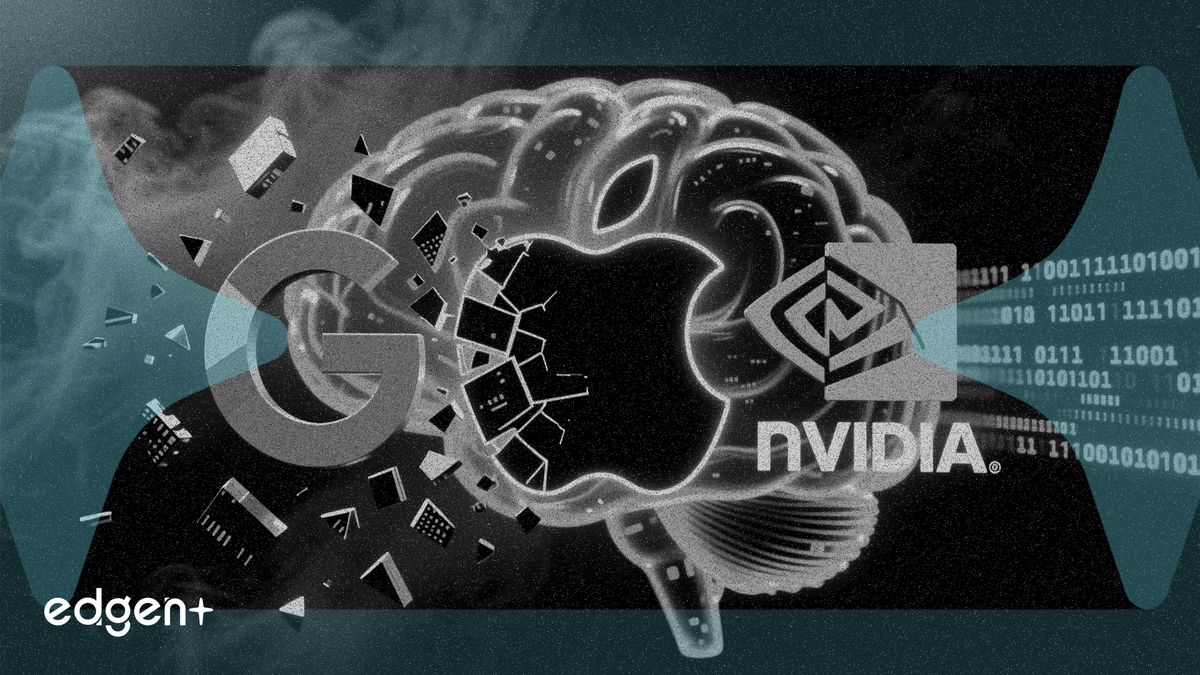
Apple's long-delayed Siri overhaul will finally arrive in September, powered by Google's Gemini model running on Nvidia's Blackwell B200 chips.
Apple's revamped Siri, launching in September, will run on Google's cloud infrastructure using Nvidia's Blackwell B200 chips, marking a rare reliance on external hardware for the iPhone maker. The overhauled voice assistant represents Apple's most significant AI push since Apple Intelligence was unveiled at WWDC 2024.
"The arrangement diverges from Apple's usual strategy of attempting to control all the critical ingredients to its products," The Information reported, citing people familiar with the matter. Apple had tried to run a modified version of Google's Gemini on its in-house Private Cloud Compute system, which uses Mac-series chips, but found the performance too slow.
Instead, Apple will tap Google's fleet of Nvidia Blackwell B200 data center chips, introduced in 2024 as the successor to the Hopper architecture. The Blackwell chips are designed specifically for large language model workloads and can dramatically accelerate AI training and inference compared with the previous generation. User data will be encrypted using Nvidia's hardware-based confidential compute feature, according to the report.
The partnership validates Google Cloud's enterprise AI infrastructure and reinforces Nvidia's dominance in AI data center chips, while signaling Apple's urgency to deliver a competitive AI assistant after two years of delays. Apple shares could benefit from a successful Siri revamp that strengthens iPhone ecosystem stickiness, while Amazon's Alexa and other AI assistants face renewed competitive pressure.
The new Siri, expected to debut alongside iOS 27 at WWDC 2026 beginning June 8, will function as an AI chatbot with its own standalone app, according to Bloomberg's Mark Gurman. Users will be able to activate Siri via wake word, power button, or a new interface built into the iPhone's Dynamic Island. A swipe down from the top of the screen will surface queries, and an additional swipe will open the chatbot interface. Apple has used a glowing neon artwork and a dove motif in its WWDC promotional materials, which Gurman said previews Siri's new look and potentially its app logo.
Beyond Siri, iOS 27 will bring AI photo editing tools, Google reverse image search from the Camera app, and a Siri mode in Camera that incorporates Visual Intelligence for tasks such as scanning nutritional labels into the Health app. Image Playground and Genmoji will receive significant image quality improvements, and users will be able to generate custom AI wallpapers and create app shortcuts using natural language prompts. Writing Tools will also gain enhanced capabilities for syntax feedback beyond basic spelling corrections.
The revamp comes after a rocky rollout for Apple Intelligence, which was unveiled at WWDC 2024 but has been overshadowed by lukewarm reception to initial features and repeated delays to the personalized Siri upgrade. Apple's decision to outsource cloud AI infrastructure to Google and Nvidia underscores the computational demands of modern large language models, which exceeded the capabilities of its in-house server chips based on the M-series architecture.
For investors, the Siri overhaul could drive iPhone upgrade cycles and deepen ecosystem lock-in, particularly as Apple prepares for its first foldable iPhone expected alongside the iPhone 18 lineup. Nvidia shares have already priced in continued data center growth, while Google Cloud's partnership with Apple provides a marquee customer win against Amazon Web Services and Microsoft Azure. Apple reports its next quarterly earnings in July, where executives may provide additional detail on the AI roadmap and any associated capital expenditure plans.
This article is for informational purposes only and does not constitute investment advice.