

Apple is preparing at least five new iPhone models across the next 12 months, a product blitz that tests whether the world's most valuable company can justify a trailing P/E of 36.
Apple is preparing at least five new iPhone models across the next 12 months, a product blitz that tests whether the world's most valuable company can justify a trailing P/E of 36.
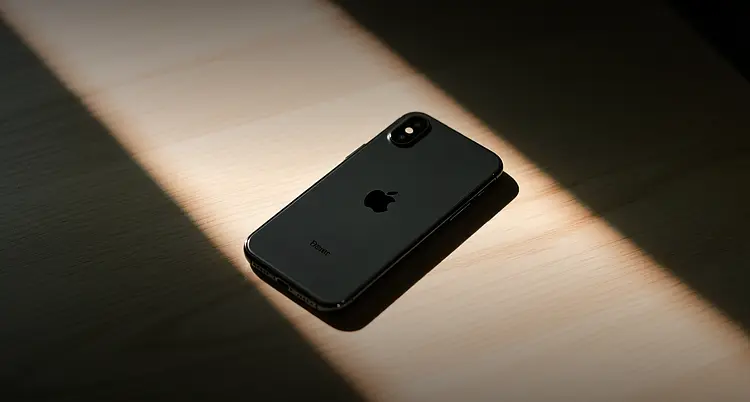
Apple is preparing at least five new iPhone models across the next 12 months, a product blitz that tests whether the world's most valuable company can justify a trailing P/E of 36.
Apple plans to launch at least five new iPhone models across the second half of 2026 and early 2027, according to Nikkei Asia, an expanded product cycle that puts pressure on a stock trading at 36 times trailing earnings.
"This is the most aggressive iPhone refresh in Apple's history in terms of model count within a 12-month window," the Nikkei report said, citing supply chain sources familiar with the company's production plans.
The lineup is expected to include the iPhone 18 and iPhone 18 Pro in September 2026, followed by the iPhone Air 2, iPhone 18e, and a second-generation foldable iPhone Ultra in early 2027, according to supply chain leaks corroborated by TechRepublic and 9to5Mac. Apple shares closed at $275.15 on July 1, down 10.9% over the past month but still up 1.2% year to date. The stock has a market capitalization above $4 trillion.
The expanded lineup could drive higher unit volumes and services attach rates, but the valuation leaves little room for error. Apple trades at 36 times trailing earnings and 54 times book value, compared with Microsoft at 21 times earnings. The company's July 30 earnings call will be the first opportunity for management to address how memory cost inflation — which triggered price hikes of 17% to 25% on Macs and iPads on June 25 — will affect gross margins across the broader product line.
The five-model strategy marks a departure from Apple's traditional once-a-year September launch. Under the new cadence, standard models arrive in the fall while premium and foldable devices follow in the spring, a split designed to sustain momentum across the calendar rather than concentrate attention into a single event.
The iPhone 18 and iPhone 18 Pro, expected in September, will feature Apple's A20 Pro chip built on TSMC's 2-nanometer process, according to supply chain reports. The iPhone Air 2, tipped for early 2027, is said to carry a 6.55-inch 1.5K 120Hz LTPO OLED display, while the entry-level iPhone 18e would retain a 6.12-inch 60Hz LTPS OLED screen, potentially leaving it without ProMotion support, per leaker Digital Chat Station.
Valuation vs. Volume
The product expansion comes at a moment of competing pressures. Apple's iPhone revenue reached $56.99 billion last quarter, with CEO Tim Cook citing "extraordinary demand for the iPhone 17 lineup." Yet the company faces a structural cost challenge: memory chip prices have more than quadrupled over the past year as AI data center demand consumes supply from Samsung, SK Hynix, and Micron. Apple raised Mac and iPad prices by $100 to $300 on June 25, its first broad pricing action in years, and shares fell 6.12% in a single session, erasing roughly $265 billion in market value.
Analyst targets reflect the tension. Wedbush's Dan Ives maintains an outperform rating and a $400 price target, arguing Apple's high-end consumer base and services ecosystem give it pricing power. The consensus target stands at $314.42, implying about 14% upside from current levels. But the stock's multiple — 36 times trailing earnings versus the S&P 500's 22 times — means any demand softness from higher prices could trigger multiple compression.
What's at Stake
The iPhone remains Apple's most important product, accounting for roughly half of total revenue. A successful five-model cycle could boost unit sales and drive services growth through higher install-base attachment. But the expanded lineup also risks fragmenting consumer attention and deepening the perceived gap between premium and entry-level tiers, particularly if features like high refresh rates remain uneven across the range.
For investors, the key question is whether volume growth can offset margin pressure from rising component costs. Apple's operating margins of 33.4% remain among the strongest in consumer hardware, but the memory cost headwind could shave 100 to 200 basis points off gross margins in the second half, according to Counterpoint Research estimates. The July 30 earnings call will provide the first official update on how management sees the trade-off playing out.
This article is for informational purposes only and does not constitute investment advice.
