Back

Key Stats
Trading Volume (24hr)
$1.3B
Circulating Supply
62.0B
Market Cap
$71.1B
Total Supply
99.9B
Holders
--
Max Supply
100.0B
FDV
$114.7B
Funding Rate
-0.000296%
Date of Creation
--
What is XRP (XRP)?
Ripple is the catchall name for the cryptocurrency platform, the transactional protocol for which is actually XRP, in the same fashion as Ethereum is the name for the platform that facilitates trades in Ether. Like other cryptocurrencies, Ripple is built atop the idea of a distributed ledger network which requires various parties to participate in validating transactions, rather than any singular centralized authority. That facilitates transactions all over the world, and transfer fees are far cheaper than the likes of bitcoin. Unlike other cryptocurrencies, XRP transfers are effectively immediate, requiring no typical confirmation time.
Ripple was originally founded by a single company, Ripple Labs, and continues to be backed by it, rather than the larger network of developers that continue bitcoin’s development. It also doesn’t have a fluctuating amount of its currency in existence. Where bitcoin has a continually growing pool with an eventual maximum, and Ethereum theoretically has no limit, Ripple was created with all of its 100 billion XRP tokens right out of the gate. That number is maintained with no mining and most of the tokens are owned and held by Ripple Labs itself — around 60 billion at the latest count.
Even at the recently reduced value of around half a dollar per XRP, that means Ripple Labs is currently sitting on around $20 billion worth of the cryptocurrency (note: Ripple’s price crashed hard recently, and may be worth far less than $60 billion by time you read this). It holds 55 billion XRP in an escrow account, which allows it to sell up to a billion per month if it so chooses in order to fund new projects and acquisitions. Selling such an amount would likely have a drastic effect on the cryptocurrency’s value, and isn’t something Ripple Labs plans to do anytime soon.
In actuality, Ripple Labs is looking to leverage the technology behind XRP to allow for faster banking transactions around the world. While Bitcoin and other cryptocurrencies are built on the idea of separating financial transactions from the financial organizations of traditional currencies, Ripple is almost the opposite in every sense.
XRP by Ripple price can be found on this page alongside the market capitalization and additional stats.
Core Team
Investors
Breaking News
Today Jun 13 2026
11:49
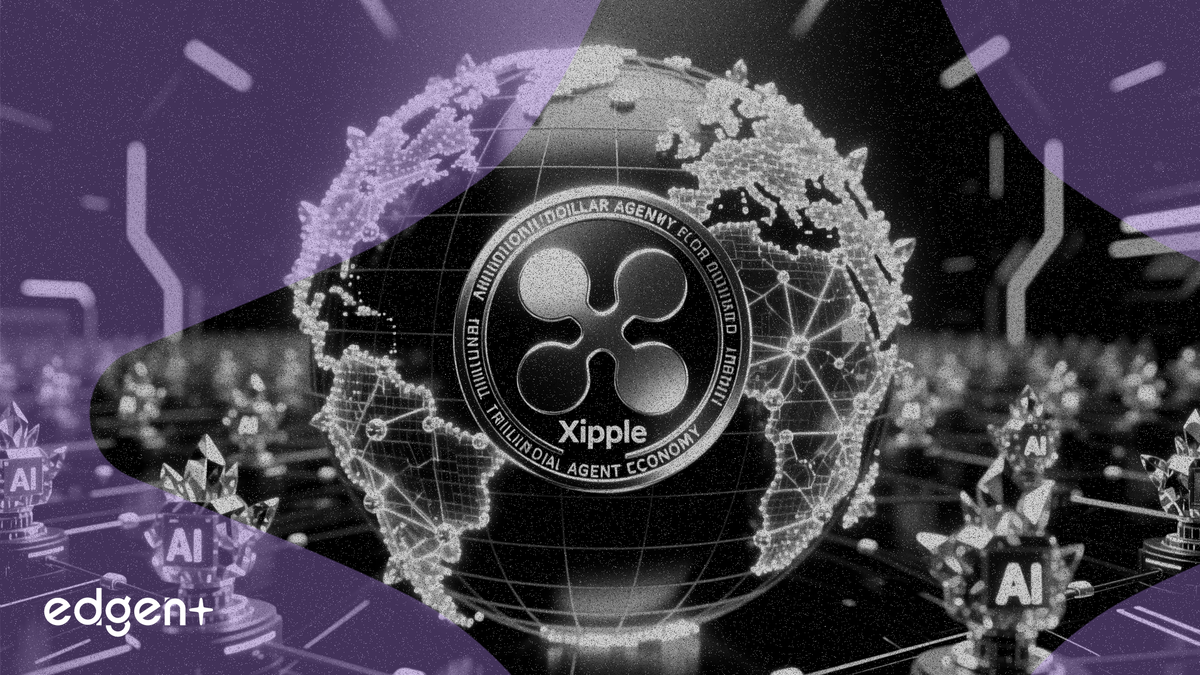
Major players like Ripple, MetaMask, and Mastercard are shifting focus from human-centric tools to building financial infrastructure for AI agents. This transition aims to support autonomous software capable of instant, machine-speed transactions. With initiatives such as Ripple's XRPL AI Starter Kit and Mastercard's Agent Pay, the industry is preparing for an economy where billions of agents operate continuously, requiring fast, scalable, and low-cost settlement rails.
11:31
Ripple introduces the XRPL AI Starter Kit to encourage AI agent payments via XRP and RLUSD, aiming to compete with USDC-dominated platforms like Base and Solana by leveraging speed and low transaction costs.
11:17
XRP has surged 8% to $1.14, recovering from its June low of $1.05. Despite the gain, market liquidations and waning futures interest suggest ongoing caution. Investors are now watching ETF inflows and critical technical barriers at $1.04 and $1.30.
11:04
Ripple and Bitso are enhancing cross-border payments between the U.S. and Mexico using XRP and new stablecoins. By leveraging exchanges like Bitstamp and Bitso to manage asset exposure, the system reduces transfer times from days to about ten minutes while lowering costs, enabling efficient enterprise liquidity flow on the XRP Ledger.
10:21
SBI Holdings seeks approval for Japan's first dual Bitcoin-XRP ETF, sparking renewed interest in XRP. The token rebounded to $1.14, with analysts eyeing $1.17 and $1.20 as key resistance levels amid regulatory reviews.
10:03
Crypto pundit Digital Asset Investor urges XRP holders to maintain long-term conviction, calling the asset a rare "one in a hundred to 200-year opportunity." Citing George Soros's investment philosophy, he emphasizes deep research over market noise. Meanwhile, XRP's utility narrative strengthens with new enterprise collaborations like Mastercard's AI initiative, suggesting growth beyond mere price speculation.
10:00
Bank of America is exploring the integration of XRP into its payment infrastructure, discussing Ripple-based blockchain solutions alongside traditional systems as SWIFT upgrades to compete with emerging hybrid models.
09:16
Despite a 27% price drop this quarter, XRP sees a 35% surge in on-chain activity with record daily transactions and significant growth in tokenized assets.
09:07
Recent discussions suggest a hybrid future for cross-border payments where SWIFT and Ripple coexist rather than compete. Major banks like Bank of America may integrate Ripple's blockchain technology to enhance liquidity and speed without replacing legacy SWIFT infrastructure. While on-demand liquidity using digital assets offers theoretical benefits, current implementations remain experimental, indicating a gradual transition toward blended financial systems.
09:03
Financial educator Coach JV and Ripple executive Luke Judges express strong optimism for XRP, citing a 100-fold growth in tokenized assets on the XRP Ledger to $5.1 billion. They predict a new phase of blockchain adoption focused on institutional financial infrastructure, though community reactions remain mixed between excitement and skepticism.
© 2026 Edgen Powered by