

Key Takeaways:
- Cleveland Fed projects May inflation at 4.18%, nearly double February's 2.4% reading
- Markets now price a 43% chance of a Fed rate hike before 2027
- The S&P 500 erased $1.4 trillion in market cap after a strong jobs report
Key Takeaways:
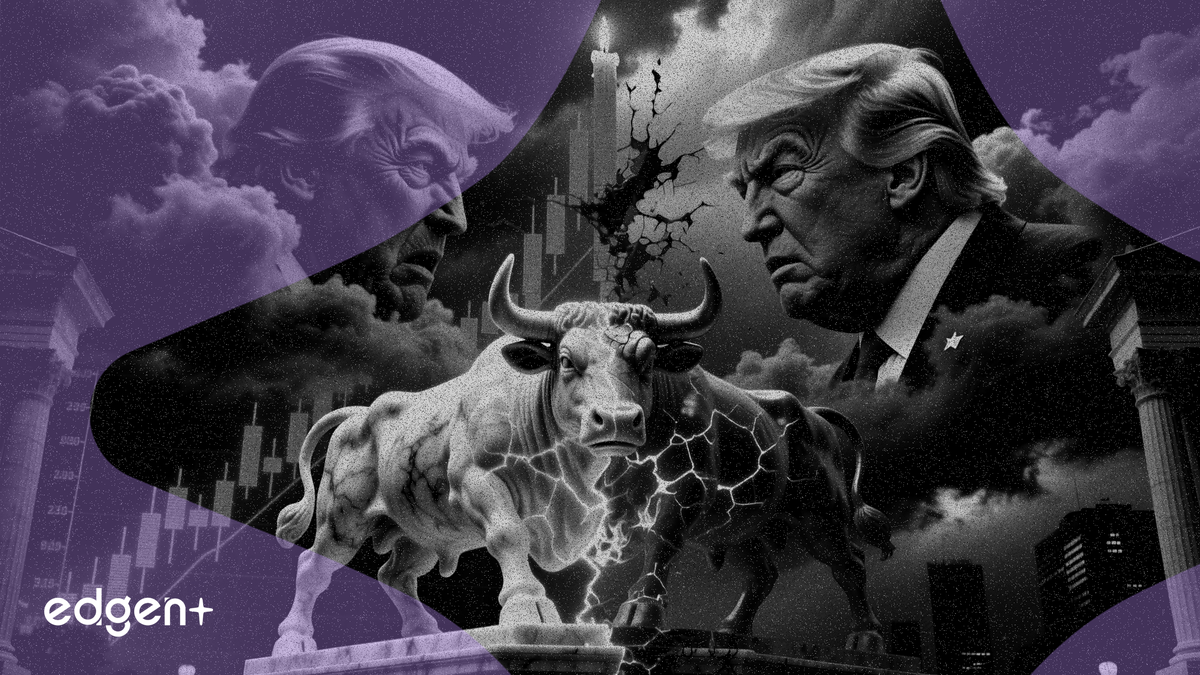
The alliance between President Donald Trump and Federal Reserve Chair Kevin Warsh is fracturing, and the stock market is losing its most powerful tailwind.
The Federal Reserve under Kevin Warsh is signaling it will prioritize inflation control over political pressure, with Cleveland Fed projections showing trailing 12-month inflation rising to 4.18 percent in May from 2.4 percent in February, upending Wall Street's assumption of aggressive rate cuts.
"Warsh's record suggests he will pursue balance sheet reduction and prioritize price stability, regardless of who occupies the White House," said Clive Crook, a Bloomberg Opinion columnist who has analyzed Warsh's policy framework. "His core positions have never really changed."
The shift in expectations has already hit markets. The S&P 500 erased $1.4 trillion in market capitalization after a stronger-than-expected jobs report reinforced the case against holding rates steady. Treasury yields have risen as investors repriced the probability of easing, with markets now assigning a 43 percent chance of a rate hike before 2027, according to data compiled by Bloomberg. The Fed's balance sheet remains above $6.7 trillion, and Warsh has signaled support for shrinking it — a process that drains liquidity and pushes up longer-term borrowing costs.
The conflict creates a lose-lose for equities. If Warsh maintains a tight stance to preserve credibility, financial conditions tighten and valuation multiples compress. If he caves to political pressure and cuts aggressively, bond investors may demand higher yields to compensate for inflation risk, pushing long-term rates higher anyway. The next test comes at the June 17 FOMC meeting, where the committee is expected to shift from an easing bias to a neutral stance.
The Iran war, which began Feb. 28 and effectively closed the Strait of Hormuz to commercial traffic, has upended the inflation outlook. The disruption halted the movement of 20 million barrels of petroleum liquids per day, sending energy prices sharply higher. The Cleveland Fed's nowcast for May inflation of 4.18 percent — nearly double February's 2.4 percent reading — leaves the FOMC with little room to cut.
Trump has publicly called for rates at 1 percent or lower, arguing that cheaper borrowing costs would support economic growth, reduce mortgage rates, and make it easier to service the nation's more than $39 trillion in national debt. But the data is moving in the opposite direction. Three FOMC members already opposed the easing bias at Jerome Powell's final meeting on April 29, and a majority favored shelving it entirely. The fed funds rate, cut six times between September 2024 and December 2025, now faces a path that could include a hike rather than further easing.
The last time a Fed chair faced this level of White House pressure was during Trump's first term, when Powell resisted calls for aggressive easing in 2018 and 2019. The S&P 500 fell 6.2 percent in the fourth quarter of 2018 as the standoff escalated, before the Fed reversed course in 2019 with three cuts.
This time, the stakes are higher because valuations are richer and inflation is accelerating rather than stable. Warsh, who took office May 22 after a 54-45 Senate confirmation vote, has built a reputation as an inflation hawk dating back to his tenure as a Fed governor from 2006 through 2011. He has criticized the Fed's reliance on forward guidance and argued for clearly defined boundaries on quantitative easing — positions that put him at odds with a White House demanding immediate rate relief.
If Warsh resists, liquidity tightens and stocks face a valuation reset. If he accommodates, the Fed's credibility erodes and bond yields rise to compensate. Either way, the market loses the certainty that has supported its rally through the first half of 2026.
This article is for informational purposes only and does not constitute investment advice.
