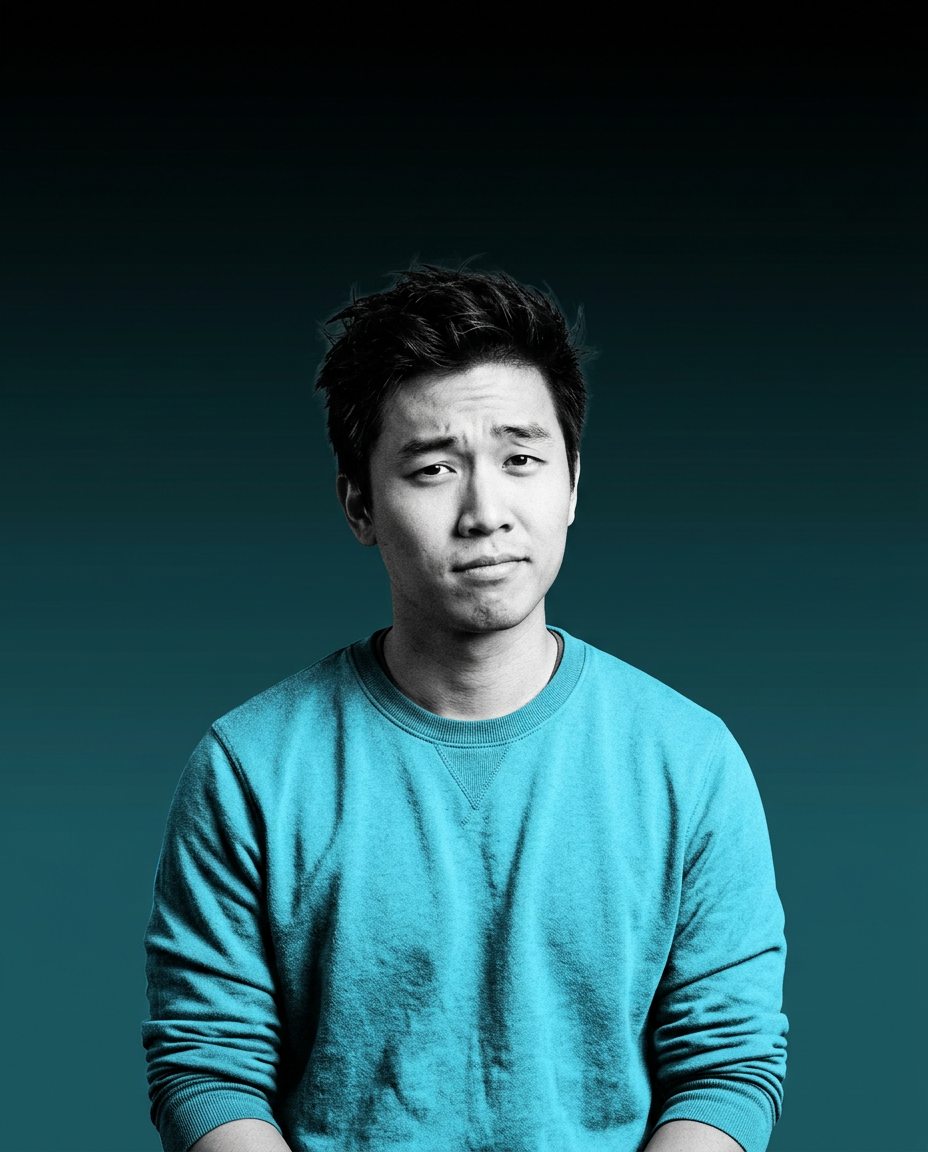
Vinod Khosla treats every investment like an option contract — risking total loss for the chance at 100x or more returns.
Vinod Khosla treats every investment like an option contract — risking total loss for the chance at 100x or more returns.

Vinod Khosla, the billionaire venture capitalist behind Khosla Ventures and an early OpenAI backer, treats investments like options contracts — risking a total loss on each bet for the chance at 100x or more returns.
"If the option expires, you lose one times your money. If it works, you make five times your money, 10 times your money, 100 — and I hope OpenAI is 1,000x or more," Khosla said in an interview with The Wall Street Journal.
Khosla, whose firm has backed companies including OpenAI and DoorDash, said the approach requires a tolerance for failure that most investors lack. "Not everybody should be like me, but people who are more ambitious in what they want to get done, you have to take risks," he said. "If it's an easy problem, somebody will have solved it."
The philosophy carries implications beyond Khosla's portfolio. He argued that artificial intelligence will concentrate more value in capital than labor, calling for a restructuring of the US tax system — including eliminating the preferential rate on capital gains entirely.
Khosla's option-value framework stands in contrast to traditional venture capital, where firms typically seek a predictable multiple on diversified bets. By accepting that most investments will go to zero, he said, the strategy frees him to pursue the highest-conviction opportunities — including AI, which he described as the defining technology shift for the next generation of entrepreneurs.
On taxes, Khosla said the current system is "screwed up" in an AI-driven economy. "More value is going to accrue to capital than to workers," he said. "I think a very fundamental thing we should consider is to change all capital-gains tax to be the same as ordinary income tax, no difference." The proposal would eliminate the 20% top rate on long-term capital gains, currently less than half the 37% top marginal rate on ordinary income.
Khosla said he does not experience stress, even when facing uncertainty about investment outcomes. "You always have doubts. You're never sure what the right thing is, but I've never let it hold me back," he said. "I don't get stressed ever. I just don't know what stress means."
For investors tracking the AI sector, Khosla's views offer a window into how one of its most influential backers allocates risk. His call for capital gains tax reform, if adopted, would directly affect venture returns and the incentive structure for startup investing. OpenAI, which Khosla expects to be his best-performing bet, faces mounting competition from rivals including Google and Anthropic — a race that will determine whether his 1,000x thesis materializes.
This article is for informational purposes only and does not constitute investment advice.