
America's emergency oil cushion has fallen to 340.3 million barrels, a level not seen since the Reagan administration was still filling the reserve for the first time.
America's emergency oil cushion has fallen to 340.3 million barrels, a level not seen since the Reagan administration was still filling the reserve for the first time.
America's emergency oil cushion has fallen to 340.3 million barrels, a level not seen since the Reagan administration was still filling the reserve for the first time.
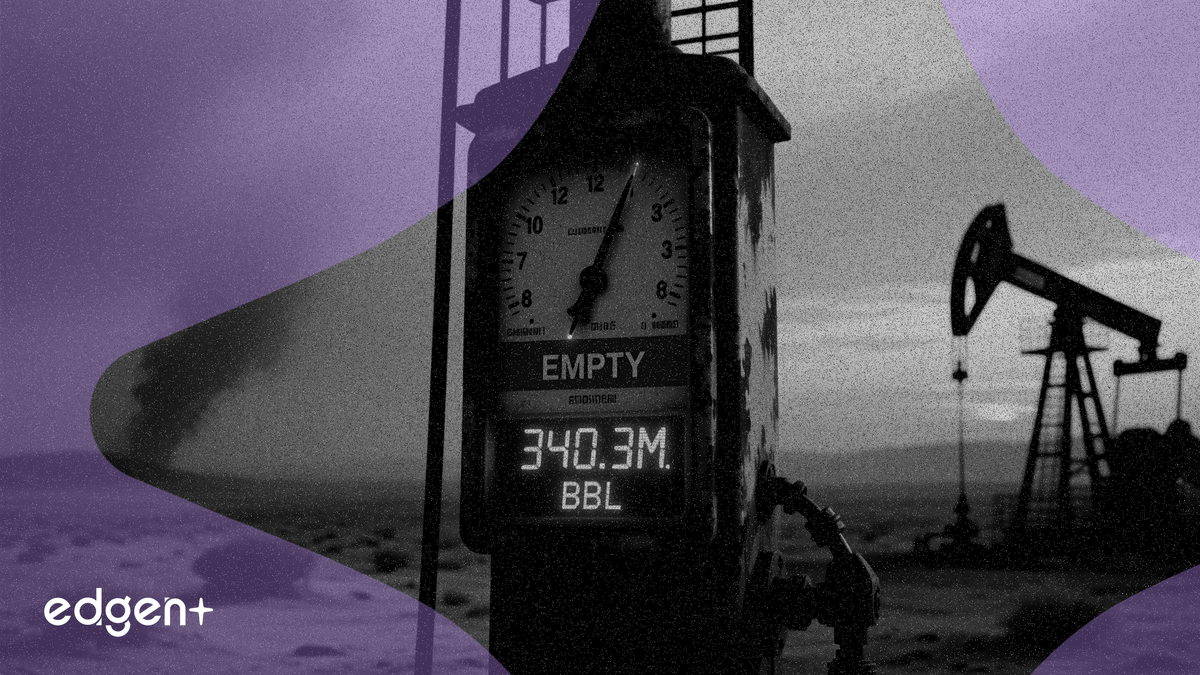
The US Strategic Petroleum Reserve fell to 340.3 million barrels last week, the lowest since July 1983, as the Trump administration's Iran conflict drawdowns pushed the emergency stockpile below levels reached during the Russia-Ukraine war.
"No matter where you stand politically, it's a remarkable statistic," said Patrick De Haan, head of petroleum analysis at GasBuddy.
The Energy Department reported Monday that 8.9 million barrels were withdrawn in the week ending June 12, bringing total stocks to 340.3 million — below the prior post-Cold War low of 346.8 million barrels hit in July 2023. The reserve, designed to hold 714 million barrels across salt caverns along the Gulf Coast, is now less than half full. Roughly 50 million barrels have been pulled since the Iran conflict began, an 18% decline in SPR crude stocks.
With the Trump administration having authorized the sale of 172 million barrels total and weekly drawdowns averaging about 9 million barrels, the reserve could breach 300 million barrels before the end of summer if withdrawals continue at the current pace. A 60-day peace deal announced Sunday between the US and Iran could slow the drain, though the administration has not signaled any change in drawdown plans.
The current depletion marks a sharp acceleration from the Biden era. When President Joe Biden left office in January 2025, the SPR stood at roughly 394 million barrels after he had tapped it extensively following Russia's invasion of Ukraine. The largest release in the reserve's history occurred in 2022, when Biden authorized the sale of more than 180 million barrels to counter post-invasion price spikes. The reserve stood at about 638 million barrels when Biden took office in 2021, meaning his administration oversaw a drawdown of roughly 244 million barrels over four years.
The reserve was established after the 1973 Arab oil embargo, when OPEC's supply cutoff sent gasoline prices soaring and triggered panic buying across the US. It reached its peak fill of about 700 million barrels in 2009 and has been on a broadly downward trajectory since, punctuated by periodic releases during geopolitical crises. The last time the SPR was at this level, in 1983, US energy demand was substantially lower — the economy was smaller, the population was smaller, and daily oil consumption was a fraction of today's levels.
A thinner cushion in a bigger economy
The 340.3 million barrel level carries different implications today than it did in 1983. US daily oil consumption has grown substantially over the past four decades, meaning the same absolute stockpile provides fewer days of emergency cover. A release of 10 million barrels from a 700-million-barrel reserve barely registers as a percentage; from a 340-million-barrel stockpile, it represents nearly 3% of what remains.
The Biden administration discovered the difficulty of refilling the reserve after the 2022 releases, when it was forced to buy crude at higher prices to replenish stocks it had emptied to keep prices low. The Trump administration has promised to refill the reserve quickly once the Iran conflict ends, but the economics of buying back oil at elevated prices present the same policy challenge.
For crude markets, the thinning cushion introduces a new layer of price support. With the US holding less than half its authorized emergency capacity, the market's perception of supply security has shifted. WTI crude and Brent crude both face elevated volatility risk as traders price in a reduced ability by the US to respond to future supply shocks. The 60-day peace deal with Iran, which includes reopening the Strait of Hormuz with no shipping tolls, could ease some supply concerns, but energy analysts warn the path to price stabilization could be slow.
This article is for informational purposes only and does not constitute investment advice.
