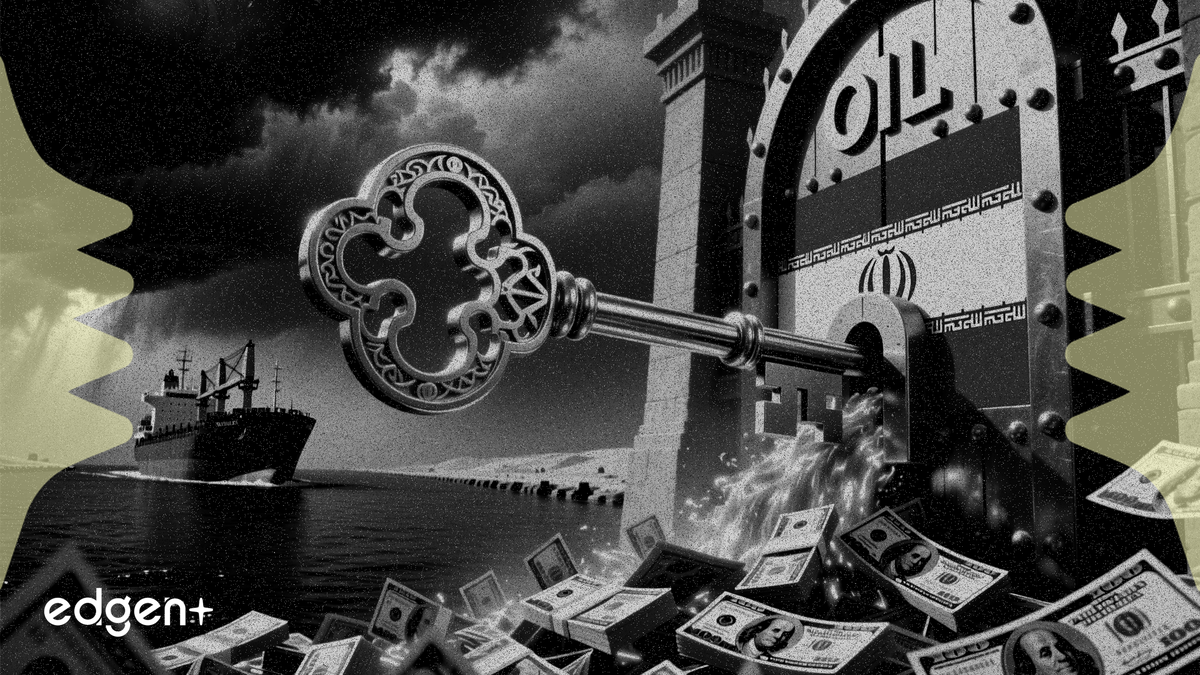
A leaked 14-point draft memorandum between the US and Iran proposes releasing $24 billion in frozen funds and reopening the Strait of Hormuz, though neither government has confirmed a final agreement.
A draft US-Iran memorandum published by Iran's Mehr News Agency calls for an immediate ceasefire on all fronts including Lebanon, the release of $24 billion in frozen Iranian assets, and the reopening of the Strait of Hormuz within 30 days — a waterway that handles about 21% of global oil trade.
"Textually, the text has almost been finalized in its major parts. The problem is that the contradictory positions of the United States have always caused turbulence and disruption in this process," Esmaeil Baghaei, spokesperson for Iran's Foreign Ministry, told Mehr News Agency.
The 14-point draft envisions suspending US sanctions on Iranian oil exports, providing reconstruction assistance valued at over $300 billion, and withdrawing all American personnel from Iran. Final negotiations would begin only after half of Iran's blocked funds are released and the naval blockade is lifted, according to the document. A separate version reported by Axios, citing US negotiating sources, appears narrower — calling for a 60-day ceasefire including Lebanon with sanctions relief tied to Iranian compliance rather than fixed dollar amounts.
If confirmed, the agreement would represent the most significant US-Iran diplomatic breakthrough in decades, with immediate implications for global energy markets. The Strait of Hormuz — through which about 21 million barrels of oil pass daily — has been effectively closed during the conflict, contributing to elevated crude prices and supply chain disruptions. A reopening would likely trigger a sharp decline in oil prices and reshape risk premiums across Middle Eastern assets.
Two drafts, one negotiation
The Iranian draft published by Mehr includes provisions for a permanent ceasefire "on all fronts, including Lebanon," alongside a full withdrawal of US forces from the vicinity of Iran. On the nuclear issue, it foresees 60 days of negotiations to reach a final agreement, with Tehran reaffirming its obligations under the Nuclear Non-Proliferation Treaty. Critically, the draft explicitly excludes Iran's missile program and its support for regional resistance movements from the negotiating agenda — a red line that may clash with US demands.
The US version reported by Axios is more conditional. It calls for the Strait of Hormuz to reopen immediately without tolls, with sanctions relief phased in based on Iranian compliance. The 60-day ceasefire framework includes Lebanon, where Israel has maintained daily strikes despite ongoing diplomatic talks. Lebanese MP Hassan Fadlallah, part of Hezbollah's March 8 alliance, said any US-Iran agreement "will have direct repercussions on Lebanon," adding that Tehran is "insisting on including the Lebanese file in any agreement."
Market implications and the path ahead
President Donald Trump said Thursday that the US had "just made a great settlement of the war with Iran," though he stressed documents were still being finalized. Reports that US Air Force planes departed to move equipment ahead of a possible trip by Vice President JD Vance to a signing ceremony in Geneva have fueled speculation that this round is more advanced than previous attempts.
The last time a major US-Iran diplomatic framework emerged — the 2015 Joint Comprehensive Plan of Action — Brent crude fell about 7% in the month following the announcement as sanctions relief brought Iranian barrels back to market. A similar dynamic could unfold if this MOU is finalized, though the current context differs: Iran's oil exports have already been severely constrained by the naval blockade, and the $300 billion reconstruction figure in the Iranian draft suggests Tehran expects significant capital inflows.
For investors, the key variables are timing and verification. The Iranian draft makes final negotiations contingent on upfront fund releases and sanctions suspension, while the US version ties relief to demonstrated compliance. The gap between these positions suggests that even if a framework is signed, detailed implementation talks could stretch for months. Crude oil options markets are likely to remain elevated until the signing date and venue are confirmed, with Geneva emerging as the most probable location.
This article is for informational purposes only and does not constitute investment advice.