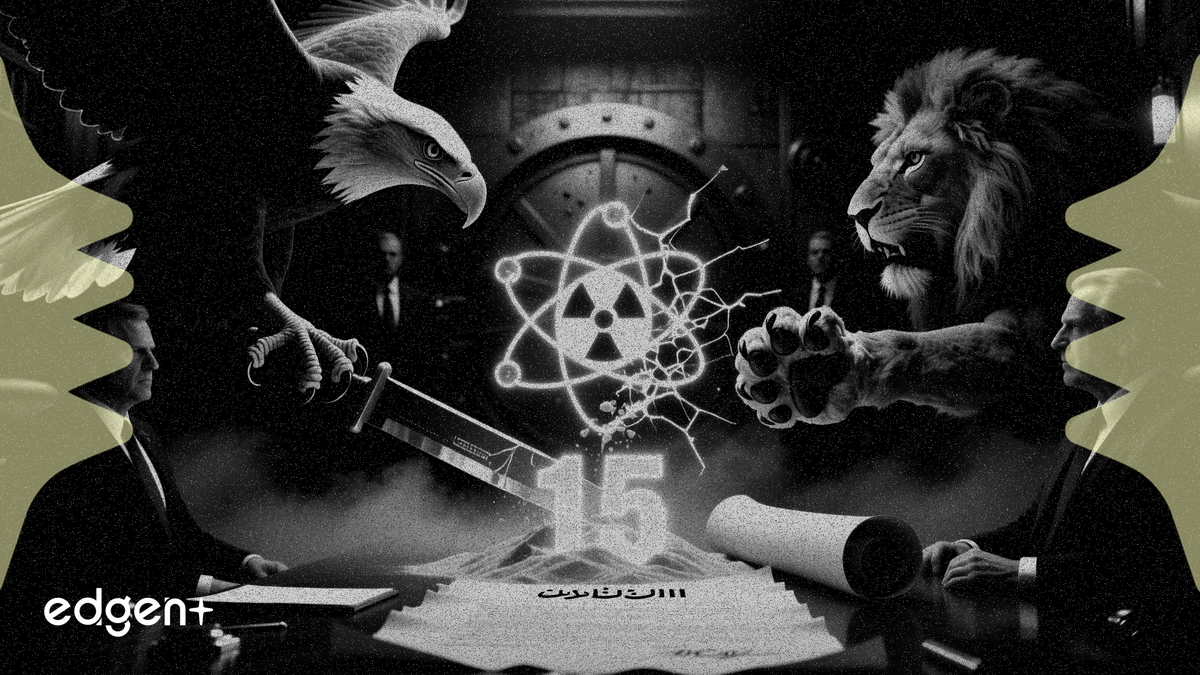
The US and Iran are closer than ever to a nuclear agreement that would suspend enrichment for 15 years, dismantle key facilities and reopen the Strait of Hormuz to global oil flows.
Iranian Foreign Minister Abbas Araghchi said on June 12 that the two sides had "never been closer" to finalizing a Memorandum of Understanding, urging media to refrain from speculation until the deal is complete. His statement followed weeks of indirect talks mediated by Qatar, which US officials said helped resolve remaining sticking points on the sequencing of nuclear rollbacks and financial relief.
"The probability of deception by Trump is high," said Ebrahim Rezaei, spokesperson for the Iranian parliament's National Security and Foreign Policy Committee, in a post on X, urging Iran to continue attacks. The hardline faction known as Jebhe-ye Paydari has worked to sabotage a potential deal, viewing it as capitulation.
US Vice President JD Vance told CBS News that an agreement addressing Iran's nuclear program "for the long term" could come within weeks or months, possibly before the November midterm elections. "I feel that we are in a position to get a deal that is good for the United States economically and that really does deal with the Iranian nuclear program," Vance said.
The core terms under negotiation include a 15-year suspension of Iranian uranium enrichment — down from the 20-year halt the Trump administration initially demanded — along with the dilution of Iran's existing enriched uranium stockpile under International Atomic Energy Agency oversight, the dismantlement of nuclear facilities at Natanz, Fordow and Isfahan, and the implementation of surprise inspections anywhere in Iran, according to US officials cited by the New York Times.
President Donald Trump claimed on Truth Social that "final points" had been approved by the US, Israel, Saudi Arabia, the UAE, Qatar, Turkey, Pakistan, Bahrain, Kuwait, Jordan and Egypt. He canceled planned strikes on Iran on June 11, saying a signing ceremony could take place in Europe with Vance in attendance. Iran's foreign ministry spokesperson Esmail Baghaei countered that no final decision had been reached and that reports of a deal were "merely speculation."
Oil markets and the Strait of Hormuz
The prospect of a deal sent oil prices tumbling. Brent crude fell 3.7% to below $90 a barrel, while West Texas Intermediate dropped 3.6% to below $87 a barrel after Trump's announcement. The Strait of Hormuz, which handles roughly 21% of global oil trade, has been effectively blocked since the conflict escalated, with Iran threatening to deny oil exports to all if its own infrastructure came under attack.
The World Bank warned on June 11 that the ongoing conflict would slow global economic growth to 2.5% in 2026, the weakest since the Covid-19 pandemic, and that renewed hostilities could push growth to just 1.3%. Oil, gas and fertilizer prices have spiked as shipping through the strait remains disrupted.
US equities rallied sharply on the news, with the Dow Jones Industrial Average surging 810 points, or 1.62%, while the S&P 500 gained 1.3% and the Nasdaq Composite rose 1.8%. The last time a US-Iran diplomatic breakthrough appeared imminent — during the 2015 Joint Comprehensive Plan of Action negotiations — Brent crude fell roughly 10% over the three months following the framework agreement, before recovering as sanctions relief took effect.
If finalized, the deal would mark the most significant US-Iran diplomatic achievement since the 2015 JCPOA, which Trump withdrew from in 2018. Unlike that agreement, the current framework includes regional powers as signatories and ties nuclear rollback directly to the reopening of the Strait of Hormuz. Iran's supreme leader has agreed "conceptually" to the terms, Trump said, though Tehran has not confirmed this.
This article is for informational purposes only and does not constitute investment advice.