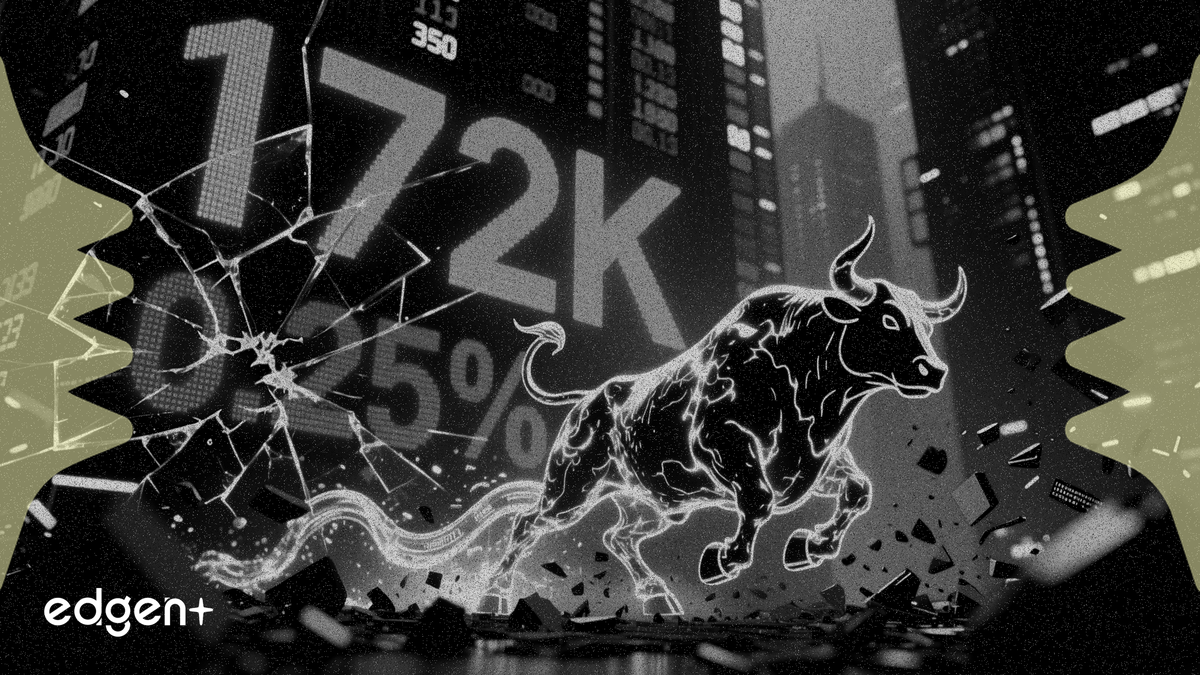
The U.S. labor market delivered its strongest monthly gain in over a year, crushing expectations and reshaping the outlook for Federal Reserve policy.
The U.S. economy added 172,000 nonfarm payrolls in May, the Bureau of Labor Statistics reported Friday, more than double the consensus estimate of 85,000 from economists surveyed by Dow Jones. The unemployment rate held steady at 4.3%, matching forecasts, while average hourly earnings rose 0.3% month-over-month, accelerating from April's 0.2% gain.
"The May jobs report removes any remaining doubt that the labor market is running too hot for the Fed to consider easing," said James Okafor, macro strategist at Edgen. "If this trend persists, the next move in rates is more likely up than down."
The blowout print follows a string of resilient economic data this week. The ISM Manufacturing PMI and ISM Services PMI both exceeded expectations and remained in expansionary territory, while ADP data released Wednesday showed private employers added 122,000 jobs in May, the highest since January. April's nonfarm payrolls were revised to 115,000, meaning the three-month average now sits well above the roughly 100,000 breakeven rate the Atlanta Fed estimates is needed to keep the unemployment rate stable.
Cross-Asset Repricing
Financial markets repriced sharply after the release. The 10-year Treasury yield jumped to 4.52%, its highest level in weeks, as traders reduced bets on rate cuts. Nasdaq 100 futures slid 1.2%, extending a week of losses for rate-sensitive technology stocks. Gold fell 1.1% to around $4,400 per ounce, while oil edged lower to $94 per barrel.
Bitcoin dropped below $62,000, trading at $61,950, as the prospect of higher rates reduced appetite for speculative assets. The broader crypto market nursed steep overnight declines, with ether falling nearly 7% and solana down more than 6%.
The S&P 500 has risen roughly 10% year-to-date and is on track for 10 consecutive weekly gains, though some exuberance has faded from the semiconductor sector after Broadcom's weaker-than-expected outlook for AI-related chip demand.
What This Means for the Fed
The May jobs data strengthens the case for the Federal Reserve to resume rate hikes later this year, a scenario that was largely dismissed by markets as recently as April. The fed funds rate has been held at 4.25%-4.50% since the 25-basis-point cut in September 2025, but Friday's report shifts the probability distribution toward tightening.
The last time payrolls exceeded expectations by this margin was in early 2024, when a similar surprise preceded a 50-basis-point rate increase over the following two meetings. If the June consumer price index, due July 15, confirms that inflation remains sticky above 3%, the Fed's June 17-18 meeting could see the first serious discussion of a hike since the current tightening cycle began.
For now, OIS markets are pricing a roughly 35% probability of a rate increase by September, up from less than 10% before the jobs report. The next major data point is the May CPI release on June 11, which will determine whether the labor market strength is translating into renewed price pressures.
This article is for informational purposes only and does not constitute investment advice.