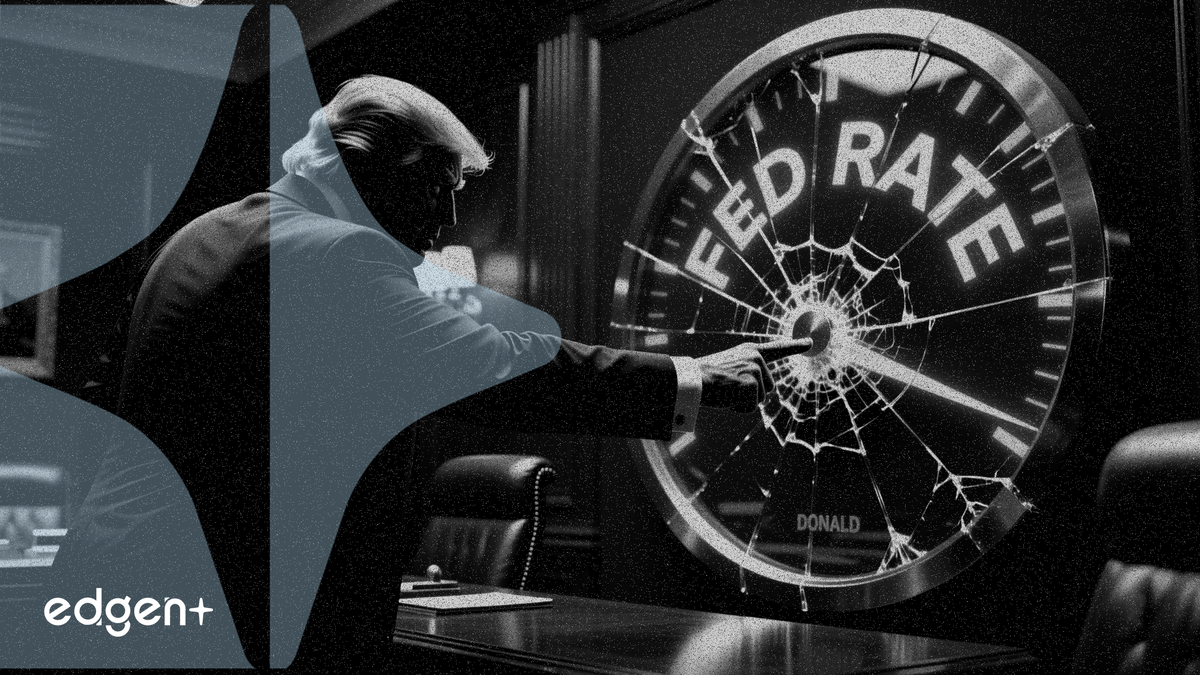
Trump's latest call for lower interest rates marks the third time in recent months he has publicly pressured the Federal Reserve, reigniting debate over central bank independence.
Trump said the US should lower interest rates and argued there is no reason to raise them, wading into monetary policy in a June 7 NBC interview that also touched on potential Fed leadership changes.
"We actually should lower rates," Trump said. He said he hopes to see lower rates and does not want to exert too much influence on Kevin Warsh, a potential candidate for Fed chair when Jerome Powell's term expires.
The remarks come ahead of the Fed's June 17-18 policy meeting. Trump has publicly commented on rate policy at least twice earlier this year, reflecting sustained White House pressure on the central bank as it balances its dual mandate of price stability and maximum employment.
The comments risk undermining Fed independence, a cornerstone of US monetary policy credibility since the 1951 Treasury-Fed Accord. Any perception of political interference could push bond yields higher and weaken the dollar as investors price in a politicized rate-setting process, with implications for borrowing costs across the economy.
Trump's reference to Warsh is significant given the former Fed governor's status as a leading candidate to succeed Powell. By saying he does not want to exert too much influence on Warsh, Trump acknowledged the upcoming leadership transition without committing to a specific pick. Powell's term as chair is set to expire in 2026, giving the president an opportunity to reshape the central bank's leadership.
The president's assertion that there is "no reason to raise rates" contrasts with the Fed's data-dependent approach. The central bank has emphasized that future rate decisions will be guided by incoming economic data rather than political considerations, a stance Fed chairs have maintained across multiple administrations. The last time a US president openly pressured the Fed on rate policy was during Trump's first term, when he called Powell an "enemy" in 2019 after the Fed raised rates four times in 2018.
Trump's latest intervention follows that pattern as the president seeks lower borrowing costs to support economic growth ahead of the November midterm elections. The timing is notable: the Fed's June meeting falls just five months before voters go to the polls, raising questions about whether rate decisions could become entangled in electoral politics.
The cross-asset implications of eroded Fed credibility are well-documented. Bond markets typically demand a term premium when central bank independence is questioned, pushing long-term yields higher even as short-term rates fall. The US dollar, which benefits from the perception of apolitical monetary policy, could weaken against major peers if investors perceive a shift. Emerging market currencies and risk assets would likely feel the ripple effects through portfolio flows.
The Fed has historically guarded its independence fiercely. Powell has repeatedly declined to comment on political pressure, stating that the central bank makes decisions based on economic data. The institution's structure — with 14-year governor terms and a 19-member Federal Open Market Committee — was designed specifically to insulate monetary policy from short-term political cycles.
Whether Trump's latest remarks translate into actual policy pressure depends on several factors: the economic data between now and the June meeting, the administration's nominee for Fed chair, and the broader political environment. What is clear is that the frequency of presidential commentary on rate policy has no modern precedent, and markets are taking notice.
This article is for informational purposes only and does not constitute investment advice.