
Key Takeaways: President Donald Trump said US aircraft are flying over Tehran without Iran's knowledge as nuclear negotiations enter their final stage.
Key Takeaways: President Donald Trump said US aircraft are flying over Tehran without Iran's knowledge as nuclear negotiations enter their final stage.
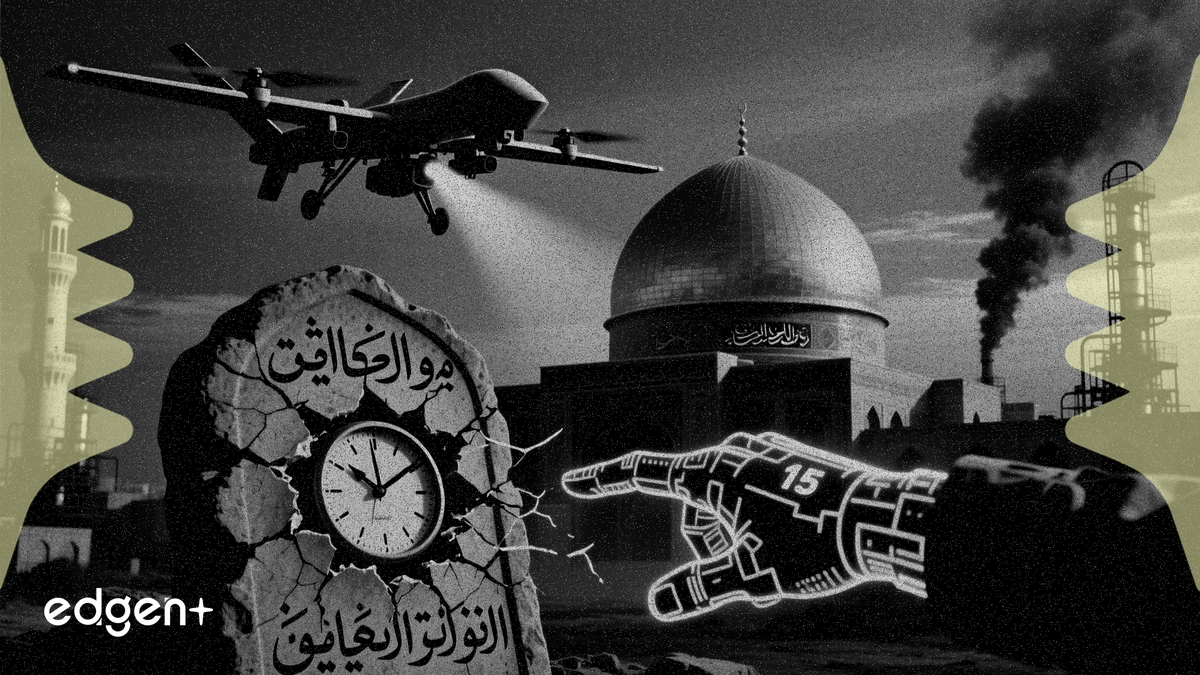
President Donald Trump said US aircraft are flying over Tehran without Iran's knowledge, a show of force that comes as negotiators close in on a 15-year deal to suspend Iran's nuclear enrichment program. The statement, posted on social media, marks one of the most direct US military claims of aerial penetration of Iranian airspace since the conflict began.
"We are very close to having a very, very good, strong, powerful deal," Trump said, according to ABC News. Vice President JD Vance told CBS News the administration is "in a position to get a deal that is good for the United States economically and that really does deal with the Iranian nuclear program... for the long term." Vance added that an agreement could come before the November midterm elections.
The Strait of Hormuz — through which about 21% of global oil supply transits — has been a flashpoint, with Iran effectively closing the waterway during the conflict. US officials told the New York Times that negotiators have moved beyond discussions on reopening the strait to focus on four core issues: a 15-year enrichment halt, dilution of Iran's enriched uranium stockpile, dismantlement of facilities at Natanz, Fordow and Isfahan, and expanded IAEA inspections. The Trump administration initially demanded a 20-year halt but has signaled willingness to accept 15 years, according to people familiar with the talks.
A deal would unlock sanctions relief and release frozen Iranian assets, potentially adding supply to tight global oil markets. Failure risks further escalation: the US has already conducted strikes as a "proportional response" to Iran's downing of a US Army Apache helicopter near the Strait of Hormuz, and Trump has warned of additional attacks. "If we go and bomb — which we could do very easily if we want, and we spend another two or three weeks bombing — they'll have nothing left whatsoever," Trump said. "But you won't have the strait open for months."
Oil Markets Price the Risk Premium
Brent crude has remained elevated as traders weigh the probability of a diplomatic resolution against the risk of a broader conflict that could disrupt supply from the Persian Gulf. The last time the US and Iran engaged in direct military exchanges in early 2025, crude prices surged more than 15% within two weeks while gold rallied past $3,000 an ounce as investors rotated into safe havens. The VIX index of implied equity volatility also spiked above 30 during that period, reflecting the market's sensitivity to Gulf disruptions.
The helicopter incident — in which an unmanned Corsair drone boat rescued two US Army aviators after their Apache went down near Oman — has added to the risk premium. Central Command said the crash occurred about 3:30 a.m. local time Tuesday while the helicopter was on patrol, though the cause remains under investigation. The Corsair, a 24-foot vessel manufactured by Saronic Technologies, was assigned to the Navy's Task Force 59, the service's first uncrewed and artificial intelligence unit focused on maritime security in the Middle East.
Negotiations Advance Despite Hostilities
US officials have insisted the strikes would not impede diplomatic progress. Pakistan has served as the lead mediator, with Army Chief Field Marshal Asim Munir shuttling between the parties. Lebanon's army chief, Gen. Rodolphe Haykal, also traveled to Pakistan this week for discussions, as the continued fighting between Israel and Hezbollah remains a top Iranian priority.
Iranian parliament Speaker Mohammad Bagher Qalibaf said Monday that Trump's remarks on a possible deal "contradicted the agreed-upon sections," suggesting the US is "neither seeking a ceasefire nor dialogue." Still, Trump expressed optimism, saying a deal could be signed in "two or three days." The conflicting signals show the fragility of the talks, where both sides have taken hard-line positions: the US wants Iran to give up its stockpile of highly enriched uranium, while Iran demands sanctions relief and the release of frozen assets before any final agreement.
For investors, the path forward carries binary risk. A successful deal would likely trigger a sharp decline in crude prices and a rally in risk assets as the Gulf supply premium unwinds. A breakdown in talks, by contrast, could push oil above the highs seen during the early 2025 conflict, with the Strait of Hormuz closure threatening a supply shock not seen since the 1990 Gulf War.
This article is for informational purposes only and does not constitute investment advice.
