
Trump's $1.8 billion anti-weaponization fund is dead for now after the administration backed down amid GOP opposition that threatened to derail a $70 billion immigration enforcement bill.
Trump's $1.8 billion anti-weaponization fund is dead for now after the administration backed down amid GOP opposition that threatened to derail a $70 billion immigration enforcement bill.
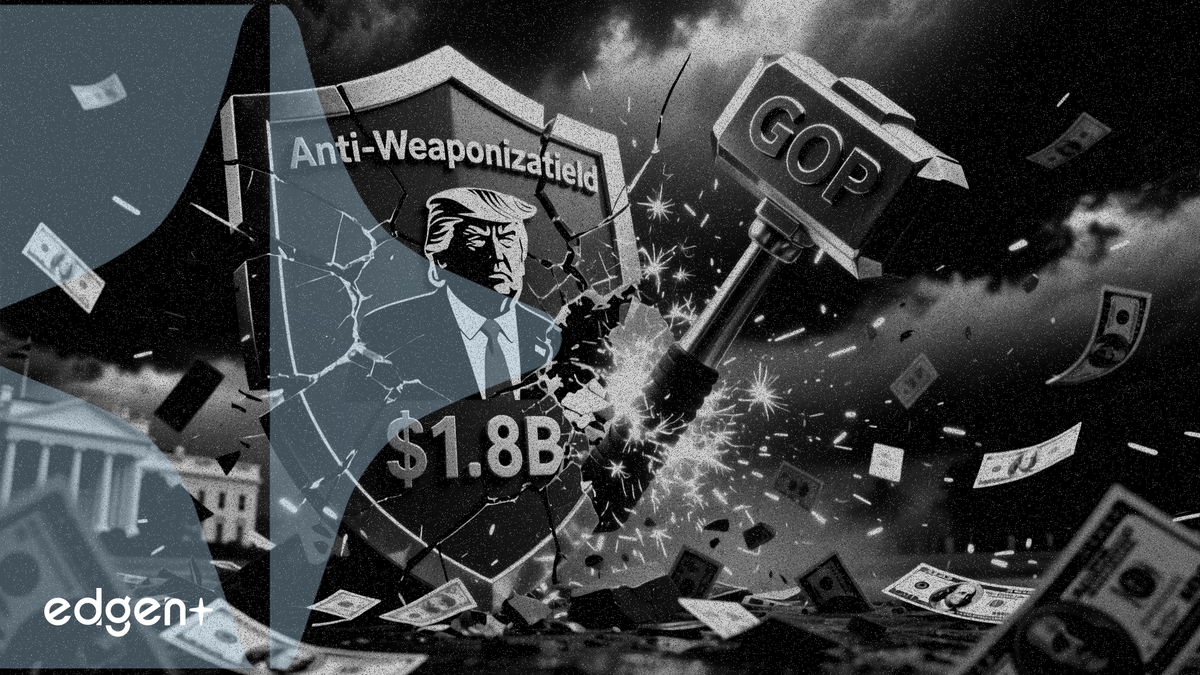
President Donald Trump has paused his $1.776 billion "anti-weaponization" fund, the Justice Department confirmed Monday, after Republican lawmakers threatened to block a $70 billion immigration enforcement bill over the controversial settlement.
"The Department of Justice will abide by the court's ruling," the DOJ said on X, citing a Friday order by Judge Leonie M. Brinkema that temporarily blocked the fund from disbursing any money. The judge set a June 12 hearing to determine whether the pause should continue while litigation proceeds.
The fund was created as part of Trump's settlement of a $10 billion lawsuit against the Internal Revenue Service over the unauthorized disclosure of his tax returns. It was designed to compensate individuals who claim the judicial system was "weaponized" against them during the Biden administration — a category that includes Jan. 6 rioters, Proud Boys leader Enrique Tarrio, and former Rep. George Santos, according to published reports.
Senate Majority Leader John Thune said Monday that lawmakers were in discussions with the White House about changes to the settlement, though he did not confirm whether the administration planned to kill it entirely. "It would have been nice" to have been given advance notice, Thune said of the fund's creation.
The backlash from within Trump's own party was unusually intense. Sen. Mitch McConnell called the fund "utterly stupid, morally wrong." The opposition had stalled a vote on Trump's immigration enforcement package, which would direct roughly $70 billion to ICE and border patrol agencies — a legislative priority the president had demanded be on his desk by June 1.
Senate Minority Leader Chuck Schumer vowed Monday to force a vote on amendments that would either restrict or eliminate the fund entirely. "Democrats are forcing Republicans to make one simple choice: kill the slush fund or own it," Schumer wrote in a letter to colleagues.
The court order does not make any determination on the fund's legality. Brinkema's ruling merely paused operations to allow briefs to be filed, meaning the fund could theoretically be revived after the June 12 hearing. An anonymous administration official told Axios the fund was "dead for now," leaving open the possibility of resurrection.
The last time a similar political standoff over a contested settlement fund threatened a major legislative package was in 2021, when bipartisan infrastructure negotiations stalled for months over disagreements on funding mechanisms. In this case, the White House's about-face removes the immediate obstacle to the immigration bill, though the political damage from the episode may linger as midterm elections approach.
This article is for informational purposes only and does not constitute investment advice.
