
Trump called off strikes on Iran on June 11, triggering a safe-haven unwind that pushed the 10-year yield to 4.4335%.
Trump called off strikes on Iran on June 11, triggering a safe-haven unwind that pushed the 10-year yield to 4.4335%.
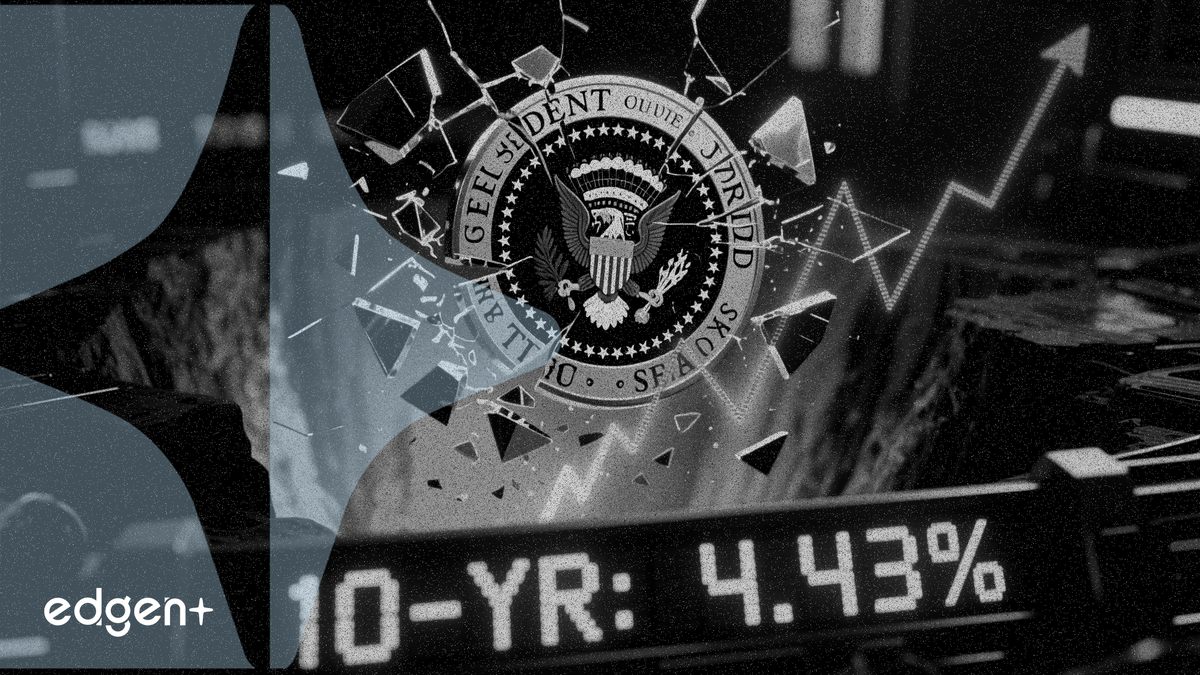
President Donald Trump's last-minute cancellation of military strikes against Iran on June 11 triggered a sharp reversal in bond markets, with the 10-year Treasury yield plunging to 4.4335% as geopolitical risk premiums unwound.
"The bond market is pricing in a material de-escalation of what was shaping up to be a sustained conflict in the Strait of Hormuz," said Elena Fischer, geopolitical risk analyst at Edgen. "The speed of the yield move — roughly 15 basis points in a single afternoon — reflects how quickly the narrative shifted from escalation to diplomacy."
The 10-year yield recovered to close at 4.4789% on June 12, up 1.78 basis points on the day but down 5.14 basis points for the week, according to market data. The two-year yield settled at 4.0809%, having traded in a 4.1970%-4.0348% range over the week. Equities rallied sharply: the S&P 500 gained 1.8%, the Dow Jones Industrial Average rose 1.6%, and the Nasdaq composite added 1.8%. Crude oil prices fell as fears of supply disruption eased, with Brent crude dropping 3.5% to $89.84 a barrel and West Texas Intermediate sliding 2.8% to $87.56.
The reversal extends a pattern of brinkmanship that has kept energy prices elevated and bond markets on edge since the US-Iran conflict erupted on Feb. 28. The Strait of Hormuz handles about 21% of global oil trade, and while Trump claimed a deal could be signed in Europe as soon as this weekend, Iranian officials have not confirmed any final agreement. If talks collapse, the 10-year yield could retest the 4.58% level reached on June 8, when Trump first threatened to strike Iran "very hard."
The yield curve steepened as the cancellation of strikes reduced demand for short-dated government paper, with the two-year yield falling more sharply than the long end. The two-year note's weekly decline of 6.61 basis points outpaced the 10-year's 5.14-basis-point drop, reflecting a market that is pricing in lower near-term geopolitical risk while remaining cautious on the medium-term outlook.
A Pattern of Escalation and Retreat
Thursday's cancellation marked at least the fifth time since April that Trump has threatened military action against Iran only to pull back hours or days later, citing diplomatic progress. On April 7, he issued a deadline for Iran to reopen the Strait of Hormuz or face "major strikes," then suspended the planned attacks two hours before the deadline. Brent crude fell 13.3% in the aftermath. On May 23, he claimed a deal would be announced "shortly," only for negotiations to stall.
The repeated cycle has eroded the market impact of each successive threat. The S&P 500's 1.8% rally on June 11 was less than half the 5.3% gain recorded in mid-May 2025, when Trump first signaled a deal was close, suggesting investors are increasingly discounting his announcements until a signed agreement materializes.
Iran's foreign ministry said Thursday that no final decision had been made, and that a large part of the negotiating text was finalized but the US had repeatedly changed its positions. Trump said the emerging agreement deals with Iran's nuclear material only "conceptually" and that the US blockade on Iran-linked shipping would remain in force until the transaction is finalized.
What Comes Next
The key date is this weekend, when Trump said Vice President JD Vance and negotiators Steve Witkoff and Jared Kushner could sign a memorandum of understanding in Europe. The deal reportedly envisions a 60-day ceasefire extension during which nuclear talks would be held, along with the reopening of the Strait of Hormuz and the release of frozen Iranian assets abroad.
For bond markets, the path forward hinges on whether a signed agreement actually materializes. If it does, the 10-year yield could drift toward 4.30% as the geopolitical premium continues to unwind. If talks collapse, the yield could spike back above 4.55%, with oil prices likely to retest $100 a barrel on renewed supply fears.
This article is for informational purposes only and does not constitute investment advice.
