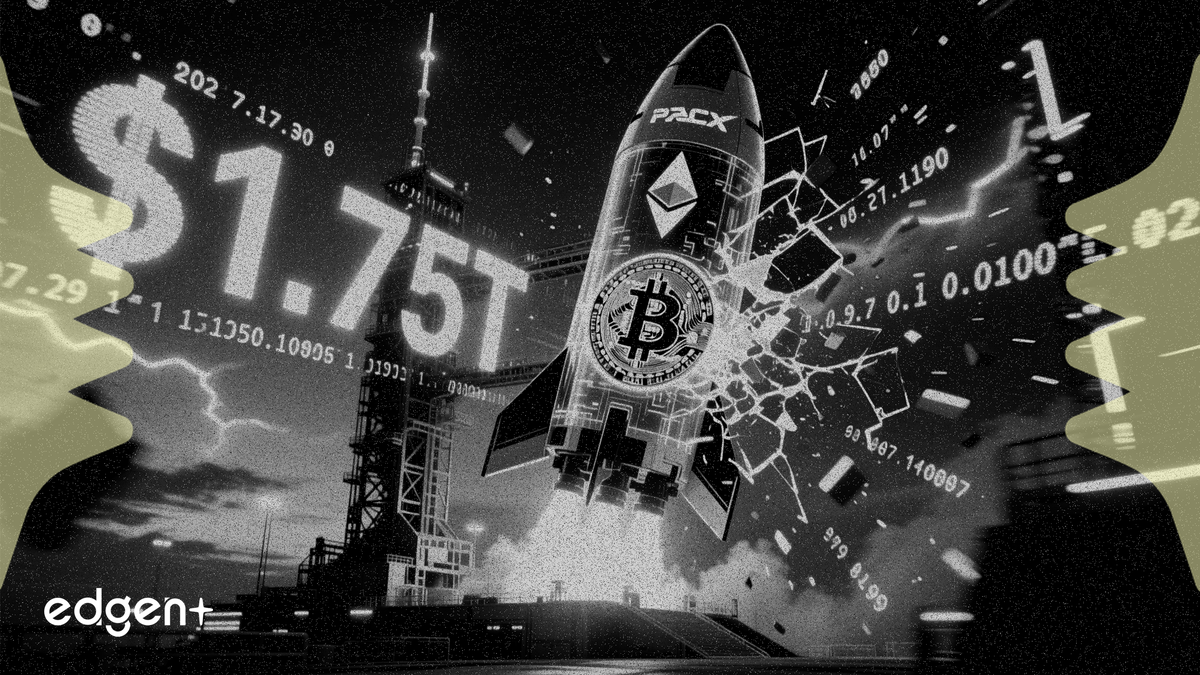
The largest initial public offering in history arrives June 12, and crypto traders are already rotating capital out of digital assets to make room.
Space Exploration Technologies Corp., valued at approximately $1.75 trillion in what analysts project will be the biggest IPO ever, begins trading on the Nasdaq this week under the ticker SPCX. The listing comes at a moment of acute stress across risk assets: the Nasdaq Composite plunged 4.18% on June 5 after a stronger-than-expected May jobs report pushed rate-hike probabilities to 68.4% by December, according to CME FedWatch data. Bitcoin fell below $60,000 for the first time since late 2024, touching an intraday low near $59,100.
"The sheer size of the SpaceX float means institutional and retail investors alike are freeing up cash — and that selling pressure is showing up in the most liquid alternative assets first," said Tom Brennan, an IPO and M&A analyst at Edgen. "Crypto markets are the path of least resistance for rebalancing ahead of a forced purchase event like this."
Bybit, one of the largest cryptocurrency exchanges, announced Sunday it will begin offering tokenized IPO access starting with SpaceX, allowing retail users to subscribe at the offering price through their Bybit accounts, backed by underlying equity held in regulated custody. The move underscores how deeply the IPO is cutting across traditional and digital asset boundaries.
The capital rotation dynamic is compounded by index mechanics. S&P Global confirmed on June 5 that SpaceX will not receive fast-track S&P 500 inclusion, reaffirming its profitability rules. But Nasdaq's revised methodology, effective May 1, allows immediate fast-track entry into the Nasdaq-100 after just 15 trading days for companies ranked in the top 40 by market cap. That means Nasdaq-tracking funds will be forced to absorb SpaceX shares on a compressed timeline, amplifying the pre-listing rebalancing effect.
The macro backdrop adds another layer of pressure. Citigroup's proprietary Bear Market Checklist hit 11.5 of 18 risk flags in the U.S. — the highest reading since the 2008 financial crisis. Citi strategist Beata Manthey warned that once the count reaches double digits, "it has historically tended to rise more rapidly, signaling a potential acceleration in risk." The last time the U.S. reading was this elevated, the S&P 500 was entering a period of sustained drawdown.
For crypto markets, the near-term risk is straightforward: liquidity is being pulled into the SpaceX IPO at a time when rate-sensitive assets are already under pressure from the Fed repricing. The May nonfarm payrolls report showed 172,000 new jobs — roughly double the 85,000 consensus — pushing the 10-year Treasury yield to 4.54% and triggering a "good news is bad news" selloff that erased roughly $1.3 trillion in chip-sector market value in a single session.
If SpaceX trades well on debut, the positive sentiment could spill back into risk assets broadly, including crypto. But if the listing coincides with further deterioration in macro conditions — the Fed meets June 16-17, and May CPI and PCE data will sharpen the rate outlook — the rotation out of crypto could accelerate. The July FOMC meeting looms as the next major inflection point for both asset classes.
This article is for informational purposes only and does not constitute investment advice.