
SpaceX President Gwynne Shotwell said a merger with Tesla "might make Elon's life a little easier" as shares surged 30% on debut.
SpaceX President Gwynne Shotwell said a merger with Tesla "might make Elon's life a little easier" as shares surged 30% on debut.
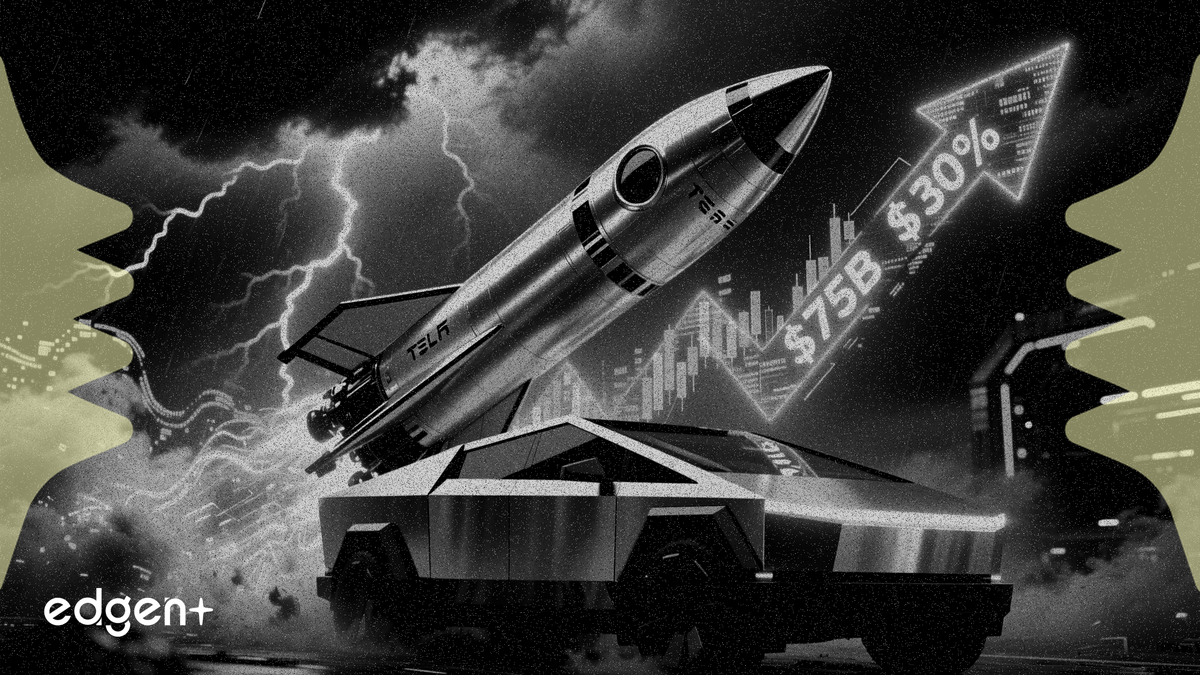
SpaceX raised $75 billion in the largest IPO in history Friday, pricing at $135 a share before surging 30% in its Nasdaq debut, as President Gwynne Shotwell opened the door to a potential merger with Tesla.
"A merger between SpaceX and Tesla might make Elon's life a little easier," Shotwell told CNBC, while noting that her immediate focus remains on rocket production, crewed flights and Starlink broadband. "There's no question that there are synergies between SpaceX and Tesla in our futures."
The IPO valued SpaceX at $1.77 trillion despite $4.9 billion in losses last year on $18.7 billion in revenue. Morningstar analysts Nicolas Owens and Suryansh Sharma said the company "has been significantly overvalued," pegging fair value at $780 billion — less than half the IPO valuation. SpaceX set aside about 30% of the offering for retail investors, or roughly $22.5 billion, well above the typical 5% to 10% allocation.
A Tesla-SpaceX combination would create a roughly $3 trillion conglomerate spanning electric vehicles, aerospace, satellite communications and artificial intelligence. Wedbush analyst Dan Ives put the odds of a merger closing in 2027 at 80% to 90%, calling it the "holy grail" of Musk's push into AI.
SpaceX amended its S-1 registration document ahead of the IPO to include language about issuing "a significant amount of equity in connection with future transactions" — a warning Shotwell's comments now give context to. The company already absorbed Musk's AI venture xAI earlier this year in an all-stock deal, and xAI subsequently acquired the social media platform X. Tesla holds a stake in SpaceX, and the two companies jointly develop a chip manufacturing project called Terafab. SpaceX spent $131 million on Cybertrucks in 2025, according to its IPO filing, while Tesla has sold roughly $890 million worth of vehicles and batteries to SpaceX and xAI since 2023.
Musk, who controls more than 80% of SpaceX's voting power, holds a supermajority that allows him to sign off on any board action that could result in his ouster. The SpaceX board also approved a pay package granting him 200 million super-voting restricted shares if he establishes a permanent Mars colony with at least 1 million residents and SpaceX reaches a $7.5 trillion valuation.
Starlink, SpaceX's satellite internet division, remains the primary revenue driver with more than 10,000 satellites in orbit and over 10 million subscribers. The unit posted an operating profit of $1.19 billion in the first quarter. On the eve of the IPO, SpaceX announced a $1.25 billion monthly deal to rent its Colossus 1 AI data center to Anthropic and a separate $920 million monthly agreement with Google, a major SpaceX shareholder.
The IPO places Musk in the unusual position of running two publicly traded companies simultaneously. Oppenheimer analysts took the opposite view from Wedbush, arguing that independence between SpaceX and Tesla better aligns with Musk's long-term objectives, though they called a future transaction "plausible." About 4,400 SpaceX employees stand to become millionaires from the listing, according to the New York Times.
This article is for informational purposes only and does not constitute investment advice.
