

Markets price in a US-Iran peace deal as RBC CEO McKay says negotiations near a breakthrough, with Brent crude at $93.
Markets price in a US-Iran peace deal as RBC CEO McKay says negotiations near a breakthrough, with Brent crude at $93.
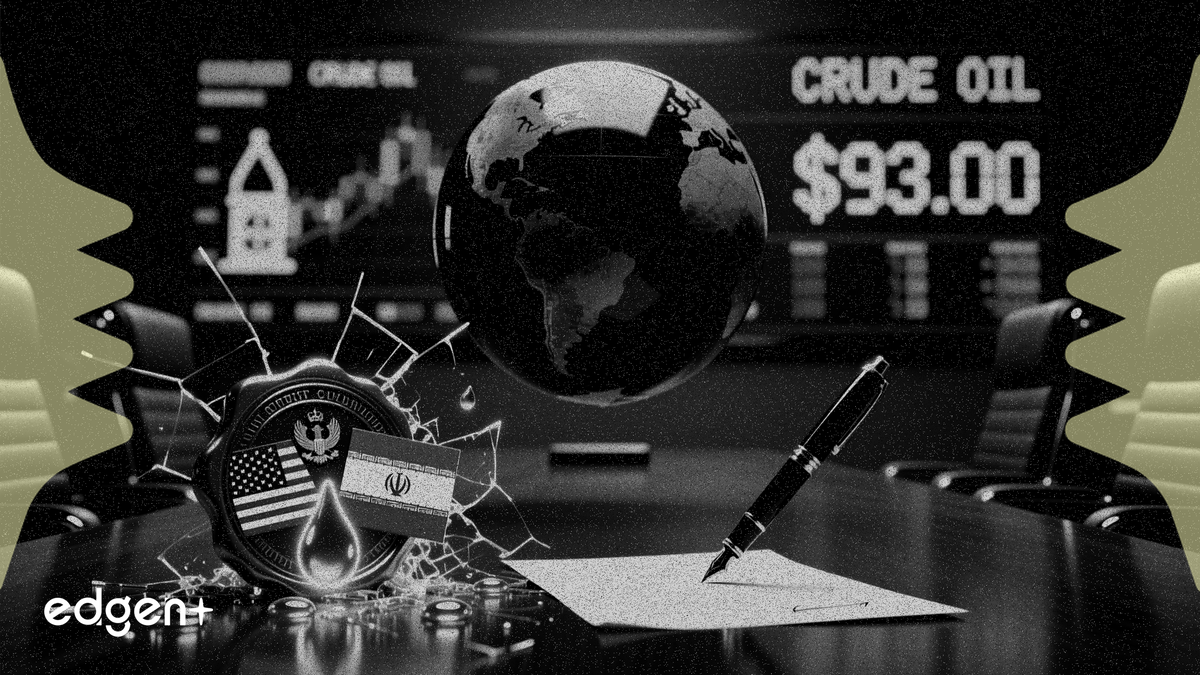
Markets price in a US-Iran peace deal as RBC CEO McKay says negotiations near a breakthrough, with Brent crude at $93.
RBC Chief Executive Officer Dave McKay said a US-Iran peace deal is nearing, sending equities higher and pointing to a potential unwind of the geopolitical risk premium that has kept Brent crude above $90 since the conflict erupted in late February.
"A resolution with Iran would remove a significant risk premium embedded in energy markets and global equities," McKay, president and CEO of Royal Bank of Canada, said on Fox Business's The Claman Countdown. "We're watching this very closely."
Brent crude edged up 8 cents to $93.18 a barrel Thursday, paring earlier gains of more than $2 after Iran's joint military command announced the closure of the Strait of Hormuz to oil tankers and commercial ships. US crude inventories have fallen 79 million barrels since the war began Feb. 28, while OPEC output in May slid to its lowest level in over two decades, a Reuters survey showed. The US military said commercial ships continued to transit the strait and no US warships had been struck.
A peace deal would unlock a significant unwind of the risk premium built into energy and equity markets since the conflict began. The Strait of Hormuz handles about 21 percent of global oil trade, and its effective closure has constrained supply from Gulf producers, contributing to inflation pressures that pushed the European Central Bank to raise rates to 2.25 percent this week. Prediction markets reflect the uncertainty: the probability of a US-Iran diplomatic meeting by June 30 stands at 31.7 percent, while the likelihood of a permanent Israel-Iran peace deal by June 30 is just 3.4 percent.
The disconnect between military escalation and market optimism has historical precedent. After the 2019 attacks on Saudi Aramco's Abqaiq and Khurais facilities, Brent spiked 15 percent in a single session before giving back gains within weeks as supply disruptions proved temporary. The current situation carries higher stakes: a sustained Strait of Hormuz closure would affect a far larger share of global supply.
Trump told Fox News reporter Trey Yingst that the strikes would stop shortly but that he would "bomb the shit out of them" if Iran's leaders did not sign an agreement immediately. The dual-track approach — escalating military pressure while indicating openness to a deal — has created a volatile environment for traders. Indian refiners told Reuters they have secured enough crude through August, while Abu Dhabi National Oil Co managed to export some crude to Asian buyers, suggesting supply chains are adapting.
What a Deal Would Mean
A peace agreement would likely trigger a sharp repricing across multiple asset classes. Brent could test $80 a barrel as the risk premium dissipates, according to ING analysts, who noted that "energy flows from the Persian Gulf will remain heavily constrained" until a deal is confirmed. Equities, particularly in energy-sensitive sectors, could see sustained upside, while Canadian markets and global indices may rally on reduced trade and military tension.
After the 2020 US-Iran standoff following the Soleimani strike, the S&P 500 rose 12 percent over the following three months as the risk premium faded. A similar pattern could emerge if a deal materializes, though the current conflict's impact on global energy supply is more severe.
This article is for informational purposes only and does not constitute investment advice.
