
**China's 62.9% NEV penetration has destroyed luxury car resale values, with Bentley and Porsche models losing up to 87% of their original price.
**China's 62.9% NEV penetration has destroyed luxury car resale values, with Bentley and Porsche models losing up to 87% of their original price.
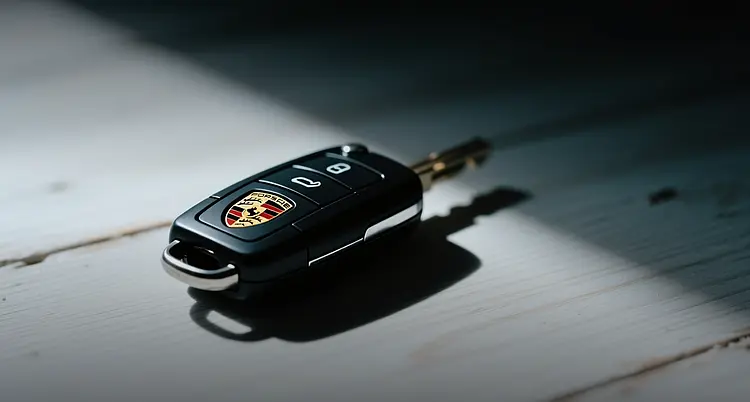
China's 62.9% NEV penetration has destroyed luxury car resale values, with Bentley and Porsche models losing up to 87% of their original price.
China's accelerating shift to electric vehicles has shattered the resale value of traditional luxury cars, with an 8-year-old Bentley Flying Spur now trading at 268,000 yuan ($36,900) — an 87% plunge from its 2-million-yuan new-car price.
"The depreciation curve for luxury fuel vehicles has fundamentally broken," said a Hangzhou-based used car dealer surnamed Liang, who has operated in the market for more than a decade. "We now prioritize turnover speed over profit margins to avoid holding dead assets."
Porsche's three-year resale value has fallen to 67.34% from 92.63% in 2022, according to the China Automobile Dealers Association. Mercedes, BMW and Audi now all trade below 60% — at 58.50%, 52.68% and 50.19%, respectively. A 2020 Mercedes E260 recently sold for just over 140,000 yuan, while a Volkswagen Touareg that cost nearly 900,000 yuan new changed hands for 68,000 yuan.
The collapse threatens the China profitability of every major European luxury automaker. BMW cut its 2026 EBIT margin forecast to 1%-3% from 4%-6%, Mercedes slashed its Beijing sales workforce by a third, and Porsche plans to shrink its China dealer network from 116 stores to 80. Together, BMW, Mercedes and Audi lost nearly 260,000 units of combined China sales in 2025.
New-energy vehicles — including battery electrics, plug-in hybrids and range-extenders — captured 62.9% of China's passenger car sales in May 2026, data from the China Passenger Car Association show. That milestone has rewritten the economics of car ownership for traditional internal-combustion vehicles, particularly in the premium segment where brand cachet once commanded a significant premium.
The price destruction is most acute in the 300,000-to-1-million-yuan ($41,000-$138,000) bracket, where domestic NEV brands such as AITO, Li Auto and NIO have directly challenged the dominance of BMW, Mercedes and Audi. These Chinese competitors offer advanced cabin interfaces, autonomous driving features and lower running costs — advantages that have eroded the traditional selling points of German engineering and heritage.
Dealers bleed as inventory turns toxic
Nearly 80% of used car dealers are losing money on luxury fuel vehicles, according to the China Automobile Dealers Association. Many have stopped accepting large-displacement, niche luxury models or are offering only rock-bottom acquisition prices. The wholesale market for older luxury cars has descended into a price war among dealers desperate to clear inventory.
Porsche's situation illustrates the severity. The sports car maker delivered 41,938 vehicles in China in 2025, down 26.3% from a year earlier and more than 56% below its 2021 peak of 95,700. Each of its remaining dealers is losing 20,000 to 30,000 yuan ($2,941-$4,413) per vehicle delivered, according to local reports. The company closed four dealerships in Wuhu, Jining, Huai'an and Nanning on June 30 and has shuttered about 200 DC fast chargers it built at significant cost. A restructuring plan is expected to cut about 3,900 jobs.
Mercedes-Benz China in June launched a new round of layoffs at its Beijing sales joint venture, reducing headcount to fewer than 600 from about 900 — a cut of more than a third. The manufacturing side had already shed more than 2,000 workers in 2025. BMW, meanwhile, has lowered its profit guidance three consecutive years through 2026, with the latest revision in June halving its core automotive EBIT margin forecast to 1%-3%.
Investment implications
For investors, the China earnings contribution from European luxury automakers will continue to shrink. BMW, Mercedes and Porsche derive a significant portion of global profits from China, and the structural shift to NEVs shows no sign of slowing. Chinese NEV exports reached 1.83 million units in the first five months of 2026, accounting for 45% of the country's 4.06 million vehicle exports, as domestic brands expand into markets that European automakers once dominated.
Some used car dealers are already pivoting, exporting Chinese NEVs to overseas markets not yet covered by the automakers' official distribution networks — a trend that could further pressure European brands in emerging markets.
This article is for informational purposes only and does not constitute investment advice.
