

Lockheed Martin and Rheinmetall will build the first ATACMS production line outside the US at a German facility dating back to the 19th century.
Lockheed Martin and Rheinmetall will build the first ATACMS production line outside the US at a German facility dating back to the 19th century.
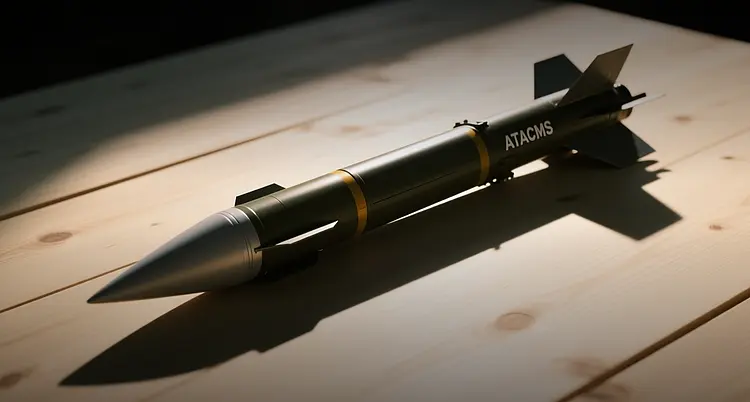
Lockheed Martin and Rheinmetall will build the first ATACMS production line outside the US at a German facility dating back to the 19th century.
Lockheed Martin and Rheinmetall signed a memorandum of understanding Tuesday to establish a joint venture producing ATACMS guided missiles in Germany, creating the first European center of excellence for the weapon system outside the United States.
"This partnership marks a watershed moment for European security and allied industrial cooperation," said Jay Pitman, president of Lockheed Martin International. "By combining Lockheed Martin's unmatched missile expertise with Rheinmetall's manufacturing excellence, we'll deliver combat-proven capabilities faster and more efficiently to our allies."
The agreement, announced at the NATO Summit Defense Industry Forum in Ankara, places production at Rheinmetall's Unterluess facility in northern Germany, a site commissioned more than 125 years ago that employs about 4,000 workers. A rocket motor factory at the site is nearing completion, with production of rocket motors and guided missile components scheduled to begin as early as 2027. The facility already houses "Werk Niedersachsen," one of Europe's most modern artillery ammunition plants, which opened last year.
The deal addresses a critical gap in NATO's munitions supply chain as European allies seek to reduce dependence on US-based production amid heightened security demands. Rheinmetall CEO Armin Papperger said the partnership strengthens "autonomy in defense policy" for Germany and Europe, while Dennis Goege, Lockheed Martin's chief executive for Europe, described it as "a strong signal for Europe's defense industry and for NATO's long-term resilience."
The joint venture comes as NATO members face renewed pressure from the Trump administration to boost defense spending above the current 2 percent of GDP target. European defense budgets have risen sharply since Russia's 2022 invasion of Ukraine, with Germany committing 100 billion euros to a special defense fund and several allies pledging to reach 3 percent of GDP. The last major US-European co-production of a strategic missile system was the Patriot air defense program, which began manufacturing in Europe in the 1980s.
For Rheinmetall, the ATACMS deal extends a rapid expansion. The Düsseldorf-based defense contractor has more than doubled its revenue since 2022, driven by ammunition orders from Ukraine and European rearmament programs. Its shares have gained more than 150 percent over the past two years, outperforming the Stoxx Europe 600 Aerospace & Defense Index, which rose about 80 percent in the same period. Lockheed Martin, the world's largest defense contractor by revenue, reported $71 billion in sales last year, with international customers accounting for about a quarter of that total.
The Unterluess site's selection underscores Germany's push to anchor critical defense manufacturing on domestic soil. The facility, which already produces weapon systems, ammunition, and tracked vehicles, also operates Europe's largest privately owned firing range. Rheinmetall has invested heavily in expanding its ammunition capacity, with the rocket motor factory representing the latest addition to a production network that now spans artillery shells, propellants, and guided missiles.
This article is for informational purposes only and does not constitute investment advice.
