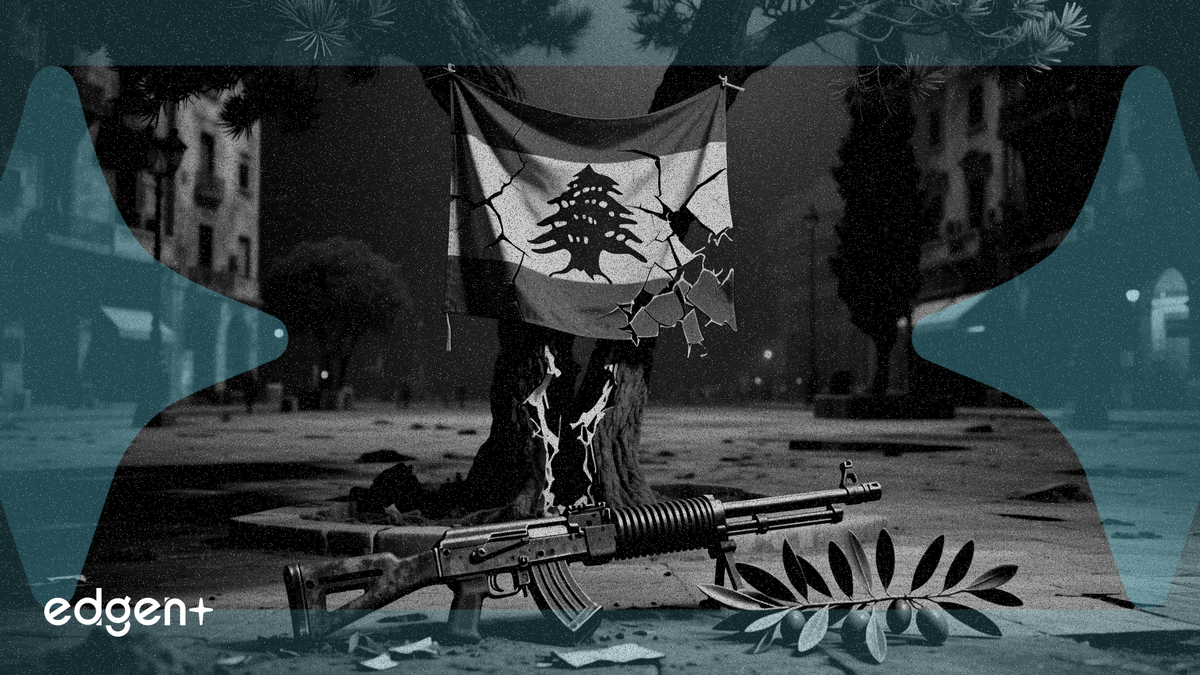
Lebanon is sliding toward a new civil war as the US and Israel press its weak government to disarm Hezbollah under a ceasefire deal the militant group has rejected, deepening sectarian fractures that have already displaced more than 1 million people.
"The ingredients of civil unrest are there. Emotional tensions are rising," said Khalil Helou, a former general in Lebanon's military who opposes Hezbollah.
The April 17 ceasefire between Israel and Lebanon was supposed to halt hostilities that began March 2, when Hezbollah joined Iran's war against the US and Israel by firing rockets across the border. Instead, the truce has been violated repeatedly. Israel struck 100 targets across Lebanon in 90 seconds on April 8 — one of the deadliest single bombardments in recent years — and hit Beirut's southern suburbs again on June 7. Hezbollah has continued launching projectiles into northern Israel, with the Israeli military reporting interceptions on June 7 in Yiftah and Ramot Naftali.
More than 3,500 people have been killed in Lebanon since March 2, according to the Associated Press. Almost 30 Israeli soldiers and a defense contractor have died in or around southern Lebanon, with two civilians killed in northern Israel. The fighting has created over 1 million internal refugees, many of whom now live in tent encampments on Beirut streets, where displaced Shia Muslims report being shunned by Christian, Druze and Sunni neighborhoods fearful of attracting Israeli airstrikes.
The Ceasefire That Isn't
The agreement requires the Lebanese state to gradually take back control of its territory and disarm Hezbollah — a plan attempted after Israel's 2024 war with the group that faltered when the militia refused to surrender its weapons. Hezbollah Secretary-General Naim Qassem made the group's position explicit in a May speech: "Disarmament is extermination, and we will never accept it."
The US has provided more than $3 billion to the Lebanese Armed Forces since 2006, but the military remains the second-most-powerful force in the country after Hezbollah. Current and former Lebanese military officials acknowledge the army acts as a unifying institution rather than a formidable fighting force. Soldiers don't want to be seen doing Israel's work, and many lack the will to confront fellow citizens in Hezbollah, US and Lebanese officials say.
On June 4, Israeli troops withdrew from the southern municipality of Dibbin and were replaced by Lebanese army units — a small step forward in a plan that envisions gradual Israeli pullbacks as the Lebanese military establishes control. But Hezbollah has rearmed, restocking rockets, antitank missiles and artillery via seaports and smuggling routes through Syria, and has adopted new tactics including fiber-optic-guided explosive drones that Israel is struggling to counter.
Sectarian Fault Lines Widen
The war is reopening wounds from Lebanon's 1975-1990 civil war, when rival Shia, Sunni, Maronite Christian, Palestinian and Druze militias carved the country into armed enclaves. In the Christian east Beirut neighborhood of Ain Saadeh, an Israeli strike killed Pierre Mouawad — a member of the anti-Hezbollah Lebanese Forces party, not a Hezbollah operative — along with his wife and a neighbor. After the incident, landlords evicted several Shia families from apartments in the area, according to local officials.
Imad Sobh, religious leader of Beirut's Sunni al-Kantari Mosque, said he has heard some Sunnis express support for Israel's war against Hezbollah and Shia at large. "I have never heard such things from Sunnis before," Sobh said. "I am trying to tamp down these sentiments and bring people together."
Market Implications
The Strait of Hormuz handles about 21 percent of global oil trade, and Iran has begun charging vessels $1.5 million to $2 million per passage, according to Fars News. The US Central Command said it has redirected 132 commercial vessels as part of its maritime blockade enforcement. Brent crude prices face upside risk from any further escalation that disrupts tanker traffic through the strait, while safe-haven demand for gold and the US dollar could strengthen if the conflict draws in Iran more directly.
The last time Lebanon's civil war erupted in 1975, the conflict lasted 15 years, destroyed Beirut's economy and turned the country into a proxy battleground for regional powers. The current trajectory — a government unable to enforce its laws, a militia refusing to disarm, a population fractured along sectarian lines and over 1 million people displaced — carries echoes of that era. With Iran, Israel and the US all militarily engaged in or adjacent to Lebanese territory, the risk of a broader regional conflagration remains elevated.
This article is for informational purposes only and does not constitute investment advice.