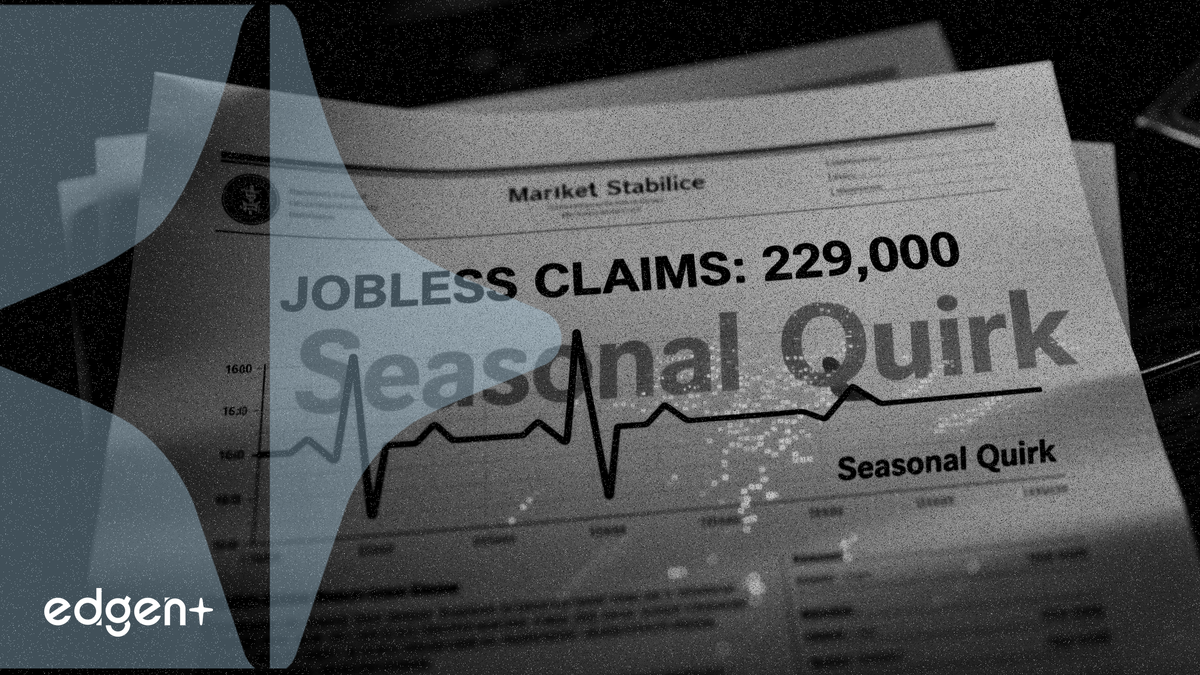
US applications for unemployment benefits climbed to a 4.5-month high of 229,000 last week, but economists say the increase reflects seasonal quirks rather than a deterioration in the labor market.
"The bump in new claims over the past two weeks is almost certainly noise and ought to be played down," said Thomas Simons, chief US economist at Jefferies. "Labor market conditions have improved substantially since the middle of 2025."
The Labor Department reported Thursday that initial jobless claims for the week ending June 6 rose by 4,000, exceeding the 216,000 consensus forecast from FactSet. The four-week moving average, which smooths weekly volatility, increased by 4,250 to 219,000. Continuing claims for the week ending May 30 jumped by 24,000 to 1.8 million, slightly above analyst estimates.
The headline number masks a more benign picture. Raw, unadjusted claims stood at 228,000 last week — about 7 percent below the 244,000 recorded in the same week a year earlier. The end of the school year typically pushes some education workers onto benefit rolls, while an earlier-than-usual Memorial Day holiday disrupted the government's seasonal adjustment process, according to the MarketWatch analysis.
Broader labor market data supports the view that layoffs are not rising. US employers added 172,000 jobs in May, and the economy has averaged 188,000 monthly gains over the three months since the Iran war began in late February — the strongest three-month stretch since early 2024. The unemployment rate has held at 4.3 percent for three consecutive months, near historic lows. Job openings also rebounded in April to 7.6 million from 6.9 million in March, the highest since May 2024.
The data comes as the Federal Reserve prepares to meet next week for the first time under new Chair Kevin Warsh, who replaced Jerome Powell. With consumer inflation running at 4.2 percent — the highest in three years, driven by rising gas prices after the closure of the Strait of Hormuz — most analysts expect the central bank to hold its benchmark rate steady. Some policymakers have signaled willingness to consider a rate hike this year to combat persistent price pressures, a move that would raise borrowing costs and potentially slow hiring.
"Although we are optimistic about the labor market, things could turn quickly given the pessimism over energy prices and the war in Iran," Simons said.
This article is for informational purposes only and does not constitute investment advice.