
Key Takeaways:
- Economic compensation has become the central obstacle in US-Iran nuclear negotiations, with Tehran demanding sanctions relief in exchange for surrendering a stockpile of highly enriched uranium that could fuel at least 10 bombs.
Key Takeaways:
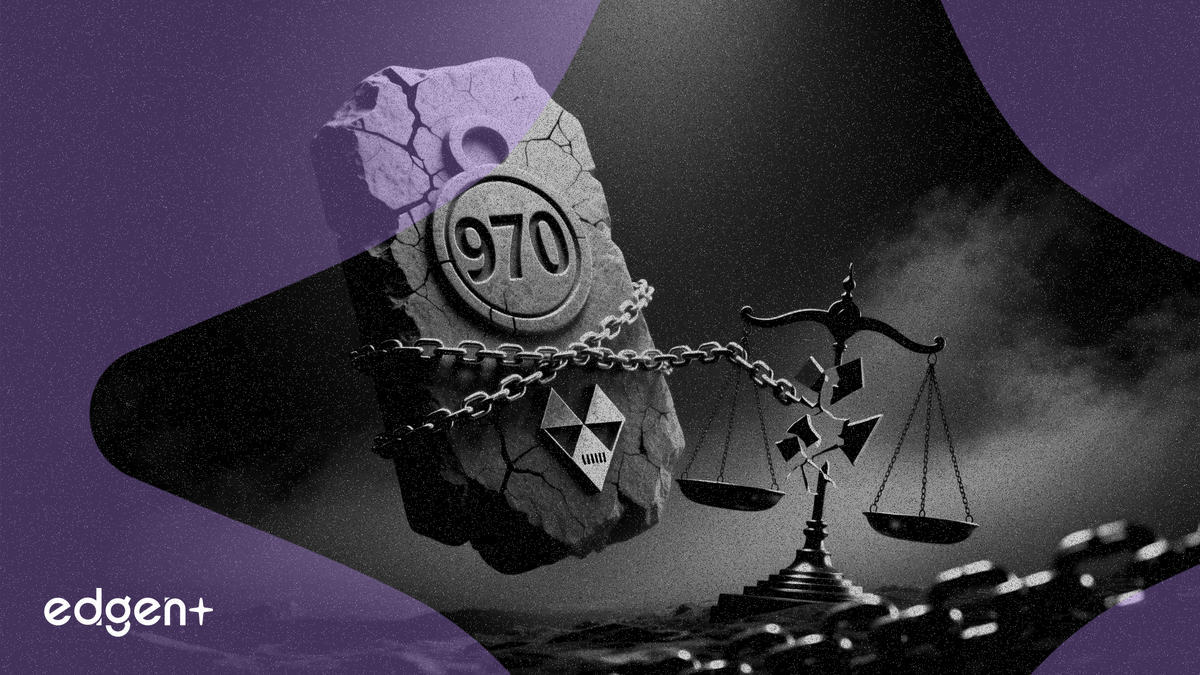
The Trump administration is pushing Iran to hand over roughly 970 pounds of uranium enriched to 60% purity — enough for multiple nuclear weapons — but disagreements over economic compensation have stalled progress, US officials said.
"Iran is being sanctioned because they have highly enriched uranium," Secretary of State Marco Rubio told the Senate Foreign Relations Committee on Tuesday. "If they agree to give up those things, there will be sanctions relief associated with their commitment and compliance with those agreements."
Iran's total enriched uranium stockpile exceeds 19,930 pounds, according to the International Atomic Energy Agency's latest assessment from February, including 405 pounds enriched to 20% and 13,280 pounds at 5%. The 60% material, stored in canisters roughly the size of scuba tanks, could be split among multiple locations — the Isfahan complex, Natanz, and the destroyed Fordo site — making retrieval or disposal without Tehran's cooperation extremely difficult.
The impasse carries direct consequences for global energy markets. The Strait of Hormuz handles about 21% of global oil trade, and Iran has previously threatened to disrupt shipping there. A collapse in talks could push crude prices higher and trigger a risk-off shift across equities, while a breakthrough would remove a key geopolitical risk premium priced into oil and gold.
President Donald Trump on Tuesday pushed back against reports that negotiations had stalled, posting on Truth Social that "the conversations between us have been going on continuously." But he also warned that time was running out, saying: "It's time, one way or another, for you to make a deal."
The mixed messaging reflects deep divisions over what a final agreement would look like. Rubio acknowledged that Iran had "agreed to negotiate aspects of their nuclear program that just a month ago, just a year ago, they were refusing to even mention." Yet Iranian Foreign Ministry spokesman Esmaeil Baghaei countered that "no negotiations have taken place at this stage on the details of the nuclear issue," according to Iranian state media.
The last time the US and Iran reached a framework understanding — the 2015 Joint Comprehensive Plan of Action — Iran accepted limits on enrichment in exchange for sanctions relief worth an estimated $100 billion in frozen assets and suspended oil sanctions. That deal collapsed after the US withdrew in 2018, and Iran subsequently expanded its enrichment program. The current stockpile of 60% material represents a level of nuclear advancement far beyond what existed under the JCPOA.
The location of the enriched uranium adds another layer of complexity. Much of the 60% stockpile is believed to be stored deep underground at the Isfahan nuclear complex, buried under a mountain beyond the reach of even powerful US bunker-buster bombs. Satellite imagery shows Iran has added dirt barriers and defensive structures at the site this year, suggesting preparations for a potential ground operation. A smaller share may be at Natanz or in a separate undisclosed location, according to IAEA head Rafael Grossi.
Rubio told Congress that Iran has not been offered sanctions relief in exchange for reopening the Strait of Hormuz, a key demand from Washington. The administration is instead focusing on convincing Tehran to turn over its nuclear material in return for incentives, though no specific compensation package has been disclosed.
The negotiations have been further complicated by Israel's military escalation in Lebanon. Iranian Foreign Minister Abbas Araghchi said Monday that "the cease-fire between Iran and the US is unequivocally a cease-fire on all fronts, including in Lebanon," warning that "its violation on one front is a violation of the cease-fire on all fronts." Trump later brokered a partial cease-fire between Israel and Hezbollah, but Israeli Prime Minister Benjamin Netanyahu said forces would continue operating "as planned" in southern Lebanon.
For markets, the key variable remains whether the US and Iran can bridge the compensation gap before the current window closes. A deal would likely send oil prices lower and reduce demand for safe-haven assets like gold, while also removing a source of volatility that has weighed on Middle East equities. Failure to reach an agreement would leave Iran's nuclear program unconstrained and keep the threat of supply disruptions in the Persian Gulf alive.
This article is for informational purposes only and does not constitute investment advice.
