
Iran's IRGC struck petrochemical facilities in Haifa on Monday, retaliating for Israeli attacks on Iranian energy infrastructure and threatening to target all energy sites across the region, a move that risks pushing Brent crude above $100 a barrel.
Iran's IRGC struck petrochemical facilities in Haifa on Monday, retaliating for Israeli attacks on Iranian energy infrastructure and threatening to target all energy sites across the region, a move that risks pushing Brent crude above $100 a barrel.
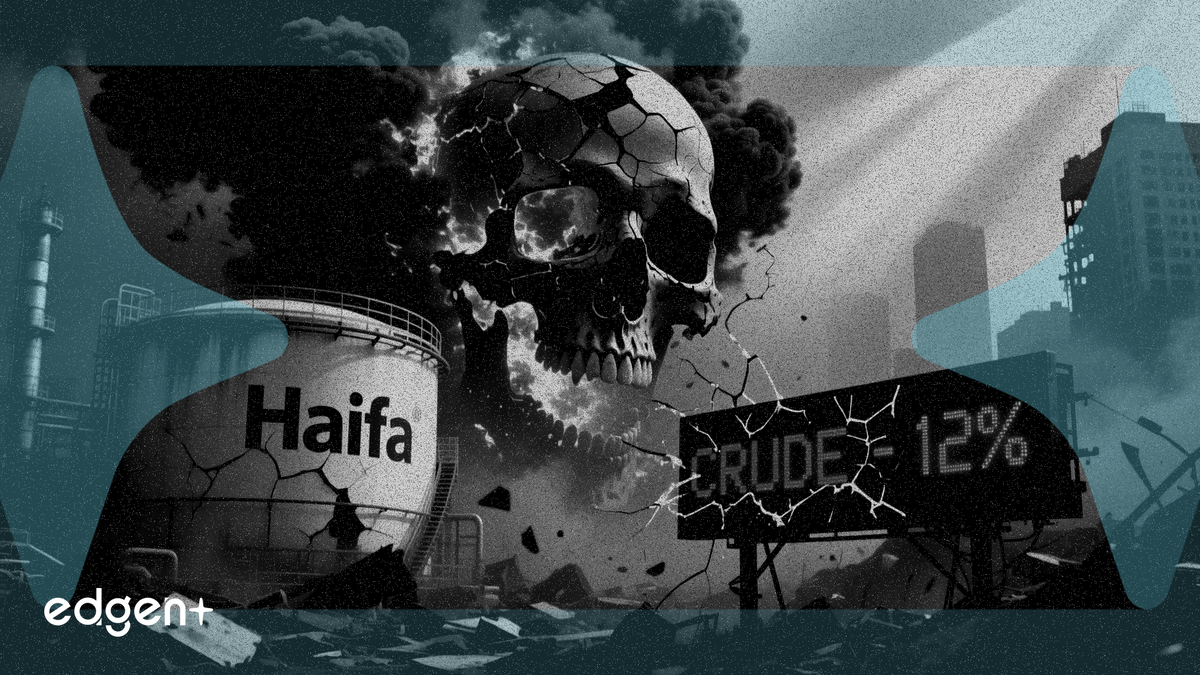
Iran's Islamic Revolutionary Guard Corps launched missile strikes against petrochemical facilities in Haifa on Monday, retaliating for Israeli attacks on Iranian energy infrastructure and warning it would target all energy sites across the region.
"The enemy has opened a dangerous operation by attacking civilian and oil industrial targets," the IRGC said in a statement. "Iran's strike range will cover all energy targets in the region, and the consequences for the global economy should be borne by the United States."
The strikes came on the 100th day of the Iran war, which began Feb. 28 when Israel and the US killed Supreme Leader Ayatollah Ali Khamenei and other senior Iranian leaders. A nominal ceasefire took effect April 8 but has frayed as both sides struck energy infrastructure, with Israel hitting Iranian petrochemical plants and Iran retaliating against Haifa's industrial zone.
The escalation threatens to choke off oil flows through the Strait of Hormuz, which handles about 21% of global crude trade, according to the US Energy Information Administration. Brent crude futures have already risen 18% since the ceasefire began fraying in late May, and further disruption could push prices above $100 a barrel for the first time since 2022.
Energy Infrastructure in the Crosshairs
Monday's attack marks the first time Iran has explicitly targeted Israeli petrochemical facilities, broadening the conflict beyond military and nuclear sites. The IRGC's warning that it would strike "all energy targets in the region" raises the specter of attacks on Saudi and UAE infrastructure, which could remove an additional 9 million barrels a day of production capacity.
Oman's Mina Al Fahal terminal was already hit by a drone strike on June 5, though operations resumed normally. The terminal handles about 897,000 barrels a day of Omani crude exports, according to Petroleum Development Oman. LNG loadings at Oman's Qalhat terminal continued as normal, though insurance costs have risen.
The last time Iran directly attacked Israeli territory was on April 13, when it launched more than 300 drones and missiles in response to an Israeli strike on its Damascus consulate. That attack caused minimal damage but triggered a cycle of retaliation that culminated in the Feb. 28 war. Monday's strikes suggest the April 8 ceasefire has effectively collapsed.
Market Fallout and Diplomatic Stakes
Global equity markets sold off in Asian trading Monday, with Japan's Nikkei 225 falling 3.2% and Hong Kong's Hang Seng Index dropping 2.8% as investors priced in a prolonged energy supply disruption. Gold rose 1.4% to $2,458 an ounce, while the dollar index gained 0.6% against a basket of major currencies.
US President Donald Trump told Israeli Prime Minister Benjamin Netanyahu on Sunday to hold off on further retaliation, according to a senior US official, but the White House has not commented on whether Monday's Israeli strikes on Iran were coordinated with Washington. Trump earlier told Fox News that Israel's strikes in Lebanon were "not coordinated" and that he was "not happy about it."
Iran's decision to target energy infrastructure directly mirrors the strategy it employed through proxies in 2019, when drone attacks on Saudi Aramco's Abqaiq and Khurais facilities temporarily removed 5.7 million barrels a day from global markets, sending crude prices up 15% in a single day. The difference now is that Iran is acting directly, not through Houthi or militia proxies, raising the risk of a US military response that could widen the conflict across the Persian Gulf.
This article is for informational purposes only and does not constitute investment advice.
