
Iran and Israel traded direct fire Monday, shattering a two-month ceasefire and pushing the Middle East back toward all-out war on the conflict's 100th day.
Iran and Israel traded direct fire Monday, shattering a two-month ceasefire and pushing the Middle East back toward all-out war on the conflict's 100th day.
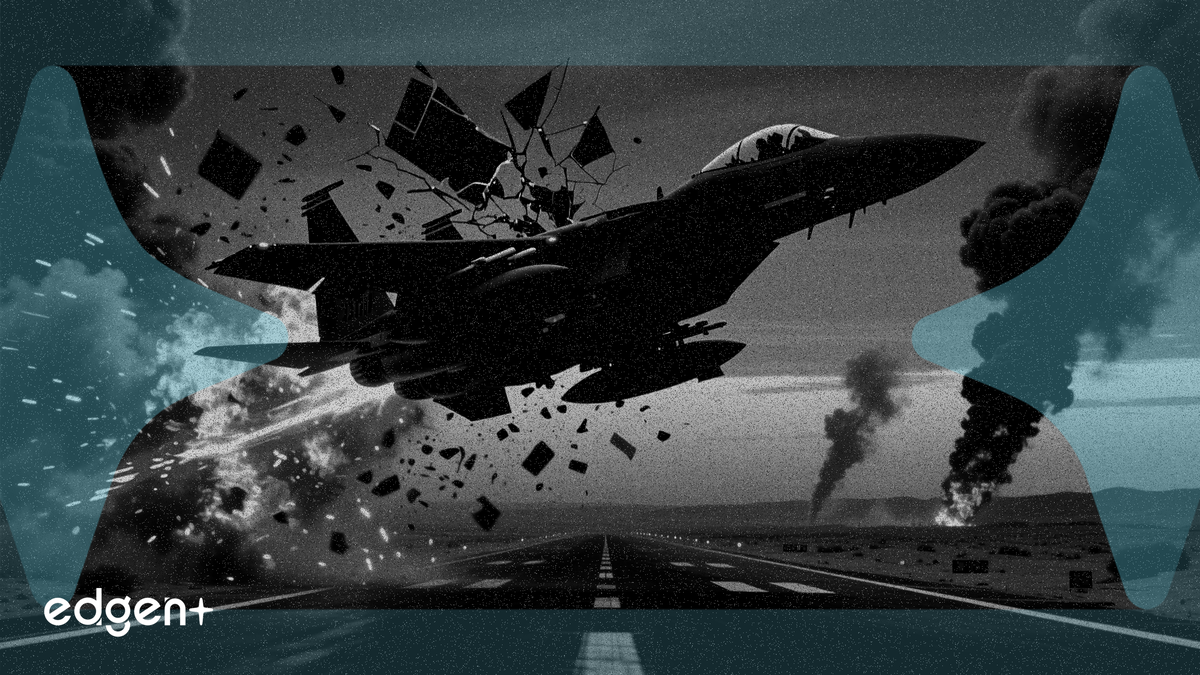
Iran's Islamic Revolutionary Guard Corps launched Operation Nasr against Israeli airbases Monday, while Israel struck a petrochemical complex in southwestern Iran, imperiling a fragile ceasefire on the war's 100th day.
"No one believes that the Israeli regime would take any action without coordination with the United States," Esmail Baghaei, spokesman for Iran's Foreign Ministry, told journalists in Tehran. "The United States bears responsibility for the Israeli regime's aggression."
The escalation sent crude oil futures higher as the Strait of Hormuz — which handles about 21% of global seaborne crude — remained under threat from Iran-backed Houthi rebels, who declared a ban on Israeli shipping in the Red Sea. Gold rose as investors sought havens, while equity futures in Asia and Europe pointed lower. The US has redirected 129 commercial vessels since imposing its blockade on Iranian ports, Central Command data show.
The breakdown of the April 8 ceasefire risks reopening a conflict that has already killed more than 3,550 people in Lebanon alone and pushed oil prices toward $100 a barrel. President Trump, who told the Financial Times last week that he "calls all the shots" on how the war is prosecuted, had urged Prime Minister Benjamin Netanyahu not to retaliate — a request Israel apparently disregarded.
The Iranian operation targeted two military bases in Israel with multiple missile waves, according to the Guard's statement carried by Tasnim News Agency. Israeli authorities reported three waves of incoming Iranian fire, with air defense systems intercepting projectiles over central Israel. The country canceled school nationwide for the first time since the April round of fighting.
Israel's military said it struck a petrochemical complex in Mahshahr, in Iran's Khuzestan province, as well as radar sites in three areas of Iran. The strikes came hours after Iran retaliated for an Israeli attack on Beirut's southern suburbs Sunday that killed two people and wounded 20, according to Lebanon's health ministry.
Yemen's Houthis Join the Fight
Yemen's Iran-backed Houthi rebels fired a missile at Israel and announced a "complete and total ban on Israeli maritime navigation in the Red Sea," raising the specter of renewed disruption on a waterway that carries about 12% of global trade. Saudi Arabia sounded missile alert sirens near Prince Sultan Air Base, which hosts US forces, though no impacts were reported. The Houthi declaration threatens to reimpose shipping disruptions that had eased after the April ceasefire.
Market Implications
The renewed hostilities come as US gasoline prices averaged $4.22 a gallon, about $1.10 above a year ago, with the White House's top economic adviser Kevin Hassett saying prices would fall "relatively quickly" once a deal with Iran is reached. Oil was trading near $97 a barrel, down from crisis peaks but still elevated by historical standards.
The last time Iran and Israel traded direct fire at this scale was in April, when a ceasefire was reached after 40 days of fighting. That conflict pushed the VIX above 30 and sent the S&P 500 down more than 5% before stabilizing. With the ceasefire now in jeopardy, options markets are likely to reprice geopolitical risk premiums higher across Middle East-exposed assets.
This article is for informational purposes only and does not constitute investment advice.
