

IBM posted its strongest first-quarter free cash flow in a decade, yet the stock has fallen 16% from its January peak as hawkish Fed policy compresses enterprise tech multiples.
IBM posted its strongest first-quarter free cash flow in a decade, yet the stock has fallen 16% from its January peak as hawkish Fed policy compresses enterprise tech multiples.
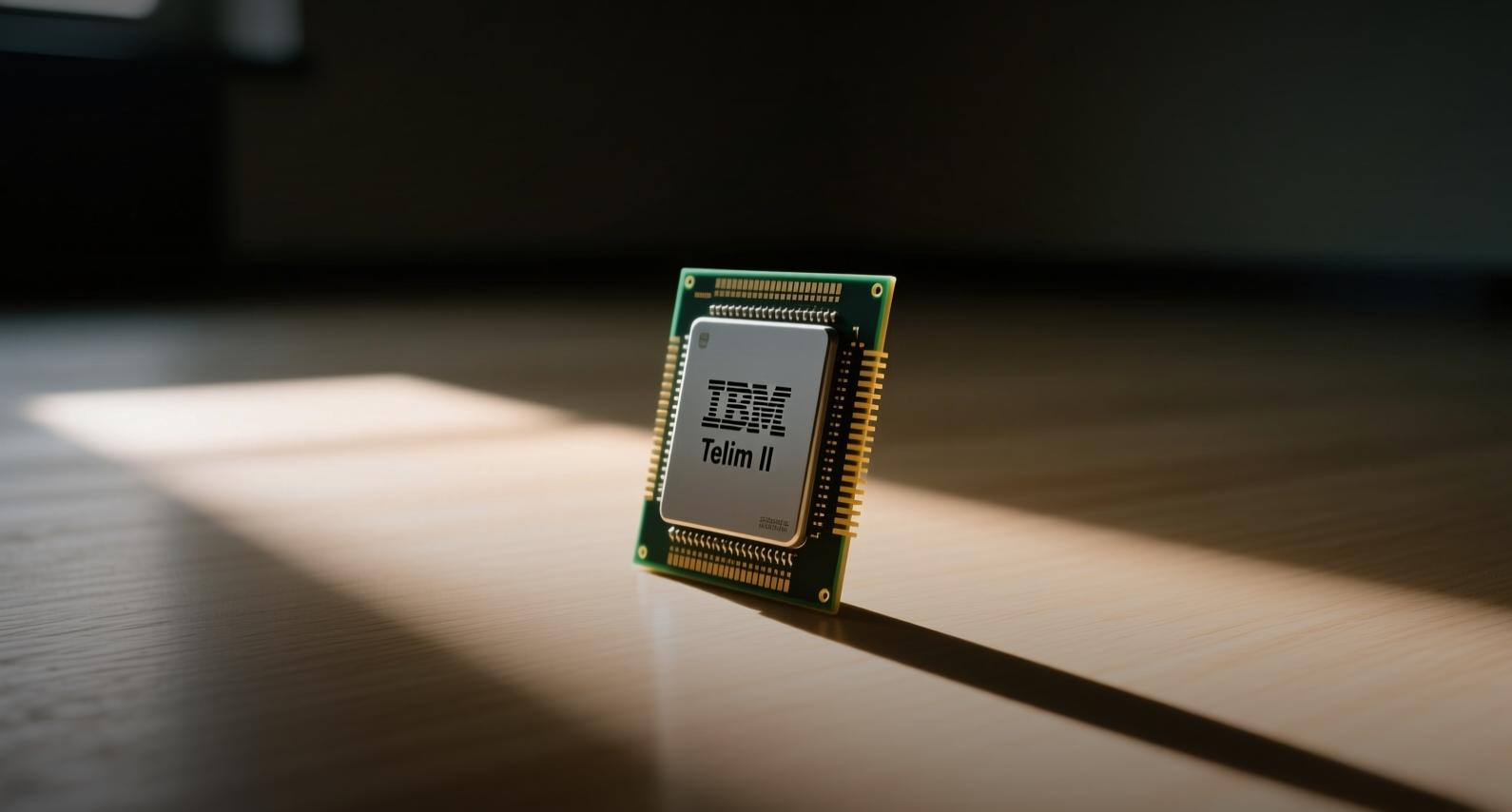
IBM fell 16% to $268.71 from its January high near $314.84, even as the company reported its highest first-quarter free cash flow in a decade. The decline has widened the gap between price and fundamentals to levels not seen in years, with the stock now trading at 22 times forward earnings.
"IBM's Q1 was clean — software grew 11%, infrastructure surged 15%, and free cash flow hit a decade high," said Alex Sirois, a financial writer covering the stock. "The selloff reflects multiple compression from quantitative tightening under Kevin Warsh, not deteriorating business fundamentals."
Of the 22 analysts covering IBM, 12 rate it a Buy or Strong Buy, 7 rate it a Hold, and 2 rate it a Strong Sell, with a consensus price target of $290.89. The stock has rebounded 22.5% from its recent lows but remains 8% lower year to date, while the S&P 500 has gained 10.7%.
The divergence matters because IBM is delivering where it counts. Its generative AI book of business has reached $12.5 billion since inception, and the company has raised its dividend for 31 consecutive years, yielding 2.44%. The question is whether the market's macro-driven discounting is an opportunity or a warning.
What the Numbers Show
Q1 2026 revenue reached $15.92 billion, beating estimates by 1.7%, while earnings per share of $1.91 exceeded consensus by 5.45%. Free cash flow rose 13% year over year to $2.22 billion, the highest first-quarter total in a decade. Software revenue grew 11.3%, and infrastructure revenue jumped 15.3%, driven by a 51% surge in IBM Z mainframe shipments.
The mainframe cycle is proving stronger than expected. The z17 platform's first-year installations have already surpassed the prior generation by more than $1 billion, and mainframes now handle 73% of global transaction value. IBM's Telum II processor processes 50% more AI operations per day than its predecessor, running models directly where enterprise data resides.
Consulting remains the weak spot, growing just 1% on a constant-currency basis, signaling caution in enterprise discretionary spending. Total debt stands at $61.3 billion after acquisitions including Confluent, making the company sensitive to sustained rate increases.
The Risk-Reward at $268
At a forward price-to-earnings ratio of 22, IBM screens as undervalued relative to its growth trajectory. The 50-day moving average of $249.15 has flipped into support, and the 200-day moving average of $273.07 sits just above as overhead resistance. A retest of $260 would sharpen the asymmetry further, according to technical analysis.
The broader market context adds pressure. The U.S. 10-year Treasury yield has climbed as Warsh's Fed maintains quantitative tightening, compressing multiples across enterprise tech. The U.S. dollar index has strengthened, adding headwinds for multinational earnings translation. IBM's annualized volatility tops 66%, reflecting the stock's sensitivity to macro shifts.
What could invalidate the thesis: software growth slipping below 10%, the AI book stalling for two consecutive quarters, or z17 mainframe demand fading after the current refresh cycle. The next catalyst is Q2 earnings, where investors will watch for consulting acceleration and any upward revision to full-year guidance.
This article is for informational purposes only and does not constitute investment advice.
