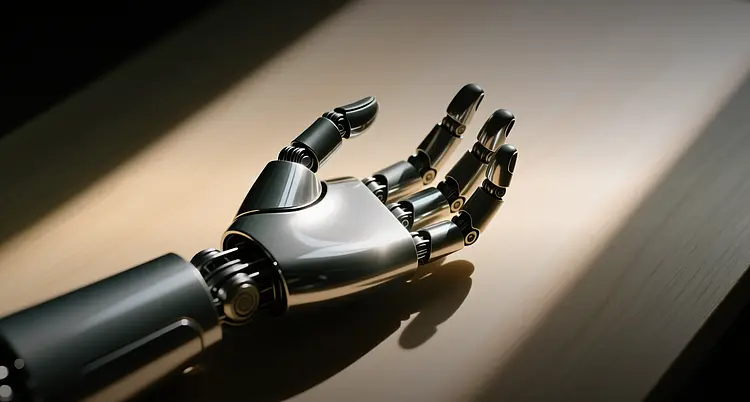
The first major humanoid robotics company completed its initial public offering in the first half of 2026, marking a milestone that could unlock a wave of investor interest in a sector that raised more than $2.1 billion in June alone across funding rounds and public listings.
"The IPO validates that humanoid robotics has moved from research concept to commercial reality, and public markets are now pricing that transition," said Tom Brennan, an analyst covering IPOs and deal flow. "Investors who missed the early AI infrastructure trade are looking at robotics as the next frontier."
Agility Robotics merged with Churchill Capital Corp. XI, a special purpose acquisition company, to become what it described as "the only U.S. publicly listed pure-play humanoid company with proven, active commercial deployments." The deal followed a June that saw Standard Bots raise $200 million in Series C funding at a $1 billion valuation, NEURA Robotics pursue up to $1.4 billion in Series C financing for physical AI, and General Intuition secure $320 million to train robots using video game data. Collaborative Robotics unveiled the second generation of its Proxie mobile robot with autotasking and mobile manipulation, while AGIBOT produced its 15,000th robot in a milestone for embodied AI deployment.
The IPO arrives against a broader venture capital backdrop that reached a record $510 billion globally in the first half of 2026, according to Crunchbase data. More than 70 percent of global startup capital in the second quarter went to AI-focused companies, up from just under 50 percent a year earlier. Sixteen companies raised billion-dollar rounds in the quarter, totaling $108.6 billion, with robotics and AI infrastructure among the sectors drawing capital beyond foundation model developers.
Five Robotics Stocks to Watch
The IPO has focused attention on companies with exposure to the robotics supply chain and commercial deployment pipeline. Standard Bots, now valued at $1 billion after its Series C, plans to expand its manufacturing footprint in New York, increasing its capacity to design and assemble American-made robots at scale. NEURA Robotics, targeting up to $1.4 billion in its Series C, is developing what it calls "cognitive robots" with backing from global technology leaders.
Figure AI, whose Figure 03 humanoid was deployed by BMW Group in June after successful tests with the previous version at the automaker's Spartanburg, South Carolina plant, represents a direct play on industrial humanoid adoption. Collaborative Robotics, with its Proxie Gen 2 now offering self-swapping batteries and autonomous task identification, is expanding across healthcare, logistics, and manufacturing. General Intuition, with its $320 million Series A and a differentiated approach using video game data to train physical AI models, offers exposure to the software layer of robotics.
The broader opportunity is substantial. Global venture funding to AI and robotics companies has accelerated sharply, with the second quarter of 2026 marking one of the strongest periods for venture-backed exits in years. The SpaceX IPO at a $1.77 trillion valuation and Anthropic's confidential IPO filing at a $965 billion valuation have demonstrated that public markets are absorbing large technology listings at scale.
What comes next depends on execution. The companies that can move from pilot deployments to production-scale operations will determine whether the robotics IPO market broadens beyond the initial wave. With BMW, Amazon, and other industrial giants already placing bets on humanoid and mobile robots, the second half of 2026 will test whether the public market enthusiasm matches the private market conviction.
This article is for informational purposes only and does not constitute investment advice.