
Key Takeaways:
- HSI opens 123 points lower as US launches retaliatory strikes against Iran
- HSBC drops 2.74%, WuXi Biologics slumps 4.88%, Longfor falls 1.1%
- Six-session losing streak extends as geopolitical risk compounds macro headwinds
Key Takeaways:
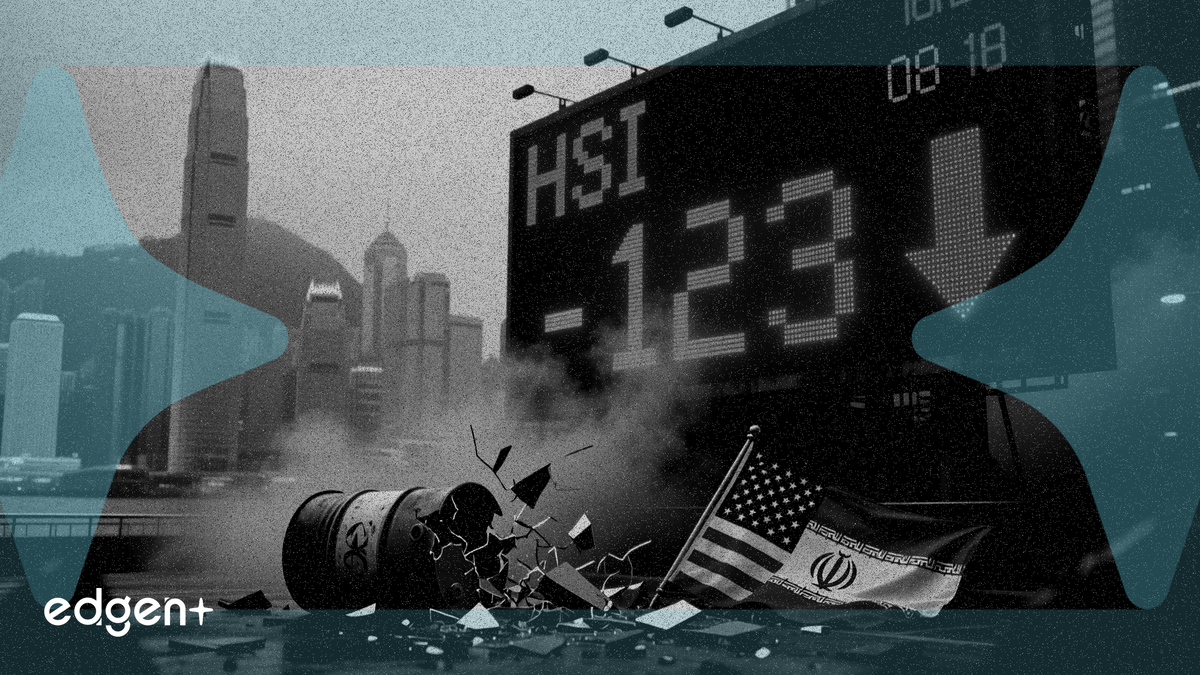
Hong Kong's Hang Seng Index opened 123 points, or 0.5%, lower at 24,442 after the US launched retaliatory strikes against Iran, extending the benchmark's losing streak to six sessions.
The Hang Seng China Enterprises Index fell 29 points, or 0.35%, to 8,295, while the Hang Seng Tech Index dropped 18 points, or 0.38%, to 4,751. The declines tracked a mixed session on Wall Street where the Nasdaq Composite slid nearly 1% as chip stocks came under renewed pressure.
US President Donald Trump accused Iran of shooting down a US helicopter over the Strait of Hormuz and vowed to respond, after which the US military carried out strikes against Iranian targets. The escalation marks a sharp deterioration in Middle East security and threatens one of the world's most critical oil transit chokepoints.
Among blue chips, HSBC Holdings (0005.HK) opened down 2.74% at HKD138.2, the steepest decliner among financials, as the lender's exposure to Middle East markets and potential sanctions risk weighed on the stock. WuXi Biologics (2269.HK) slumped 4.88%, extending its recent slide. Lenovo Group (0992.HK) opened 2.52% lower, while Longfor Group (0960.HK) fell 1.1% after reporting May contracted sales tumbled 49% from a year earlier, underscoring the deepening distress in China's property sector.
Technology stocks offered some support. Tencent Holdings (0700.HK) opened up nearly 0.4% after announcing plans to issue USD2.45 billion and CNY15 billion in notes. NetEase (9999.HK) rose 1.9%, while Meituan (3690.HK) edged down 0.1% at the open.
The opening decline extends the HSI's five-day losing streak, with the geopolitical shock from the US-Iran confrontation compounding headwinds from US rate uncertainty and China's uneven economic recovery. Traders will watch for further escalation in the Middle East and any retaliatory measures that could disrupt oil flows through the Strait of Hormuz, where about one-fifth of the world's petroleum passes daily.
This article is for informational purposes only and does not constitute investment advice.
