
Hong Kong-listed technology stocks plunged Monday as a global selloff in artificial intelligence shares and escalating Middle East tensions deepened, with the Hang Seng Tech Index falling more than 3%.
Hong Kong-listed technology stocks plunged Monday as a global selloff in artificial intelligence shares and escalating Middle East tensions deepened, with the Hang Seng Tech Index falling more than 3%.
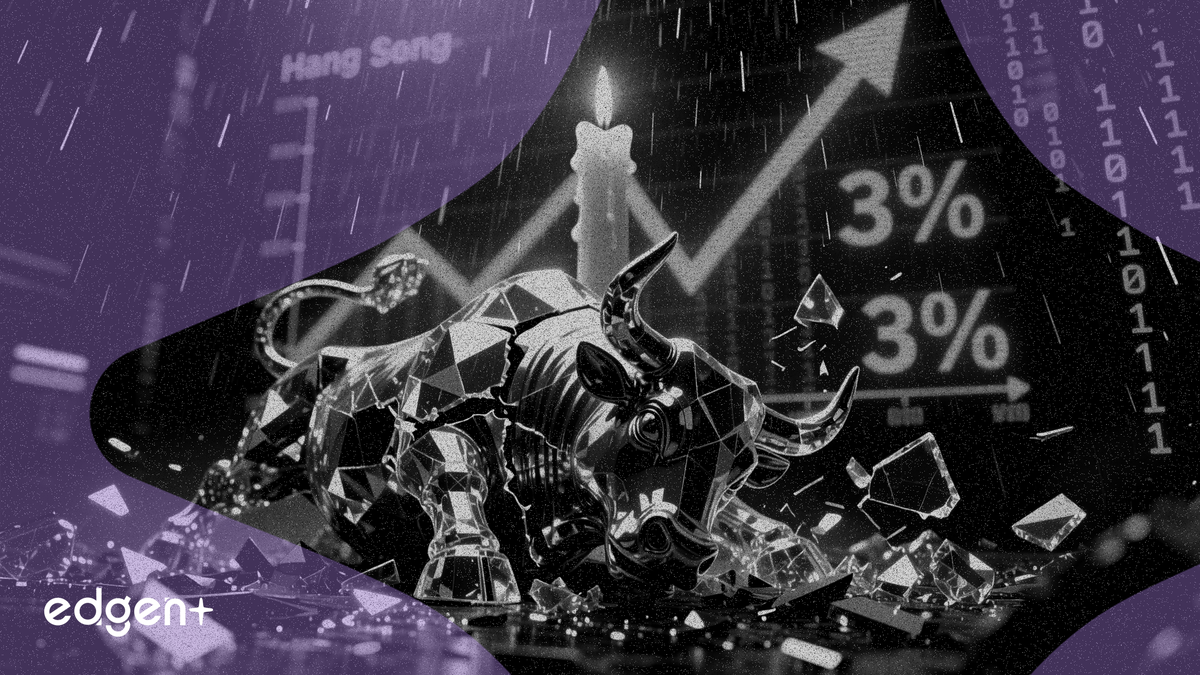
The Hang Seng Tech Index fell more than 3% on Monday, tracking a global equity rout triggered by a tech selloff on Wall Street and renewed Middle East hostilities.
"The burden of proof has gone up for AI investments — investors need to see real revenue, not just promises," said Charu Chanana, chief investment strategist at Saxo. "The messy mix of tech repositioning and rising energy prices is a dangerous cocktail for markets."
MINIMAX tumbled nearly 10%, while Baidu Group (9888.HK) slid more than 7%. The broader Hang Seng Index fell 1.8% to 24,512, with turnover reaching HK$178 billion, well above the 20-day average of HK$132 billion. Southbound Stock Connect saw net selling of HK$4.2 billion as mainland investors reduced Hong Kong exposure.
The selloff compounds Friday's 5% plunge in the Nasdaq 100 — its worst session in over a year — and raises the stakes for this week's US inflation data and Fed meeting minutes, which will determine whether the rate-hike repricing that rattled markets has further to run.
The declines in Hong Kong mirrored a broader Asian rout. South Korea's Kospi crashed nearly 9% within minutes of the open, triggering a 20-minute trading halt via circuit breaker for the third time this year. Japan's Nikkei 225 slid 4%, its steepest drop in three months, as chipmakers Samsung and SK Hynix led losses. The Shanghai Composite fell 1.2%.
Oil Surges as Middle East Tensions Flare
Brent crude jumped 3.7% to $96.50 a barrel in Asian trading after Iran launched missiles toward Israel, testing a fragile ceasefire brokered in April. US-traded West Texas Intermediate rose 3.5% to $93.70. The escalation threatens to reopen disruption risks in the Strait of Hormuz, adding to inflation concerns that have already pushed swap markets to fully price in a Federal Reserve rate increase by year-end. The offshore yuan weakened past 7.25 per dollar as risk aversion swept through Asian currencies.
AI Valuation Reckoning Spreads
The tech-heavy HSTECH has been among the best-performing Asian indices this year, riding a wave of AI enthusiasm that lifted names like MINIMAX and Baidu. But Friday's US jobs report — which showed unemployment holding at 4.3% and wage growth accelerating — triggered a sharp repricing of rate expectations, with two-year Treasury yields jumping 12 basis points to 4.16%. That shift, combined with growing skepticism about AI monetization timelines, has prompted investors to rotate out of high-multiple tech names.
"The selloff is about repositioning, not panic," Chanana said. "Markets like the Kospi and Nikkei are particularly exposed because their exchanges are dominated by tech stocks. Hong Kong is feeling the spillover."
South Korean President Lee Jae-myung said Monday that while the stock market is expected to experience volatility, domestic shares remain "slightly undervalued."
This article is for informational purposes only and does not constitute investment advice.
