

Key Takeaways:
- HAL fell 3.6% to $38.18, its biggest single-day drop in three months.
- The stock trades 14.5% above its GF Value of $33.35, indicating overvaluation.
- Insiders sold $16.8 million in shares over the past three months with no buying.
Key Takeaways:
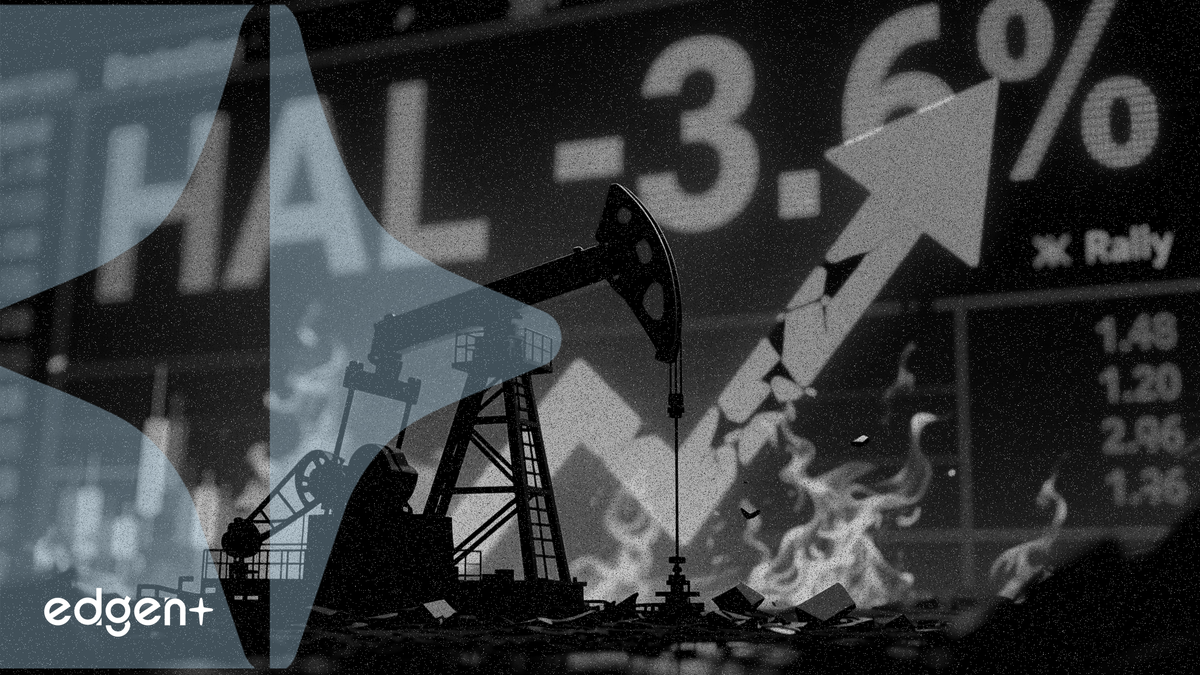
Halliburton Co. fell 3.6% to $38.18, its steepest single-day decline in three months, even as the S&P 500 and other major indices posted gains.
The decline came as valuation metrics flashed warning signs. HAL's price-earnings ratio of 21 times is 39% above its five-year median of 15.1 times, data compiled by GuruFocus show. The GF Value model, which incorporates historical multiples and growth estimates, pegs fair value at $33.35 — 14.5% below the current price, placing the stock in "modestly overvalued" territory. The forward P/E of 16.2 times offers some relief but still exceeds the stock's long-term average.
The stock's GF Score of 73 out of 100 ranks as "above average" but reveals a mixed underlying profile. Profitability scored 7 out of 10, reflecting solid margins and returns on capital, while financial strength rated 6 out of 10 and growth scored 5 out of 10. Momentum ranked just 3 out of 10, the weakest component, reflecting the recent price declines that have pushed the stock toward the lower end of its 52-week range of $20.09 to $43.59.
Insider activity has added to the cautionary signals. Over the past three months, insiders sold $16.8 million worth of shares with no purchases reported, a pattern that often suggests those closest to the company see limited upside at current levels. The absence of buying activity may weigh on investor sentiment as the stock trades above its estimated fair value.
The selloff in Halliburton, one of the world's largest oilfield services providers alongside Schlumberger and Baker Hughes, may signal broader caution toward energy stocks if crude prices fail to find support. The company's fortunes are closely tied to drilling activity, which in turn depends on oil price levels and producer spending plans. With the stock's momentum score at its lowest among the GF Score components, the near-term technical picture remains challenging.
The divergence between HAL's decline and the broader market's advance highlights the stock-specific pressures at play. While the S&P 500 and other major indices posted gains, energy names faced headwinds from valuation concerns and shifting expectations around oil demand. Halliburton's elevated P/E relative to its history suggests the market had priced in stronger growth than the company has delivered, leaving the stock vulnerable to repricing.
The financial strength rating of 6 out of 10 suggests a manageable balance sheet, but the combination of elevated valuation and weak momentum may keep buyers on the sidelines until a clearer catalyst emerges. The stock's forward P/E of 16.2 times, while lower than the trailing multiple, still represents a premium to the sector average and leaves little room for error in execution. Investors will watch for catalysts including the next quarterly report and any shift in oil prices that could alter the outlook for drilling activity. For now, the data points to a stock that appears priced for perfection in an industry facing uncertain demand signals.
This article is for informational purposes only and does not constitute investment advice.
