

Key Takeaways:
- Gilead plans four drug launches in 2026 across hepatitis delta, HIV, and oncology
- Q1 revenue rose 4% to $7 billion, with EPS up 54.8% year over year
- The stock trades at 15x forward earnings with a 2.39% dividend yield
Key Takeaways:
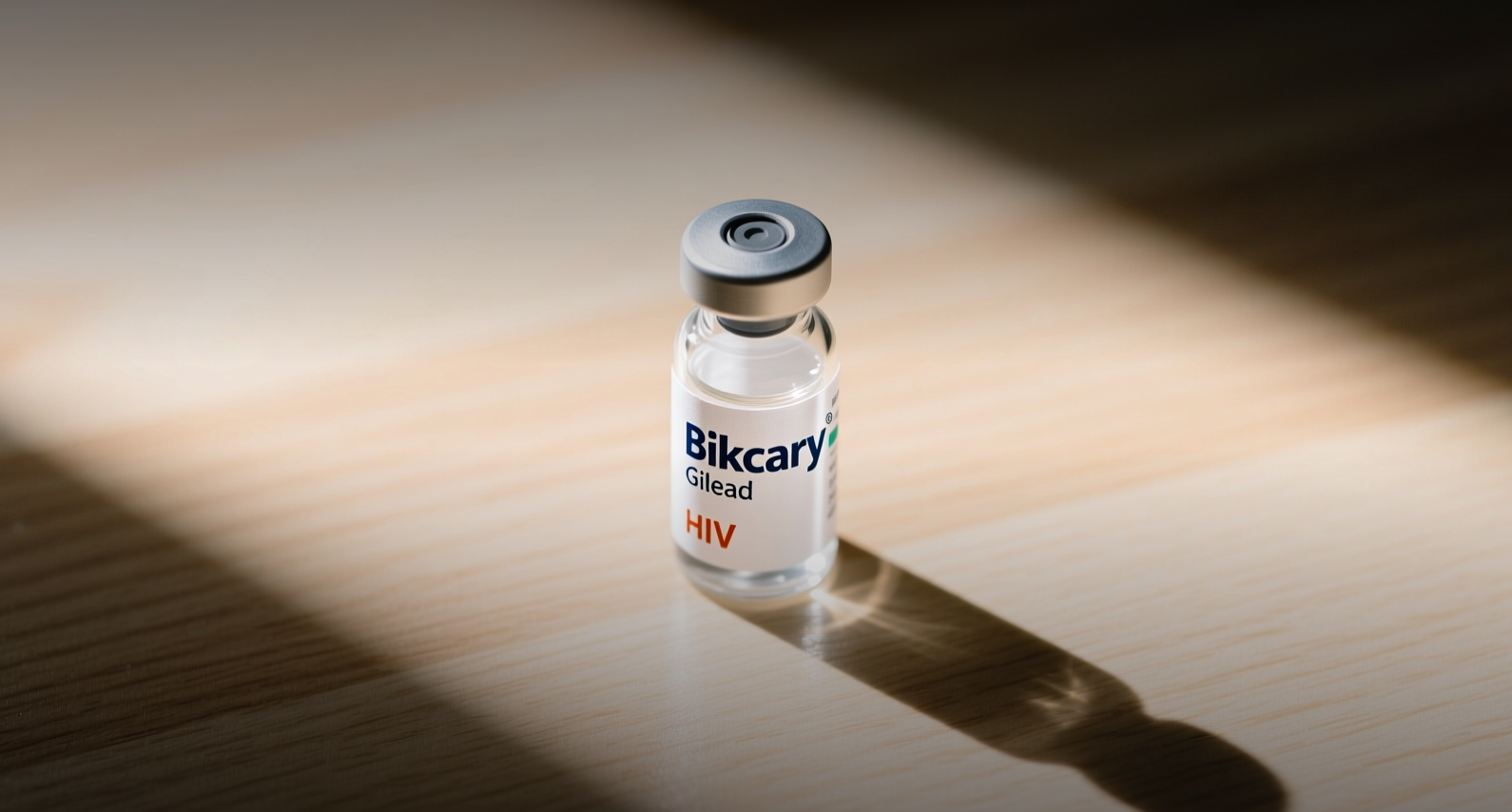
Gilead Sciences is launching four new drugs this year, a pipeline event that could reshape investor perception of the company as a pure-play HIV stock.
Gilead Sciences Inc. plans four commercial drug launches in 2026, a pipeline cadence that would mark the company's most aggressive expansion beyond its core HIV franchise in a decade. The Nasdaq-listed shares have risen 9% this year, trailing the S&P 500's 14% gain, as the market has yet to price in the diversification.
"The breadth of launches this year is unprecedented for Gilead in the post-HIV era," said Sam Goldstein, a healthcare analyst at Edgen. "Investors have treated the stock like a has-been, but the pipeline tells a different story."
Gilead reported first-quarter revenue of $7 billion, up 4% from a year earlier, with earnings per share of $1.61, a 54.8% increase. HIV product sales rose 10% to $5 billion, driven by Biktarvy and Descovy, while breast cancer drug Trodelvy posted 37% sales growth. Product gross margins stand at roughly 79%, and the company sees no major patent expirations until 2036.
The four launches span hepatitis delta virus, HIV maintenance, multiple myeloma, and expanded use of Trodelvy. Bulevirtide received accelerated approval on May 22 as the first treatment for chronic hepatitis delta virus infection. The FDA granted Priority Review on April 29 for a once-daily single-tablet regimen of bictegravir plus lenacapavir (BIC/LEN) for adults with suppressed HIV, with a PDUFA action date of Aug. 27. Anito-cel, a BCMA CAR-T therapy acquired through the Arcellx purchase, has a PDUFA date in December. Trodelvy received FDA approval on June 24 for first-line metastatic triple-negative breast cancer. The company also expects its twice-yearly injectable HIV prevention drug, Yeztugo, to generate $1 billion in 2026 sales.
The acquisition strategy behind the pipeline
Gilead spent heavily this spring on acquisitions of Arcellx, Ouro Medicines, and Tubulis, adding oncology and inflammation assets that will take time to integrate. The deals expand Gilead's pipeline beyond HIV into cell therapy and antibody-drug conjugates, areas where the company has historically underperformed relative to rivals such as Bristol Myers Squibb and Pfizer.
The company trades at roughly 15 times forward earnings, below its five-year average, despite the upcoming launch cycle. Gilead has raised its dividend for 11 consecutive years, including a 3.7% increase this year, giving the stock a 2.39% yield at current prices.
What the launches mean for investors
The four launches represent a test of whether Gilead can replicate its HIV dominance in oncology and virology. Success would broaden the company's revenue base beyond the $5 billion quarterly HIV franchise and support the current valuation multiple. Failure would reinforce the narrative that Gilead remains a one-trick pharma stock. Investors will watch the BIC/LEN PDUFA date on Aug. 27 and the anito-cel decision in December as the two most consequential binary events for the stock this year.
This article is for informational purposes only and does not constitute investment advice.