
Germany became the latest major economy to pledge military assets to secure the Strait of Hormuz, as a coalition of about 20 nations prepares to clear mines and escort vessels through the waterway that carries a fifth of the world's oil.
Germany became the latest major economy to pledge military assets to secure the Strait of Hormuz, as a coalition of about 20 nations prepares to clear mines and escort vessels through the waterway that carries a fifth of the world's oil.
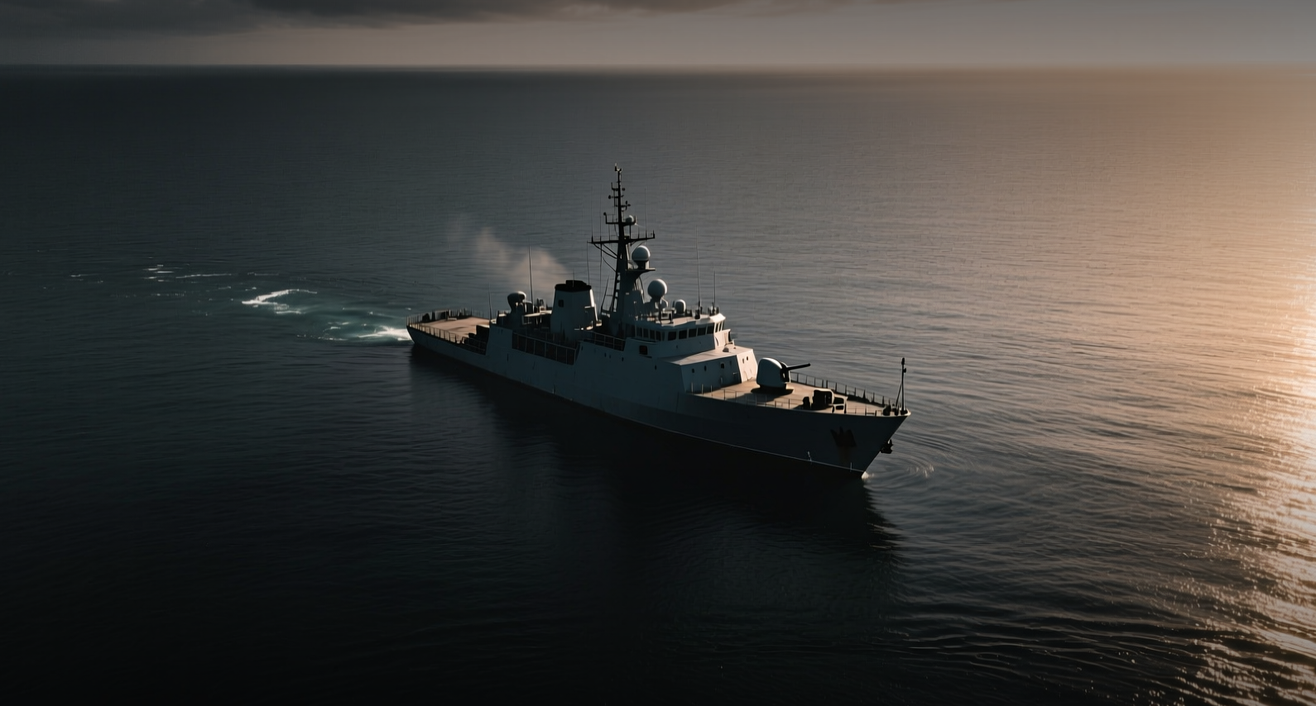
Germany became the latest major economy to pledge military assets to secure the Strait of Hormuz, as a coalition of about 20 nations prepares to clear mines and escort vessels through the waterway that carries a fifth of the world's oil.
German Chancellor Friedrich Merz told President Donald Trump that Berlin is ready to contribute to the Strait of Hormuz mission, expressing confidence the US-Iran agreement will hold as a coalition of about 20 nations prepares to reopen the critical chokepoint.
"Until then, we are committed to a diplomatic solution to the conflict," Merz told lawmakers in the Bundestag, as he confirmed Germany's readiness to deploy assets including minehunter vessels once conditions are met. The aim is for Iran to shut down its nuclear program, he argued, adding that the security of Israel and the entire region must be guaranteed.
Brent crude oil fell 3.88% on the day to around $80 a barrel, the lowest since early March, extending a monthly decline of 28.57% as the prospect of a reopening weighed on prices. The Strait of Hormuz handles about 20% of global oil and liquefied natural gas transit, and its closure since the start of the US-Iran conflict had driven fuel costs sharply higher for months.
The German commitment adds to a European-led naval mission that includes France's nuclear-powered aircraft carrier Charles de Gaulle, a British destroyer, and Italian minehunters. Yet US intelligence assessments suggest Iran retains the ability to shut the strait at will, raising questions about whether any agreement can permanently secure the waterway that underpins global energy supply.
France and Britain have been working since March to assemble the coalition, with French President Emmanuel Macron saying Monday that about 20 countries have made "concrete contributions" and four are already "present in the region." The mission's primary objectives include clearing mines laid by Iran during the conflict and escorting an estimated 2,000 tankers and cargo ships waiting to transit out of the Gulf. Macron said Oman had already agreed to Western naval escorts.
The memorandum of understanding between the US and Iran, set to be formally signed Friday at the Burgenstock resort near Lucerne, Switzerland, stipulates the reopening of the strait within 30 days, according to Iran's Mehr news agency. US Vice President JD Vance will travel to Switzerland for the ceremony, Trump said at the G7 summit in France.
US intelligence agencies have assessed that Iran can effectively shut down access to the strait at will, a capability it demonstrated during the current conflict, according to three sources familiar with the findings. Iran retains a significant portion of its weapons stockpile, including missiles, drones, and hundreds of small fast boats that continue to harass shippers, and has been rebuilding its military industrial base faster than the US anticipated.
The last time Iran demonstrated the ability to close the strait, oil prices surged and global shipping costs spiked as vessels were forced to reroute. Iran has also signaled it could weaponize the Bab-el-Mandeb strait via its Houthi proxies in Yemen — a move that would effectively cut off another major global trade chokepoint connecting the Red Sea to the Indian Ocean, according to US intelligence.
The mine-clearing operation alone represents a massive logistical undertaking. France has positioned two minehunter vessels near the Arabian Peninsula, while Germany's Bundeswehr has been preparing since May for an operation that could include its own minehunter currently in the Mediterranean. Italy has made two minehunters available.
Shipping and seafarers' associations said leaders have not yet given enough detail to prompt ships to start exiting. "We still consider it very risky for ships to commence transits at this point," said Jakob Larsen, chief security officer at the shipping lobby BIMCO.
The agreement buys negotiators another 60 days, extending a state of uncertainty that is bad for business. Iranian officials have suggested tolls or "service fees" could be imposed for ships passing through the crucial channel, while Trump has insisted the strait will be "toll-free." International risk specialist Stephane Audrand said the main objective of the mission was "to reassure maritime transport stakeholders so that they agree to send their ships back into the Gulf."
This article is for informational purposes only and does not constitute investment advice.
