


The race to power AI data centers is pushing gas turbine prices up 300% in three years, with GE Vernova's supply sold out through 2030.
The race to power AI data centers is pushing gas turbine prices up 300% in three years, with GE Vernova's supply sold out through 2030.
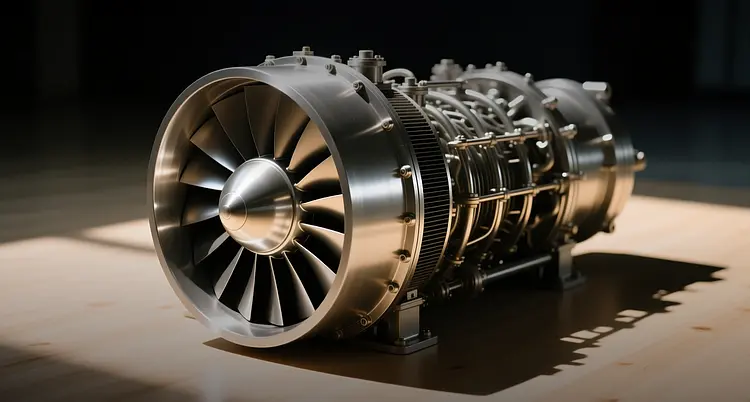
The cost of powering artificial intelligence is reshaping industrial equipment markets. Gas turbine prices have surged roughly 300% over three years, Melius Research estimates, as data center operators compete for limited generation equipment.
"Power is the lifeblood of your business. If they don't have power, their business doesn't exist," Jeremy Eliahou Ontiveros, an energy analyst, said on the Catalyst with Shayle Kann podcast. He warned that AI labs like Anthropic are trying to scale from 1.5 gigawatts of capacity at the end of 2025 to more than 10 gigawatts by 2027 — the equivalent of building a Google-sized power footprint in two years.
Microsoft recently ordered seven large gas turbines from GE Vernova for a Texas data center, with each unit costing more than $250 million. GE Vernova's turbine supply is effectively booked through 2030, and its Electrification segment booked $2.4 billion in data center equipment orders in the first quarter of 2026 — more than all of last year. The company's shares have gained 64.8% year to date.
The supply crunch reflects a structural gap. Goldman Sachs projects US data center electricity consumption will double between 2025 and 2027, while the grid can only add roughly 35 gigawatts of new supply annually, according to analyst estimates. That leaves a 15-gigawatt annual shortfall against the 50 gigawatts of data center demand the industry is targeting. Research outfit RAND expects "behind the meter" power generation — facilities that bypass the grid entirely — to roughly triple to 49 gigawatts by 2030.
The Bypass Model Gains Traction
Chevron is capitalizing on the trend through a novel structure. The oil and gas company partnered with GE Vernova to supply Microsoft's West Texas data center under a 20-year agreement, bypassing traditional utility providers. Chevron supplies the natural gas while GE Vernova provides the turbines — a self-contained power solution that could become the norm for AI data centers, according to analysts. PwC estimates AI-linked natural gas demand could quintuple between 2025 and 2035.
The model addresses a bottleneck that extends beyond generation. Host Shayle Kann noted on the podcast that even if new generation is built, upgrading substations and ordering high-voltage transformers takes three years. That timeline mismatch between grid infrastructure and AI buildout schedules is pushing hyperscalers toward self-generation.
Who Wins, Who Loses
The equipment suppliers are the clearest beneficiaries. GE Vernova's turbine backlog and slot reservation agreements are on track to reach at least 110 gigawatts by year-end 2026, CEO Scott Strazik said. Vertiv, a pure-play data center power and cooling company, reported organic orders up 252% year over year in the fourth quarter of 2025, with backlog reaching $15 billion. Eaton's Electrical Americas orders rose 42% organic on a trailing-twelve-month basis, and the company closed a $9.55 billion acquisition to expand data center cooling capacity.
On the generation side, Constellation Energy closed its Calpine acquisition in January 2026, operating a 55-gigawatt fleet as the largest private power producer globally. Its first-quarter revenue jumped 63.9% year over year to $11.12 billion. Vistra signed 20-year power purchase agreements with Meta for more than 2,600 megawatts and with Amazon Web Services for up to 1,200 megawatts.
GE Vernova shares trade near analyst targets averaging $1,222.63, while Vertiv has doubled year to date. The open question is whether the roughly 35 gigawatts of annual new supply can meet the 50 gigawatts of annual data center demand — and whether the transformers, substations, and turbines arrive in time. For investors, the equipment and generation layers of the AI trade offer the tightest supply and the loudest demand signal.
This article is for informational purposes only and does not constitute investment advice.