
Kevin Warsh's first Fed meeting opens a new policy chapter, with rate hikes now priced in for late 2026.
Kevin Warsh's first Fed meeting opens a new policy chapter, with rate hikes now priced in for late 2026.
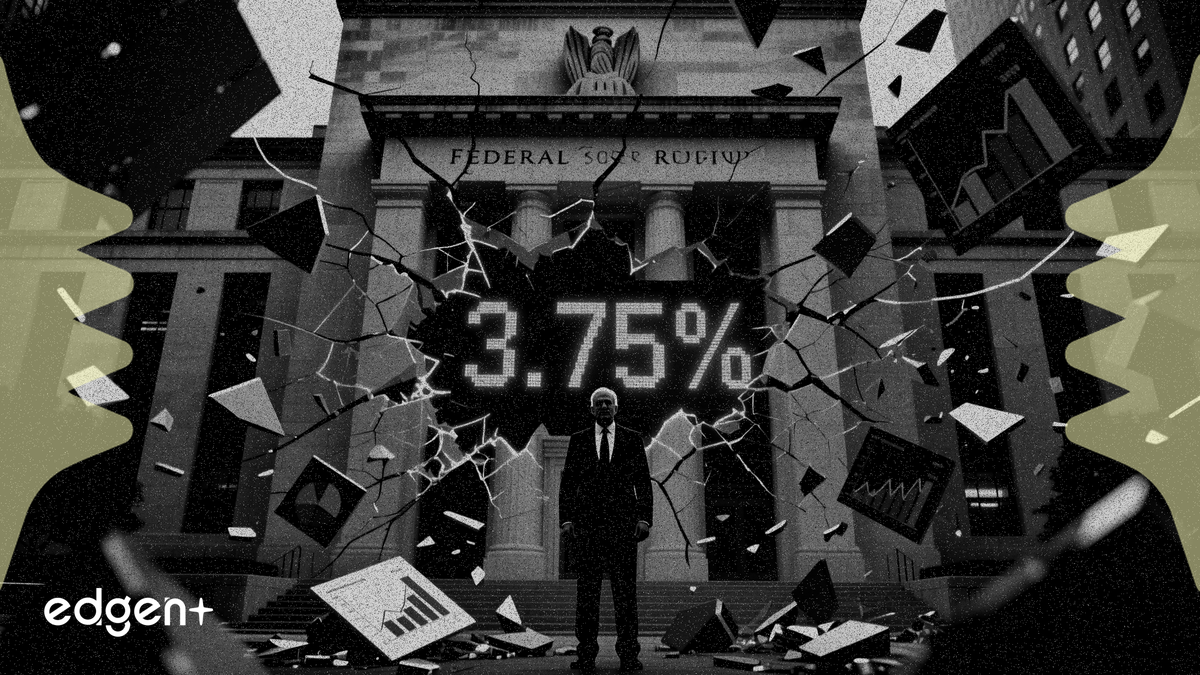
The Federal Reserve is expected to hold rates at 3.50%-3.75% next week, but newly installed Chair Kevin Warsh may use his first meeting to signal a shift away from the easing bias that defined policy since late 2025.
"The recent data on inflation and the labor market suggests the committee should remove the easing bias language to make clear a rate cut is no more likely than a rate increase," Fed Governor Christopher Waller said in a May 22 speech in Frankfurt. "That doesn't mean I think we should be considering rate increases in the near future."
Markets have already begun repricing. The CME FedWatch Tool now shows one or two quarter-point hikes as relatively likely by year-end, a dramatic reversal from three months ago when two cuts were the base case. The shift follows April's consumer price index reading of 3.8% headline inflation and 2.8% core — both well above the Fed's 2% target — and a May jobs report that showed strong hiring for a third consecutive month. The S&P 500 has fallen in four of the past six sessions as investors weigh the implications of tighter policy.
The stakes extend beyond the June decision. The May consumer price index, released June 10, showed annual inflation accelerated to 4.2% — the highest in three years and up from 3.8% in April. Core inflation also rose, reinforcing the case for a hawkish pivot. If the Fed removes its easing bias and the dot plot shifts to show fewer cuts — or even hints at hikes — equities face a repricing that could deepen the current selloff across the S&P 500, Nasdaq, and Dow Jones.
The transition from Jerome Powell to Warsh injects an additional layer of uncertainty. President Trump repeatedly attacked Powell during his tenure, yet it may be Warsh who presides over rate increases after Powell delivered 75 basis points of cuts in late 2025. Warsh has signaled plans to change how the Fed conducts forward guidance, potentially declining to discuss future policy at the same level of detail as his predecessor at this first meeting.
JPMorgan's chief global strategist David Kelly expects the Fed to stand pat next week and forecasts just two rate cuts across all of 2026, with one additional cut penciled in for 2027. "The Fed cut rates three times in late 2025, trimming the federal funds rate by a total of 75 basis points," Kelly said. "Since then, the central bank has been in wait-and-see mode, letting those cuts work through the economy while keeping a close eye on inflation data and fiscal dynamics." His outlook emphasizes persistent inflationary pressures combined with fiscal factors that make aggressive easing risky.
The cross-asset implications are already visible. Two-year Treasury yields have climbed 18 basis points over the past two weeks as traders reduced bets on near-term easing. The VIX, Wall Street's fear gauge, has risen above 22 as options markets price in larger-than-normal swings around the June meeting. The last time the Fed used language pointing toward tighter policy was in early 2023, preceding a period where the S&P 500 fell 7% over the following two months while the dollar strengthened 4% against a basket of major currencies.
For equity investors, the June 16-17 meeting sets the stage for the next several months of Fed decisions. If the statement removes the easing bias and the dot plot shifts hawkishly, the S&P 500 could test its June lows as rate-sensitive sectors — technology, real estate, and consumer discretionary — face the highest valuation risk. If the Fed maintains its current language, markets may interpret it as a temporary reprieve, but the May CPI data already suggests that reprieve would be short-lived. The European Central Bank's expected rate hike later this week adds to the global tightening picture, adding pressure on risk assets across developed markets.
This article is for informational purposes only and does not constitute investment advice.
