
Key Takeaways:
- Even Realities raised $150 million at a $1 billion valuation from Tencent and Meituan
- The startup's display-first smart glasses skip cameras entirely for privacy
- More than half of users are in the US, with average orders near $1,000
Key Takeaways:
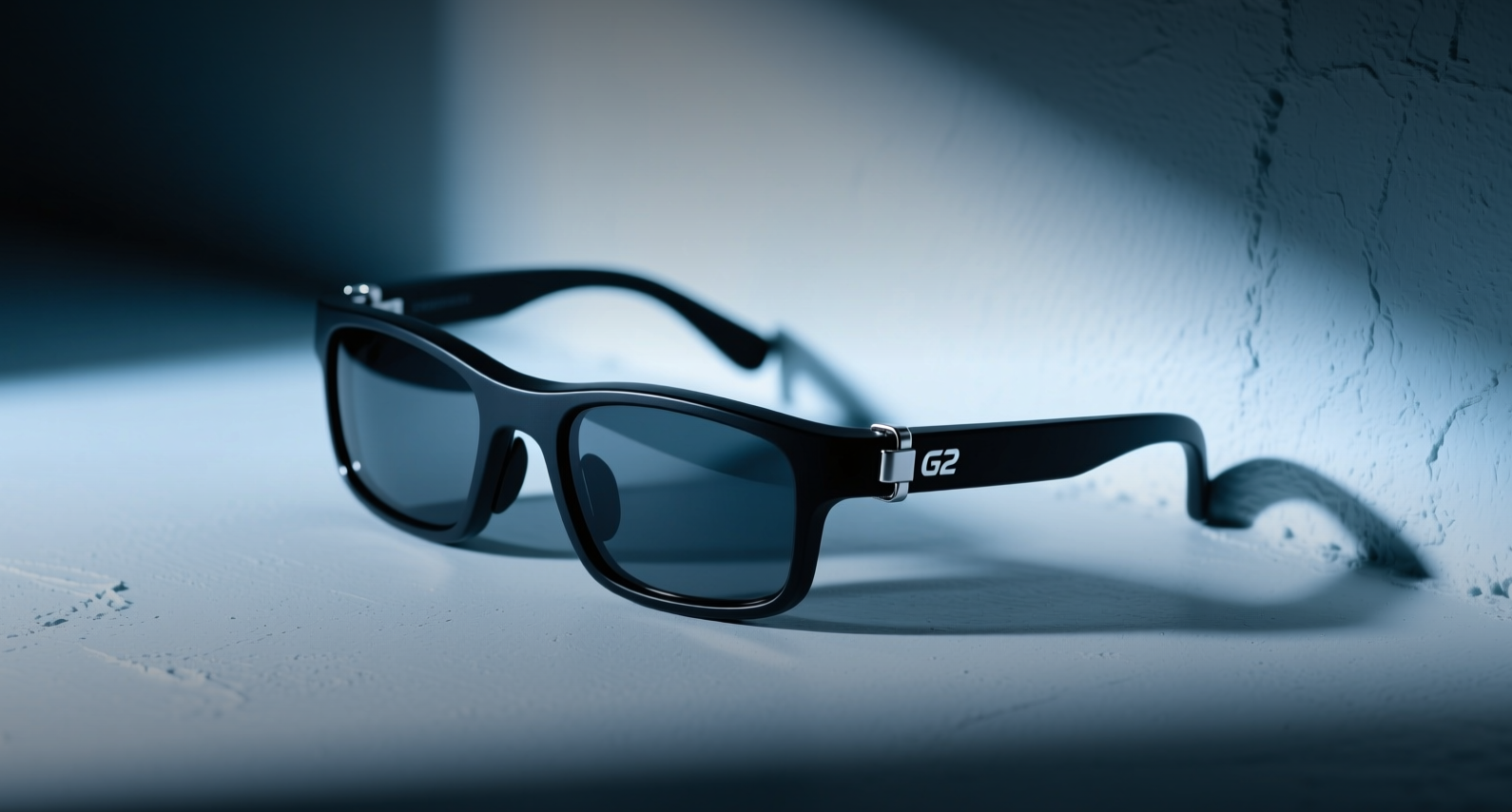
Even Realities is betting display-first smart glasses can win where camera-equipped rivals have not.
Even Realities, a three-year-old smart glasses startup founded by former Apple engineers, has raised $150 million at a $1 billion valuation, challenging Meta and Snap in the fast-growing AI wearables market.
"We're betting on display-first glasses that beam information into the wearer's line of sight without the privacy concerns of a camera," Will Wang, chief executive officer and a former Apple Watch and iPhone engineer, said.
The pre-Series B round was led by Meituan and existing backer Tencent, with participation from Hillhouse, Sequoia China and Northern Light Venture Capital. The Shenzhen-headquartered startup sold more than 10,000 units of its first-generation G1 glasses — the first company in the category to cross that threshold — and has since grown from about 35 staff in 2024 to as many as 400 today.
The funding validates the smart glasses category as a major growth frontier in consumer electronics, with Meta and Snap both releasing new camera-equipped models last month. Even's display-only approach, which skips cameras entirely in favor of a heads-up display controlled by a companion ring, targets professionals who want information without sacrificing privacy — a segment that could pressure larger rivals to diversify their product strategies.
Why No Camera Is the Point
Even's latest flagship, the G2, launched in November and contains no camera. Instead, a waveguide display feeds information into the wearer's field of view, navigated by the Even R1 ring — a controller users tap and swipe. The company developed a proprietary optical system called Even HAO, or Holistic Adaptive Optics, that integrates the microchip, waveguide and prescription support from the start, rather than combining separately designed components.
"Smart glasses are the first product category to rely on optical displays, which require an entirely different technology stack," Wang said. "You have to design the microchip, the optics and the waveguide together."
Removing the camera is central to Even's privacy philosophy. Voice features like Conversate, a real-time conversation copilot, transcribe audio into text rather than storing recordings. User data is encrypted, and the infrastructure meets Europe's strict privacy standards, Wang added. The company says it designed privacy into both hardware and software from the ground up, recognizing that glasses worn on the face all day must feel comfortable to both the wearer and those around them.
Who Is Buying and Where
More than half of Even's users are in the United States, its fastest-growing market, followed by Japan, South Korea, the Middle East and Europe. The company does not sell in China despite manufacturing there across several factories. The typical customer is a male professional between 30 and 50 years old, with about a third of users identifying as company executives, according to a company survey.
The G2 frames retail for $599 before tax. Prescription lenses or the companion ring add $200 to $300, pushing the average order to roughly $1,000. Wang said the company is profitable at those price points and has moved real volume — a claim that sets it apart from many hardware startups that struggle to reach scale. Power users lean heavily on Conversate, the copilot feature that reads conversations in real time, explains unfamiliar jargon and syncs summaries to their phones.
Investment Angle
Even's unicorn valuation and the involvement of Tencent and Meituan signal that Chinese tech capital is flowing aggressively into the AI wearables space, a category dominated by US companies. Meta's Ray-Ban smart glasses and Snap's Spectacles both carry cameras, creating a clear product differentiation for Even's privacy-first approach. The company's ability to sell 10,000-plus units at a $1,000 average order suggests a viable premium niche — one that could attract further investment or acquisition interest as the market matures. For investors, the key question is whether Even can maintain its growth trajectory as larger rivals add display-only variants to their product lines, potentially compressing the startup's pricing advantage.
This article is for informational purposes only and does not constitute investment advice.
