


- Elektros Inc. reveals a patented multi-port EV charging assembly.
- The technology allows multiple EVs to charge from one single point.
- Aims to compete with existing charging infrastructure from Tesla and others.
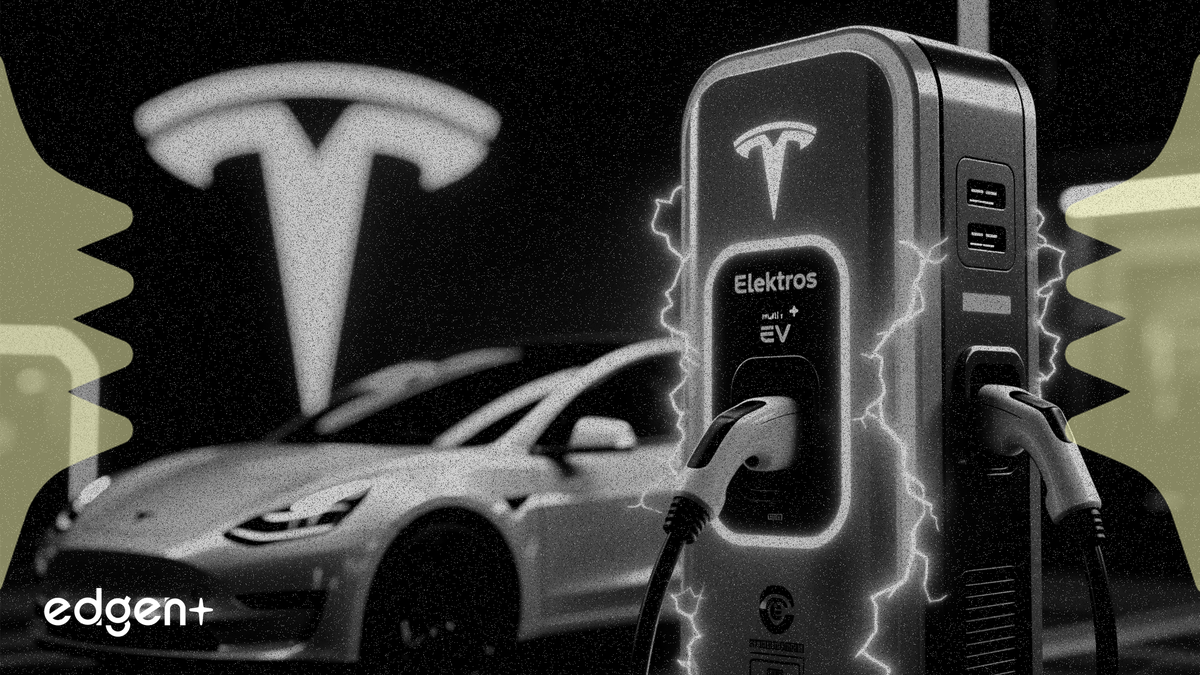
(P1) Elektros Inc. is moving forward with a patented multi-port charging assembly for electric vehicles, a direct challenge to the current single-vehicle charging model dominated by companies like Tesla and ChargePoint.
(P2) "This technology is designed to significantly increase the throughput of charging locations, reducing wait times for drivers and improving the economics for site operators," an Elektros spokesperson said in a statement.
(P3) The system services multiple vehicles from a single infrastructure point, a departure from the one-car, one-charger standard. While Elektros has not yet disclosed the exact number of ports per assembly or the charging speed, the focus is on scalability and efficiency. This compares to Tesla's Supercharger network, which is known for its high-speed, single-vehicle chargers.
(P4) For investors, Elektros's patent could represent a significant moat in the growing EV infrastructure market. The stock (OTC: ELEK) has seen a bullish sentiment, and this technology could lead to licensing revenues or strategic partnerships with automakers looking to build out their own charging networks, potentially impacting the market share of established players like ChargePoint (NYSE: CHPT) and EVgo (NASDAQ: EVGO).
The advancement of Elektros Inc.'s multi-port charging technology comes at a crucial time for the electric vehicle industry. As EV adoption accelerates, the demand for public charging infrastructure is expected to outpace supply, leading to congestion at charging stations. The ability to charge multiple vehicles from a single point could alleviate this bottleneck, making EV ownership more convenient for a wider range of consumers.
The company's approach contrasts with the current industry standard, where each charging port is a standalone unit. This traditional setup can be capital-intensive to install and maintain. By consolidating the hardware, Elektros aims to lower the total cost of ownership for charging station operators, a key factor in the build-out of a national charging network. This could be particularly attractive to businesses looking to offer EV charging as an amenity, such as retail centers, hotels, and workplaces.
While the technical specifications of the multi-port assembly are not yet public, the potential impact on the competitive landscape is clear. Tesla, with its extensive Supercharger network, has long been a leader in the charging space. However, its proprietary connector has limited its accessibility to other EV brands until recently. The adoption of the North American Charging Standard (NACS) by other automakers has opened up the market, creating an opportunity for new players like Elektros to introduce innovative solutions.
Furthermore, the potential for licensing the technology provides another revenue stream for Elektros. Automakers such as Ford (NYSE: F) and General Motors (NYSE: GM), who have committed to aggressive EV production targets, may find it more cost-effective to license a proven multi-port charging solution rather than developing their own from scratch. This could position Elektros as a key technology provider to the broader automotive industry, not just a builder of its own charging network.
The market for EV charging is projected to grow significantly in the coming years. According to a report by Precedence Research, the global EV charging station market size is expected to reach $147.94 billion by 2030. Elektros, with its patented technology, is well-positioned to capture a share of this expanding market. The company's success will depend on its ability to bring the product to market in a timely manner and secure key partnerships with automakers and charging network operators.
This article is for informational purposes only and does not constitute investment advice.
