
The ECB delivered its first rate increase since 2023 while officials privately debate whether to pause in July, a shift that could reshape the euro-area tightening outlook.
The ECB delivered its first rate increase since 2023 while officials privately debate whether to pause in July, a shift that could reshape the euro-area tightening outlook.
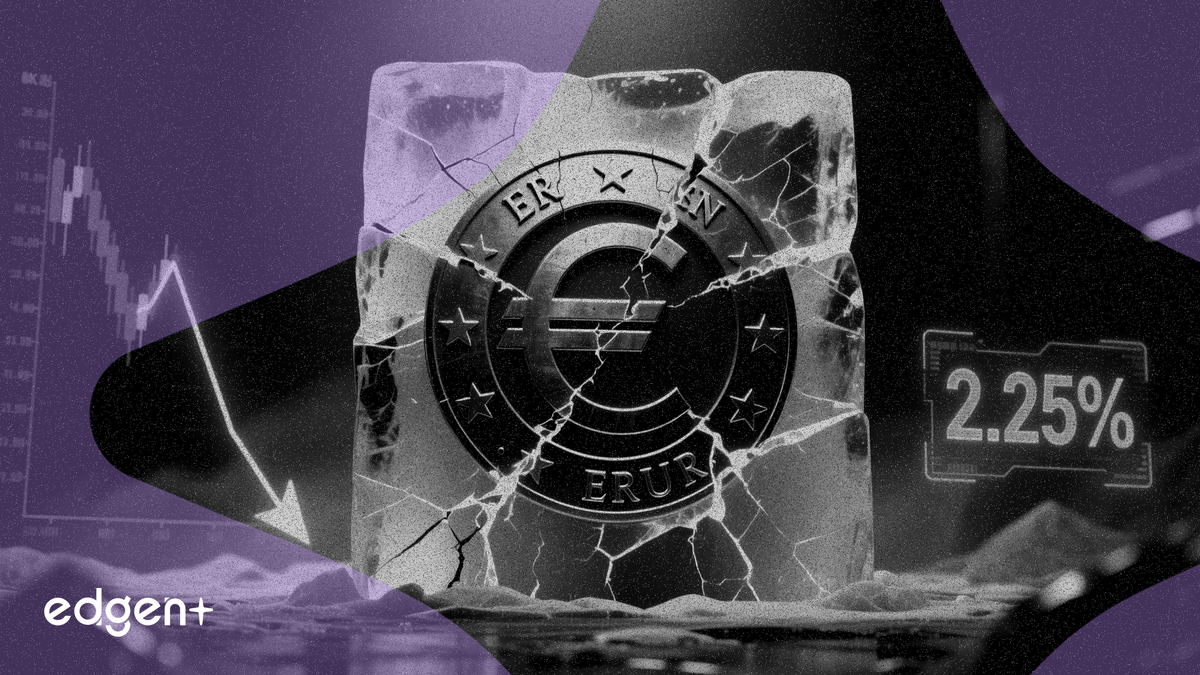
The European Central Bank raised its deposit rate to 2.25% on Thursday, the first increase since 2023, as Middle East-driven energy costs pushed euro-area inflation above 3% and forced policymakers to reverse a two-year easing cycle. The 25-basis-point move, widely anticipated by markets, lifts the main refinancing rate to 2.40% and the marginal lending facility to 2.65%, effective June 17.
"The decision to raise rates is robust across a range of scenarios mapping out how the shock might evolve," the ECB said in its statement. Yet behind the unified message, officials are considering a pause in July after the June hike, according to people familiar with the matter, pointing to internal debate about the durability of the tightening cycle.
The euro traded at $1.1551, near the lower end of the range it has held since the Middle East conflict began, as traders assessed the path ahead. ECB staff revised their 2026 headline inflation projection to 3.0%, up from the March forecast, while cutting GDP growth to 0.8% — a downward revision reflecting the war's impact on commodity markets, real incomes and confidence. Core inflation, excluding energy and food, is seen averaging 2.5% in 2026 and 2027 before easing to 2.2% in 2028.
The pause consideration marks a potential inflection point for a central bank that slashed its deposit rate by 200 basis points cumulatively since mid-2025 before reversing course. Markets have fully priced three rate increases for 2026, but assign only a 50% probability to a back-to-back hike in July, according to Lee Hardman, senior currency analyst at MUFG. "It will be difficult to trigger a hawkish repricing with three rate hikes almost fully priced in for this year," Hardman said. "The euro could weaken modestly if Lagarde does not signal that another hike is on the cards as soon as next month."
Rate path uncertainty
The ECB's forward guidance remains deliberately ambiguous. The Governing Council said it "is not pre-committing to a particular rate path" and will follow a "data-dependent and meeting-by-meeting approach." That language leaves room for either a July pause or a consecutive hike, depending on how the energy shock transmits through the economy. The next policy meeting is scheduled for July 23.
The uncertainty extends beyond the euro area. The Federal Reserve, under new Chair Kevin Warsh, is expected to hold rates steady at next week's meeting, with a strong majority of economists predicting no change for the rest of 2026. US CPI accelerated to 4.2% in May, the largest gain since April 2023, though core prices rose just 0.2% month-on-month, offering some relief. "It is important for Warsh to signal a firm commitment to tackling inflation otherwise the bond market may react negatively," said Tani Fukui, senior director of global economic and market strategy at MetLife Investment Management.
For the ECB, the stakes are unusually high. The last time the central bank raised rates after a prolonged cutting cycle was in 2023, a move that preceded a period of economic stagnation. With the euro-area economy now projected to grow just 0.8% in 2026, a premature pause risks allowing inflation to become entrenched, while pressing ahead could deepen the downturn. The Governing Council's July 23 meeting will provide the first test of which risk it considers greater.
This article is for informational purposes only and does not constitute investment advice.
