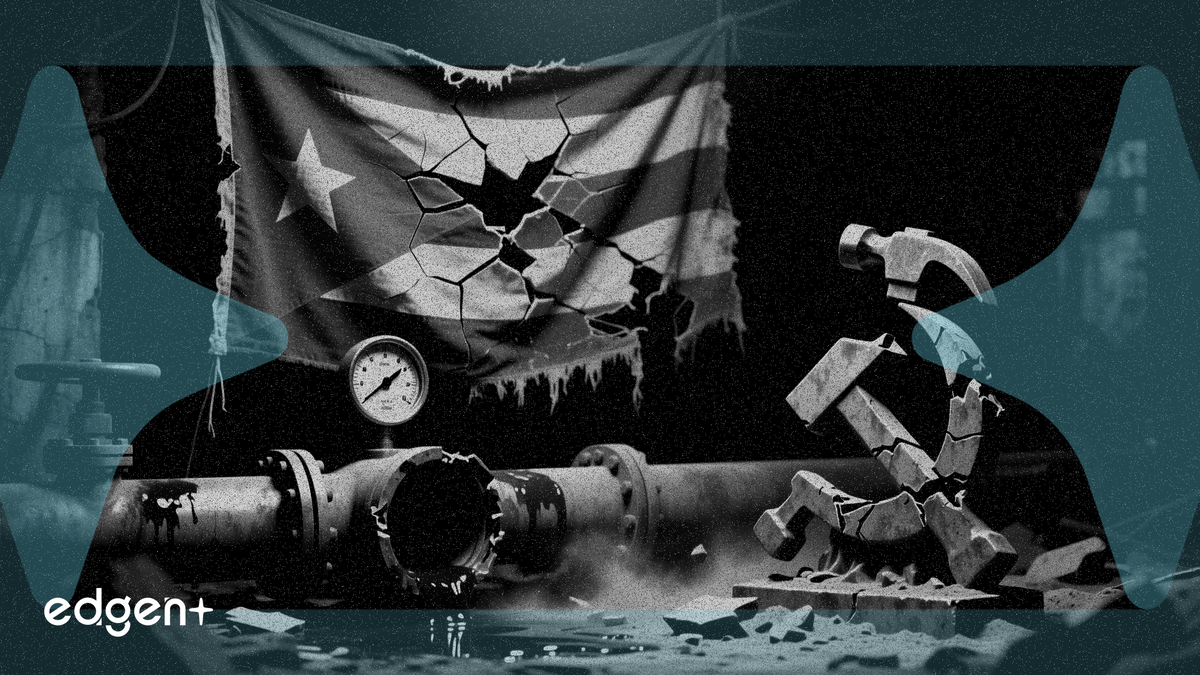
The Trump administration's oil blockade and sanctions have pushed Cuba's communist government into its deepest crisis since the Soviet Union collapsed.
Cuba's communist government is confronting its worst crisis in three decades as a US oil blockade, collapsing tourism, and the loss of Venezuelan subsidies push the island toward economic collapse, threatening a wave of migration and regional instability. President Donald Trump told CNN on March 6 that "Cuba is going to fall pretty soon," as US naval ships patrolled near the island and the Treasury Department imposed escalating sanctions on Cuban officials and foreign companies doing business with the regime.
"The Cuban government is more resilient than many of its opponents comprehend, and its fall could complicate rather than simplify the lives of American policymakers," said Walter Russell Mead, Global View columnist at the Wall Street Journal and distinguished fellow at Hudson Institute.
Cuba's economy contracted 11% between 2019 and 2024, according to the United Nations, while electricity generation fell 25% over roughly the same period. Tourism arrivals dropped 62% between 2018 and 2025. An estimated 1.7 million Cubans have left the country since 2020, gutting the labor force. The US has imposed a near-total oil blockade, and Trump administration sanctions have driven foreign investors including Hapag Lloyd shipping and the Iberostar hotel chain to abandon the island.
A regime collapse could trigger mass emigration toward US shores, open the door to drug cartel activity, and force Washington into a costly military intervention. The Cuban government has held power for 67 years and maintains a "War of All Peoples" doctrine designed for protracted insurgency, making a quick transition unlikely.
How the regime survived for decades
Cuba's communist system outlasted the Soviet collapse in 1991 by pursuing a strategy distinct from other surviving Marxist states. Unlike China and Vietnam, which adopted market reforms while retaining political control, Fidel Castro concluded that Cuba's proximity to the US made that path untenable. Instead, Havana combined brutal domestic repression with tightly controlled openings to foreign capital.
The regime permitted investors such as Canada's Sherritt International and Spain's Meliá hotel chain to operate under strict conditions, with the Cuban military overseeing the tourism industry. During economic crises, the government would allow small businesses to emerge, then crack down when conditions improved. The Cuban diaspora became an unlikely source of hard currency: exiles in Miami and Madrid sent remittances that flowed into state-owned stores, effectively turning the regime's political opponents into financial supporters.
Cuban medical workers and security personnel deployed abroad became another revenue stream, with their salaries paid directly to the state. In 2000, Venezuela's Hugo Chavez began providing subsidized oil, but that lifeline has now been cut as Caracas scaled back support amid its own economic collapse.
What a collapse would mean for markets and migration
The last time a Caribbean regime fell into chaos — Haiti after the 2010 earthquake — the US deployed 20,000 troops for humanitarian relief and border security. A Cuban collapse would be orders of magnitude larger. The island sits 90 miles from Florida, and the US Coast Guard has already intercepted record numbers of Cuban migrants in recent years.
For commodity markets, the risk centers on nickel and sugar, two of Cuba's primary exports. Cuba holds the world's third-largest nickel reserves, and any supply disruption would benefit producers in Indonesia and the Philippines. The broader Caribbean basin could see shipping disruptions if political instability affects key maritime chokepoints.
The Trump administration has shown little appetite for diplomacy. CIA Director John Ratcliffe visited Havana on May 14, and US Southern Command leader Francis Donovan followed two weeks later, but these contacts have not produced a negotiated path forward. Secretary of State Marco Rubio acknowledged in congressional testimony on June 3 that the Cuban government remains cohesive, with no indication of the internal divisions that enabled the US operation in Venezuela.
This article is for informational purposes only and does not constitute investment advice.